





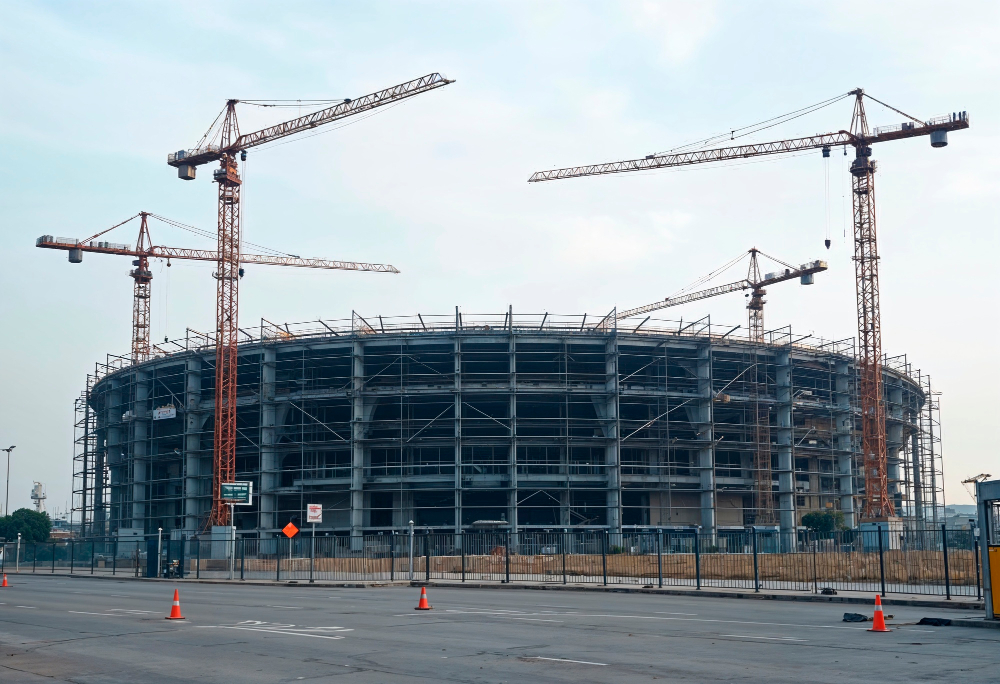
Every day your facility sits unfinished is a day you’re not generating revenue. That’s the harsh reality of construction delays and it’s a cost that rarely appears in project budgets until it’s too late.
For factory owners, warehouse developers, and industrial investors, getting a building completed on time isn’t just a scheduling preference it’s a business-critical priority. A six-month delay can mean missed seasonal demand, lost customer contracts, or competitors filling the gap you planned to occupy.
This is where pre engineered buildings (PEB) have fundamentally changed the game. Unlike conventional construction, PEB buildings are designed for speed engineered off-site, assembled on-site, and ready for operations in a fraction of the traditional timeline.
In this article, we’ll break down exactly why PEB construction is faster, how it translates to real business advantages, and which industries benefit the most.
Table of Contents
Why Construction Speed Directly Impacts Business Profitability
Most business owners focus on the upfront construction cost. But the true financial impact of a slow build often goes deeper than that.
Consider what happens during a construction delay:
- Delayed revenue generation – your production line, warehouse, or facility isn’t earning until it’s operational.
- Increased financing costs – every extra month of construction means more interest paid on your project loan.
- Lost business opportunities – customers and contracts don’t wait indefinitely.
- Competitive disadvantages – a competitor who opens six months earlier captures market share you planned to take.
- Market timing risk – economic conditions, demand cycles, and raw material prices can shift significantly during long build periods.
In short, time isn’t just money in construction, it’s market position, customer trust, and competitive advantage.
What Makes PEB Buildings Faster to Construct?
Pre-engineered steel buildings aren’t just a different material choice they represent a fundamentally different construction methodology. Several factors combine to make PEB construction significantly faster than conventional RCC or brick-and-mortar builds.
Factory-Fabricated Components
PEB structures are engineered and fabricated in a controlled factory environment before a single foundation is poured on site. Steel columns, rafters, purlins, roof panels, and wall cladding are manufactured to precise specifications cut, drilled, and prepared for assembly.
This approach eliminates the on-site fabrication work that slows down traditional construction. When your components arrive at the site, they’re ready to go up not to be measured, cut, or modified.
Faster Foundation Work
Steel structure buildings are significantly lighter than RCC constructions of comparable size. This reduced weight means simpler, smaller foundation designs are sufficient to support the structure.
Simpler foundations require less excavation, less concrete, and shorter curing times getting the ground-level work done faster so erection can begin sooner.
Quick On-Site Assembly
Because every component is pre-fabricated and pre-drilled, on-site assembly is largely a bolting operation rather than a welding and fabrication exercise. Skilled erection crews can raise structural frames rapidly, often completing large spans in days rather than weeks.
This reduces dependency on large on-site labour teams and minimises the risk of errors that come with on-site fabrication work.
Parallel Construction Activities
One of the biggest time advantages of PEB construction is the ability to run activities simultaneously. While your site team is preparing the foundation and ground works, the factory is already fabricating your structural components.
In traditional construction, work is largely sequential foundation first, then structure, then roofing. With PEB, fabrication and site preparation happen in parallel, compressing the overall project timeline considerably.
Reduced Construction Time: PEB vs Traditional Construction
When comparing pre engineered steel buildings to conventional RCC construction, the difference in timelines is substantial. While actual durations vary depending on project size, complexity, permits, weather conditions, and site logistics, the general benchmarks look like this:
Project Type | Traditional RCC | PEB Construction |
Medium Warehouse (5,000–10,000 sq ft) | 10–14 months | 3–5 months |
Large Industrial Facility | 14–18 months | 5–8 months |
Logistics Hub / Distribution Centre | 12–16 months | 4–7 months |
Food Processing Unit | 12–18 months | 5–8 months |
Note: Timelines are indicative. Actual project duration depends on engineering design complexity, statutory approvals, site accessibility, weather, and supply chain factors.
Faster ROI: How Early Completion Improves Your Bottom Line
Getting your building up and running months ahead of a conventional construction schedule isn’t just a convenience it creates measurable financial value across multiple dimensions.
Begin Production or Operations Earlier
A manufacturing unit that can begin production three months ahead of schedule generates three additional months of revenue. Over a multi-year operating life, that head start can significantly improve overall project returns.
Start Warehousing and Logistics Sooner
For logistics companies and warehouse operators, early completion means earlier client onboarding, faster fulfilment capacity, and the ability to secure service contracts that competitors with longer build timelines simply cannot.
Reduce Financing Costs
Construction loans and project finance accrue interest daily. A project completed four months ahead of a traditional build timeline can save substantially on interest payments alone a direct reduction in total project cost.
Improve Cash Flow
When a facility is operational sooner, it begins generating cash flows that can service debt, fund operations, or support expansion rather than sitting as a capital sink during extended construction.
Lower Labour Expenses
PEB construction requires fewer workers on site for shorter periods. The combination of factory fabrication and efficient on-site assembly means labour costs per completed square foot are typically lower than conventional builds.
Increase Return on Investment
When you layer together earlier revenue, lower financing costs, reduced labour, and better capital efficiency, the return on investment for a PEB project typically outperforms an equivalent RCC building sometimes considerably.
Industries That Benefit Most from Fast PEB Construction
While pre engineered buildings are used across a wide variety of applications, certain sectors gain an outsized advantage from the speed of PEB construction.
Warehouses and Distribution Centres
Demand for warehousing space in India has been growing rapidly alongside e-commerce and organised retail. Developers who can deliver warehouse space faster capture leasing opportunities that slow-moving conventional builds simply miss.
Manufacturing Plants and Factories
Factory building construction with PEB systems is well suited to industries ranging from auto components to electronics assembly. Faster completion means earlier production ramp-up and quicker product launches.
Logistics Hubs
Multi-modal logistics parks and inland container depots operate on tight timing tied to client contracts. PEB’s quick industrial building setup allows developers to honour commitments that RCC construction timelines cannot accommodate.
Food Processing Units
Food processing facilities need to meet strict hygiene and operational standards. PEB structures can be designed with the appropriate wall systems, ventilation, and flooring and delivered well ahead of conventional construction schedules.
Cold Storage Facilities
Cold chain logistics requires insulated building envelopes and specialised systems. PEB manufacturers work with insulated panel systems that integrate into the pre-engineered frame, speeding overall project delivery.
Commercial Steel Buildings
Retail showrooms, service centres, and commercial office structures increasingly use PEB frames for their cost efficiency and fast turnaround particularly when fit-out deadlines are commercially driven.
Agricultural Buildings
Grain storage, equipment shelters, and processing sheds benefit from the wide-span capabilities of steel structure buildings and the speed of PEB assembly, especially in rural or remote locations.
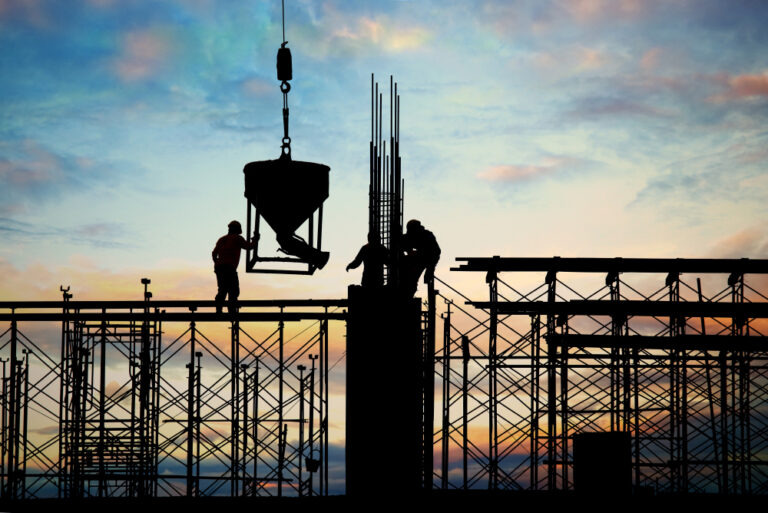
Real-World Scenarios: What Faster Construction Looks Like in Practice
The following scenarios are illustrative examples based on common industry experiences. They are intended to demonstrate how PEB construction timelines compare to conventional builds in real business situations.
Scenario 1: Warehouse Completed in Half the Time
A logistics company required a 15,000 sq ft distribution warehouse in South India to serve a new e-commerce fulfilment contract. Using a pre-engineered steel building system, the structure was designed, fabricated, and erected in approximately 14 weeks compared to an estimated 10–12 months for an equivalent RCC structure. The company was able to commence operations and honour its client contract on schedule, generating revenue months before a conventional build would have permitted.
Scenario 2: Manufacturing Unit Starts Production Earlier
A mid-sized auto components manufacturer needed to expand production capacity quickly to service a new OEM contract. By choosing a PEB solution for their new factory building, they were able to begin equipment installation within four months of project commencement allowing production to begin nearly six months ahead of the conventional construction estimate. The accelerated timeline enabled the company to fulfil its OEM commitments from day one.
Scenario 3: Logistics Hub Avoids Costly Delays
A third-party logistics operator developing a regional hub used pre-engineered buildings for the primary warehouse and ancillary structures. Parallel fabrication and site preparation activities meant the structural frame was erected in weeks once the foundation was ready. The overall project was completed ahead of schedule, avoiding the penalty clauses in their client service agreements that delays would have triggered.
Additional Benefits Beyond Faster Construction
Speed is the headline advantage of pre engineered steel buildings but it’s far from the only one. Once operational, PEB facilities continue to deliver advantages over their conventional counterparts.
Durability and Structural Strength
High-grade structural steel used in PEB systems is engineered to withstand heavy wind loads, seismic activity, and industrial operational stresses. With appropriate protective coatings, PEB structures offer long service lives with minimal structural degradation.
Lower Maintenance Costs
Steel structure buildings have fewer maintenance-intensive components than conventional brick-and-mortar or RCC structures. Galvanised and colour-coated cladding panels resist corrosion and weathering, keeping maintenance costs predictable and low over the building’s life.
Future Expansion Flexibility
PEB buildings are inherently modular. Extensions can be added longitudinally (lengthening the building) or as bay additions, without the structural disruption that conventional construction requires. For growing businesses, this adaptability has significant long-term value.
Sustainability and Resource Efficiency
Factory fabrication produces less material waste than on-site construction. Steel is also a highly recyclable material making PEB construction more environmentally responsible than conventional alternatives. Many PEB buildings also readily accommodate solar panels, rainwater harvesting, and energy-efficient roofing systems.
Consistent Quality Control
Because structural components are manufactured under controlled factory conditions, dimensional accuracy and weld quality are far more consistent than on-site fabrication. This translates to better-fitting assemblies, fewer errors, and a more predictable finished product.
Wide Span Capabilities
PEB systems can achieve clear spans of 30 metres or more without internal columns creating large, unobstructed floor areas ideal for manufacturing, warehousing, and logistics operations where layout flexibility matters.
Conclusion: Move Faster, Start Earning Sooner
The business case for pre engineered buildings extends well beyond the structure itself. When a faster construction timeline means earlier revenue, lower financing costs, and a competitive edge in your market, the choice of building system becomes a strategic business decision not just a construction preference.
PEB construction consistently delivers:
- Significantly shorter project timelines compared to conventional construction
- Lower total project costs when financing, labour, and maintenance are factored in
- Stronger return on investment through earlier operational readiness
- Flexibility to expand as your business grows
- Durable, low-maintenance structures built to Indian and international standards
Whether you’re planning a new warehouse, expanding a manufacturing facility, or setting up a logistics hub, a pre-engineered steel building solution can help you get there faster.
Frequently Asked Questions About Pre-Engineered Buildings
What are Pre-Engineered Buildings (PEB)?
Pre-engineered buildings are steel structure systems where all structural components — primary frames, secondary members, roofing, and cladding — are designed and fabricated in a factory to precise engineering specifications. Components are then transported to the site and bolted together by an erection team. The result is a complete building delivered faster and more cost-effectively than conventional construction methods.
How long does a PEB building take to construct?
Construction timelines for PEB buildings vary depending on project size, design complexity, site conditions, approvals, and logistics. As a general guideline, a medium-sized industrial facility that might take 12–18 months using conventional RCC construction can often be completed in 4–8 months using PEB construction. Smaller structures can be ready even faster.
Are PEB buildings suitable for factories and manufacturing units?
Yes. Pre-engineered steel buildings are widely used for factory building construction across industries including auto components, electronics, textiles, food processing, pharmaceuticals, and consumer goods. They offer the wide-span, column-free interiors that manufacturing layouts require, and can be designed to accommodate heavy equipment, overhead cranes, mezzanines, and specialised ventilation systems.
Can PEB buildings be expanded in the future?
One of the most practical advantages of pre-engineered buildings is their expandability. PEB structures are modular by design, meaning additional bays can be added longitudinally or on the sides with relatively minimal disruption to existing operations. This makes them an excellent long-term investment for growing businesses.
Are PEB buildings more economical than RCC construction?
In most cases, yes — when you account for the total cost of ownership. PEB construction typically has lower per-square-foot costs, shorter construction timelines (reducing financing and labour costs), and lower long-term maintenance expenses. However, for very small structures or buildings with highly specific architectural requirements, RCC may sometimes be more appropriate. A qualified PEB company can provide a detailed comparison for your specific project.
How durable are steel structure buildings?
Steel structure buildings engineered and built to relevant Indian and international standards are highly durable. Structural steel itself is resistant to cracking, warping, and settling. With appropriate corrosion-resistant coatings and regular maintenance, a PEB building can comfortably serve its intended function for 30 years or more. Buildings in coastal or high-humidity environments may require additional corrosion protection measures.
Which industries benefit most from PEB construction?
Industries where speed-to-market, large clear-span spaces, or cost efficiency are priorities benefit the most. These include warehousing and distribution, manufacturing and factory operations, logistics and supply chain, food processing and cold storage, agricultural storage, and commercial applications such as showrooms and service centres.
Do PEB buildings meet Indian building codes and standards?
Yes. Reputable PEB manufacturers design structures in compliance with applicable Indian standards including IS 800 (Code of Practice for General Construction in Steel) and relevant wind, seismic, and load codes. It is important to work with an experienced, certified PEB company to ensure all design and construction is code-compliant and properly permitted.