


How to Maintain a Steel Building

Introduction

A well-maintained steel building can last 50 years. A neglected one can develop serious problems in five. That gap between a structure that performs reliably for decades and one that starts leaking, corroding, and degrading within a few monsoon seasons comes down almost entirely to maintenance.
Most steel building owners receive little practical guidance after handover. The contractor finishes, hands over the keys, and moves on to the next project. This guide is designed to fill that gap.
Steel buildings are genuinely low-maintenance compared to conventional RCC structures no concrete spalling, no rebar corrosion, no plaster cracking. But low maintenance does not mean zero maintenance. The right inspection routine, carried out at the right time of year, catches 90 percent of problems before they become expensive repairs.
Lee Builders has been building and maintaining steel structures across India since 1995. This guide distils what our team has learned from decades of post-handover support written specifically for Indian conditions, and for Kerala’s climate in particular

Table of Contents

Why Steel Building Maintenance Matters

The good news

• Steel is inherently more durable than RCC in several key respects: no concrete spalling, no hidden rebar corrosion, no plaster cracking or waterproofing failure in the slab above you
• Factory-applied protective coatings are engineered to last 10 to 15 years with basic care
• Most routine maintenance tasks require no specialist equipment, no trades, and no significant expenditure

The cost of neglect

The risk with steel buildings is not sudden catastrophic failure it is gradual, progressive deterioration that is expensive to reverse once it has taken hold:
• Corrosion at unprotected edges or fastener points progresses quickly once it starts, especially in Kerala’s humid climate
• Blocked gutters cause water to back up under cladding leading to interior leaks, wet insulation, and internal surface corrosion
• Loose fasteners and minor cladding damage left unattended worsen with every monsoon season
• A small roof repair that costs a few thousand rupees today becomes a cladding replacement that costs several lakhs if left for three monsoons

The Annual Inspection Checklist

This checklist covers every part of a typical steel building. Work through it systematically ideally with a camera to photograph anything that needs attention. The best times to inspect in Kerala and South India are pre-monsoon (April to May) and post-monsoon (November).

Roof System

  • Check all roof cladding panels for dents, punctures, or panel distortion
  • Inspect ridge caps and flashings for lifted edges, cracked sealant, or open joints
  • Check all roof fasteners look for missing, loose, or corroded screws and washers
  • Clear all debris (leaves, branches, silt) from the roof surface
  • Inspect all gutters and downpipes clear blockages, check for sagging or joint separation
  • Check all roof penetrations (vents, pipes, conduits, lightning conductors) for sealant integrity
  • Inspect valley gutters between roof slopes for debris accumulation and sealant condition

Wall Cladding

  • Inspect all wall panels for dents, scratches, or visible paint chalking
  • Check the bottom of wall panels for signs of water ingress, soil contact, or corrosion at the panel base
  • Inspect all wall fasteners for corrosion, looseness, or missing washers
  • Check flashings at the wall-to-floor junction and around all door and window frames
  • Inspect any translucent roof or wall sheeting for yellowing, crazing, or seal failure
  • Check expansion joints and trim flashings for sealant condition

Structural Steel

  • Visually inspect all primary columns at base plate level — look for rust staining, coating breakdown, or water pooling around bases
  • Check all visible bolted connections — look for corrosion on bolt heads, nuts, and washers
  • Inspect purlins and girts for any visible deflection, distortion, or section loss
  • Check all bracing rods and turnbuckle connections — ensure they are tight and undamaged
  • Inspect any crane beams, runway rails, and end stops for condition and alignment
  • Check mezzanine floor connections, beam-to-column joints, and handrail fixings

Doors, Windows and Openings

  • Check all roller shutters and sliding doors for smooth operation, alignment, and seal integrity
  • Inspect door seals and weather strips — replace if cracked, compressed, or missing
  • Check window glazing and frames for sealant failure, condensation between panes, or water ingress marks
  • Lubricate all door tracks, hinges, rollers, and shutter springs
  • Inspect louvre and ridge vent panels for free operation and screen integrity

Drainage and Site Perimeter

  • Check ground slope around building perimeter — water must drain away from the structure, not pool at column bases
  • Clear any vegetation growing against wall cladding, in gutters, or around column bases
  • Inspect any internal floor drains, sump pits, and drainage channels for blockage
  • Check that external hardstanding does not create a dam against the wall base
  • Inspect any retaining walls or earth bunds adjacent to the building for stability
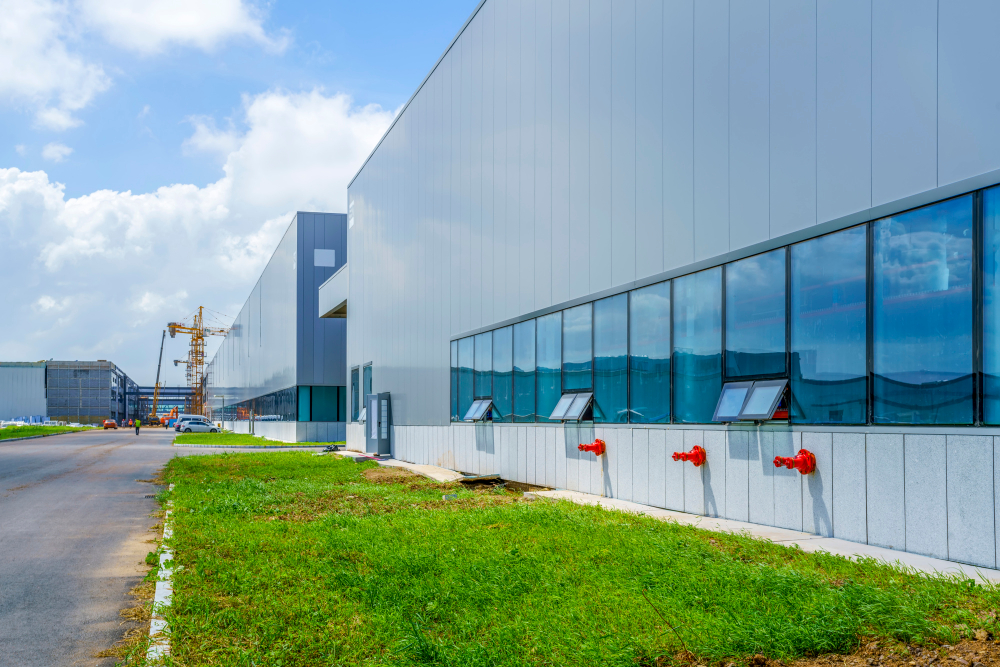
Steel corrosion

Understanding Steel Corrosion in Indian Conditions

Most steel building owners know that rust is the enemy but few know exactly where to look for it, or why it starts where it does. Understanding the mechanism helps you inspect more effectively and catch problems earlier.

Where corrosion is most likely to start

  • Cut edges: wherever steel has been cut during fabrication, the raw metal edge is unprotected unless properly treated; these are typically the first places paint begins to break down
  • Fastener points: around self-drilling screws, where the coating has been punctured during installation; water infiltrates and sits under the washer, initiating corrosion that is invisible from above
  • Column base plates: where the steel column meets the concrete plinth; moisture can accumulate in this joint, particularly if ground drainage around the building is poor
  • Gutter interiors: if gutters are not cleaned regularly, wet debris creates a continuously damp environment against the steel surface — accelerating coating breakdown
  • Cladding panel overlaps: where two panels overlap, capillary action can draw water into the joint if the sealant has failed or was never adequately applied
  • Internal condensation points: in uninsulated warehouses, condensation forms on the internal surface of cold steel during humid weather, creating a wet surface that cannot dry naturally

The Kerala and coastal context

Kerala’s climate is among the most aggressive in India for steel coating systems. High ambient humidity, an average annual rainfall of 2,800 to 3,200mm in the Ernakulam and Perumbavoor area, and salt-laden air in coastal districts all accelerate coating degradation beyond what inland or arid-region standards anticipate.

Buildings within 5km of the coast require more frequent inspection intervals and earlier recoating than inland structures. Chloride-induced corrosion — driven by salt in the atmosphere — is chemically more aggressive than standard atmospheric corrosion and requires specific coating systems that include a barrier primer to resist chloride penetration.

Protective Coatings - When to Recoat and What to Use

The protective coating system is the primary defence against corrosion on a steel building. Understanding its service life and the signs of degradation helps you plan recoating at the right time before failure, not after.

Typical coating service life in Indian conditions

Coating System

Inland / Low Humidity

Coastal / High Humidity

Standard alkyd primer + topcoat

8 – 12 years

5 – 8 years

Epoxy primer + polyurethane topcoat

12 – 18 years

8 – 12 years

Hot-dip galvanising + paint overcoat

20 – 25 years

15 – 20 years

Pre-painted (Galvalume / Zincalume) cladding

15 – 20 years

10 – 15 years

Signs it is time to recoat

  • Visible chalking or colour fading on the topcoat surface — indicates UV degradation of the binder
  • Topcoat cracking or flaking in localised areas — loss of adhesion to the primer beneath
  • Rust staining visible through the coating — the underlying steel has begun to oxidise
  • Coating thickness below specification when tested with a DFT gauge
  • Widespread loss of gloss across the roof surface — the topcoat is approaching end of service life

The recoating process – an overview

  1. Surface preparation: remove loose and flaking paint; mechanically or chemically treat any rust spots to bare metal; clean entire surface of dust, oil, and contamination
  2. Primer coat: apply a compatible primer to all prepared areas — compatibility with the original factory primer is critical; incompatible systems cause inter-coat adhesion failure
  3. Finish coat: apply topcoat in the specified colour and sheen levelm
miantaining a peb structure on monsoon

Monsoon Preparation - What to Do Before the Rains

In Kerala, the annual maintenance calendar is shaped by the monsoon. The southwest monsoon arrives in early June and runs through September. The northeast monsoon follows in October and November. Together, they deliver over 3,000mm of rainfall in many parts of the state.
A blocked gutter or failed roof sealant that is manageable in the dry season becomes a serious interior flood risk within days of the first heavy monsoon rainfall. Pre-monsoon preparation is the single most important maintenance activity of the year for any steel building in Kerala.

Pre-monsoon checklist – complete by end of May

  • Clear all gutters and downpipes of debris, leaves, silt, and bird nests — this is the single most critical pre-monsoon task
  • Inspect and reseal all roof flashings, ridge caps, valley gutters, and roof penetrations
  • Check and replace any missing or damaged roof fasteners and their neoprene washers
  • Inspect wall-to-roof junction flashings and reseal any open joints
  • Clear all vegetation from the building perimeter and from gutters
  • Ensure all drainage channels, sumps, and stormwater outlets around the building are clear and free-flowing
  • Test all roller shutters and sliding doors — monsoon humidity can cause aluminium tracks to swell and steel tracks to corrode if not kept clean and lubricated
  • Check mezzanine floor drains and internal drainage channels if applicable

During the monsoon

  • Walk the building interior after the first heavy rainfall of the season and identify any new leak points immediately
  • Photograph the location of any leaks for your maintenance record — note the roof area and the internal drip point
  • Do not attempt to reseal a wet roof surface — silicone and polyurethane sealants require a dry surface to bond properly; wait for a dry spell and address the repair promptly within the same monsoon season
  • Clear gutters of debris accumulation after any major storm event if safe to do so

Post-monsoon – November

  • Conduct the full annual inspection from the Section 2 checklist
  • Address all leak repairs identified during the monsoon season
  • Clear all post-monsoon debris accumulation from gutters, roof, and building perimeter
  • Check for any cladding distortion or fastener damage caused by storm debris or high winds

Maintenance Notes by Building Type

Different building types have specific maintenance requirements beyond the standard annual checklist. Here are the most important additional considerations by structure type.
WAREHOUSE / INDUSTRIAL
  • Forklift and vehicle impact damage to wall cladding at low level is common install bolt-on steel protection rails at all vehicle-accessible wall areas to prevent cladding damage
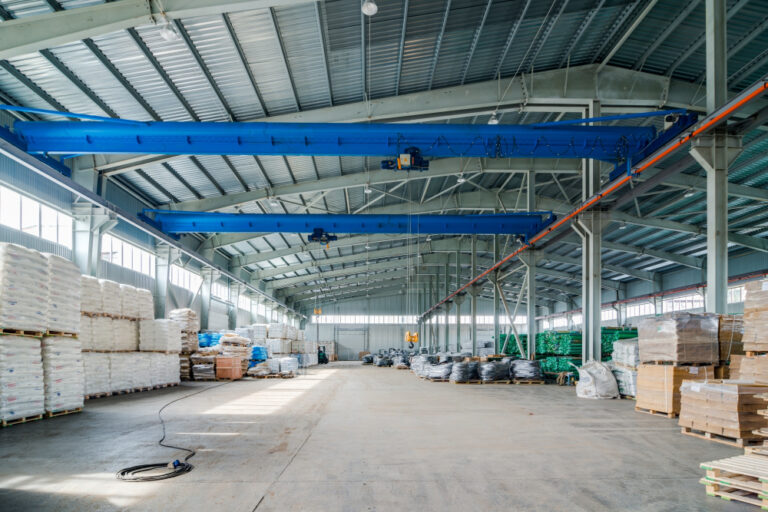
  • Overhead crane systems: check crane rail welds and runway beam connections annually; lubricate end carriage wheels and rail clamps; check for rail misalignment that causes side loading on runway beams
  • Check mezzanine floor connections, beam-to-column joints, and handrail fixings at every annual inspection
  • Internal condensation on the underside of uninsulated roof cladding during Kerala’s humid season creates a dripping ceiling effect consider installing glasswool or foil insulation if condensation is a recurring issue
COLD STORAGE FACILITY
  • Cold room door seals are the highest-maintenance item in a cold storage building inspect every three months; a failed door seal increases refrigeration energy consumption by 20 to 40 percent and causes ice build-up on the door frame
  • Inspect insulated panel joints for sealant integrity at every annual inspection any break in the vapour seal allows warm moist air to infiltrate the insulation core, causing irreversible degradation
  • Condensation drainage channels and drain points in the refrigerated zone must be kept clear at all times to prevent ice blockage and floor heave
  • Check the condition of the vapour barrier at the floor-to-wall junction annually damage here is difficult and expensive to repair once the refrigeration system is in service
MULTISTOREY STEEL BUILDING
  • Fire protection coatings (intumescent paint) on structural steel members require periodic inspection check annually for cracking, delamination, physical impact damage, or areas of missing coverage; any defects must be made good promptly
  • Inspect all floor beam-to-column connections, floor deck welding, and composite slab condition at every annual inspection
  • External cladding and curtain wall systems require sealant and gasket inspection twice yearly failed gaskets allow water infiltration that is difficult to trace once it has migrated internally
  • Check all external facade fixings and bracket connections for corrosion annually
RAILWAY AND INFRASTRUCTURE STRUCTURES
  • Railway structures typically operate under specific maintenance schedules defined by the asset owner refer to the relevant Indian Railways maintenance manual for the structure classification
  • Third-party structural inspections are typically required at defined intervals for structures in railway operational areas retain inspection reports and any remedial work completion certificates
  • Platform canopy structures require particular attention to column bases, which are often in a high-moisture environment from track drainage
  • Overhead equipment (OHE) clearance zones must be maintained when carrying out maintenance works on railway structures ensure all clearance permits are obtained before any elevated work

Conclusion

Steel buildings maintained well are among the most durable commercial and industrial structures available in India today. A structure built to IS 800 standards and maintained according to the programme in this guide will perform reliably for 40 to 50 years – and in many cases well beyond that.

The maintenance requirement is genuinely low. Two inspections per year, a thorough pre-monsoon preparation, periodic fastener replacement and sealant touch-ups, and a full recoating every 10 to 15 years – that is the entire programme for a typical warehouse or industrial building.

The buildings that fail early are almost always the ones where minor problems were noticed and left for the next monsoon. The buildings that last 50 years are the ones where owners treat maintenance as a routine annual commitment, not an emergency response.

How Long Does Steel Building Construction Take?

Introduction

One of the first questions any client asks when planning a steel building project is: how long will this take? It is the right question – because your construction timeline affects your lease negotiations, your equipment procurement schedule, your staffing plans, and ultimately the date your business becomes operational.

The good news is that steel building construction is not only faster than conventional alternatives – it is also significantly more predictable. When you work with an experienced contractor, you get a realistic programme upfront, not a vague estimate that quietly extends itself week by week.

Lee Builders has been delivering steel building projects across India since 1995 – from compact industrial units to large-scale railway infrastructure for clients including Southern Railways. In this guide, we break down the construction timeline phase by phase, by building type, and by the factors that can speed things up or add time to your project.

Table of Contents

Why Steel Buildings Are Faster to Build

Before getting into the specific numbers, it is worth understanding why steel construction is faster than RCC – because that understanding shapes how you plan your entire project.

The Parallel Construction Advantage

With conventional RCC construction, every structural phase is sequential. You pour the columns, wait for them to cure, pour the beams, wait again, pour the slab, wait again. Each curing cycle adds weeks to the programme regardless of how many workers are on site.

With steel PEB construction, the most time-consuming phase – fabrication of the structural components runs simultaneously with site preparation and foundation works. While the foundation is being excavated, reinforced, and poured, the steel columns, rafters, and purlins are being cut, drilled, painted, and loaded for delivery at the factory.

By the time the foundation has cured and the site is ready for erection, the steel is already waiting. There is no gap between phases erection begins immediately.

Additional Speed Factors

  • No curing time on-site: bolted steel connections are complete the moment they are tightened no waiting required
  • Minimal wet trades: no formwork, no plastering, no concrete pours to schedule around the weather
  • Smaller, skilled erection crew: a well-organised steel erection team works faster and with fewer dependencies than a large general labour force
  • Lower weather sensitivity: steel erection can continue through light rain; RCC concrete pours cannot
cost of pre-engineered building

The 6 Phases of Steel Building Construction

Phase 1 Brief and Requirements Weeks 1–2
  • Define span, height, use, location, load requirements, and required accessories
  • Site survey and soil investigation if not already completed
  • Initial concept review and budget-level estimate
  • Confirm project go-ahead and appoint contractor
Phase 2 Engineering and Design Weeks 2–4
  • Structural analysis and member optimisation using specialist design software
  • Preparation of general arrangement drawings, shop drawings, and Bill of Quantities
  • Client review and approval of drawings before fabrication begins
  • Permit and planning applications submitted in parallel

This phase can overlap with foundation design to save time on the overall programme.

Phase 3 Foundation Works Weeks 3–7 · runs parallel to fabrication
  • Excavation for column bases and ground beams
  • Steel reinforcement placed and column anchor bolts set to precise positions
  • Concrete poured for pad footings and ground beams
  • Curing period: 21 to 28 days for adequate structural strength
  • Floor slab preparation and pour follows if included in scope

Poor soil conditions or high water table can extend this phase significantly.

Phase 4 Steel Fabrication Weeks 2–8 · runs parallel to foundation works
  • Starts immediately after drawing approval — simultaneous with foundation works
  • Steel sections cut to length, holes drilled, and connections fabricated to shop drawing dimensions
  • Welding of built-up sections carried out in controlled factory conditions
  • All components cleaned, primed, and finish-coated with specified protective system
  • Components numbered and labelled for logical on-site assembly sequence
  • Quality checks carried out at each stage of fabrication

Standard spans up to 30 m: typically 4–6 weeks. Larger or complex structures: allow 6–10 weeks.

Phase 5 On-Site Erection Weeks 7–12
  • Steel components delivered to site and off-loaded in erection sequence
  • Columns set on anchor bolts, plumbed, and temporarily braced
  • Primary rafters lifted and bolted to column tops using mobile crane
  • Bracing, eave struts, and secondary framing installed to stabilise primary structure
  • Purlins and girts fixed to complete the secondary structural framework

5,000 sq. ft. single-span warehouse: approximately 2–3 weeks. 30,000 sq. ft. multi-bay warehouse: approximately 4–6 weeks.

Phase 6 Cladding, Finishing, and Handover Weeks 10–16
  • Roof cladding panels and insulation fixed to purlins
  • Wall cladding panels fixed to girts, with openings formed for doors and windows
  • Factory-made doors, windows, ridge vents, gutters, and downpipes installed
  • Mezzanine floors, crane rail systems, or internal partitions fitted if in scope
  • Electrical and mechanical rough-in coordinated with client’s services contractor
  • Snagging inspection, defect resolution, and final handover documentation issued

Timeline by Building Type

The total project duration varies significantly depending on the type and scale of the structure. Use the reference table below as a planning guide — these are project-to-handover timelines assuming prompt client approvals and standard site conditions.
Building Type Typical Size Total Timeline
Small industrial unit / workshop Up to 500 sq. m. 8 – 12 weeks
Single-span PEB warehouse 1,000 – 3,000 sq. m. 10 – 14 weeks
Multi-bay logistics warehouse 3,000 – 10,000 sq. m. 14 – 20 weeks
Cold storage facility 500 – 3,000 sq. m. 12 – 18 weeks
Multistorey steel building Varies by floors 20 – 36 weeks
Large industrial / railway shed 10,000+ sq. m. 24 – 40 weeks
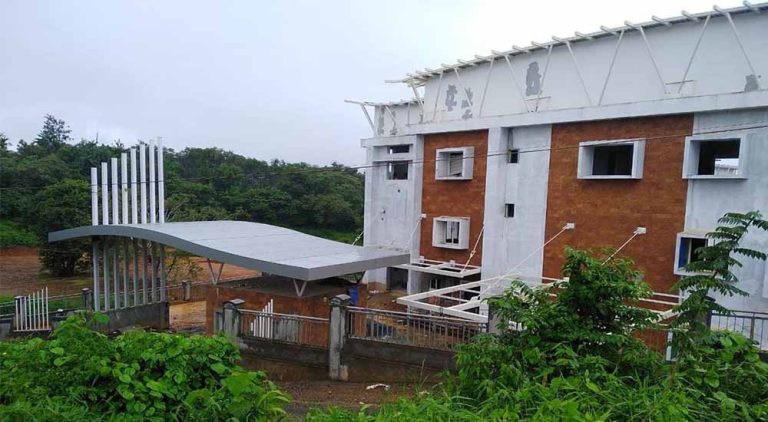
Construction building problems

What Affects the Construction Timeline?

Understanding the variables that influence your project timeline helps you plan realistically — and helps you ask the right questions of your contractor before you sign a contract.

Factors That Speed Things Up

Factors That Add Time

Standard span and height dimensions — reduces engineering complexity and fabrication time

Non-standard or complex structural geometry — additional engineering and fabrication effort

Good site access for cranes and heavy delivery vehicles

Poor soil conditions — weak, waterlogged, or variable soil requires deeper foundations or piling

Prompt client approval of drawings at each stage

Delayed client approvals — fabrication cannot begin until drawings are formally approved

Clean, level site with good bearing capacity

Multiple design changes after drawings are approved or fabrication has started

All specifications and accessories confirmed before design begins

Permit or planning approval delays — outside the contractor’s direct control

Experienced erection crew with appropriate crane equipment on site

Monsoon disruption — heavy rain affects erection scheduling and cladding installation

The Kerala Monsoon Factor

Kerala receives some of India’s heaviest annual rainfall, with the southwest monsoon running from June through September and the northeast monsoon bringing additional rainfall from October through November. Both periods can disrupt on-site construction activities — particularly erection and cladding installation, which are most affected by high winds and continuous heavy rain.

Experienced contractors plan around this. Foundation works are typically scheduled before the monsoon season begins. Structural erection and cladding are targeted for the post-monsoon window where possible, or planned in segments with weather holds built into the programme. Lee Builders factors Kerala’s seasonal weather patterns into every project programme from the outset.

Steel vs. Concrete - Timeline Comparison

For clients weighing up construction methods, the timeline difference between steel and concrete is often the deciding factor. Here is the comparison in plain terms:

Phase

Steel Building

RCC Building

Design and engineering

2 – 4 weeks

3 – 6 weeks

Foundation works

2 – 4 weeks

3 – 6 weeks

Structural works

3 – 6 weeks

12 – 24 weeks

Cladding and finishing

2 – 4 weeks

4 – 8 weeks

Typical total

10 – 16 weeks

22 – 44 weeks

The structural works phase is where the gap opens up decisively. A steel frame goes up in weeks; an RCC structure works through sequential curing cycles that cannot be accelerated regardless of resources applied. The difference between 10 weeks and 44 weeks represents three to six months of operating revenue, lease cost, and delayed business activity.

For a full analysis of the differences between steel and concrete warehouse construction — covering cost, durability, design flexibility, and sustainability — see our detailed comparison guide: Steel vs. Concrete Warehouse Construction: Which Is Better for Your Business?

How to Plan Your Project Around the Timeline

The most common timeline problems in construction projects are not caused by contractors working slowly — they are caused by clients and contractors not aligning on the critical path before work begins. Here is how to approach your planning to avoid them.

Work Backwards from Your Deadline

  1. Confirm your operational deadline: the date you need the building functional and ready for use
  2. Subtract handover and finishing time: typically 2 to 4 weeks
  3. Subtract erection time: based on your building type from the table in Section 3
  4. That gives you the latest date erection can start — which is also when the foundation must be complete
  5. Subtract fabrication and foundation lead times: 4 to 8 weeks depending on complexity
  6. Subtract design and approval time: 2 to 4 weeks
  7. Add a contingency buffer: 2 to 4 weeks for unexpected delays
  8. That is the date you need to initiate the project with your contractor


Submit Permit Applications Early

Planning and building permit applications run in parallel with design and fabrication — but processing times vary by local authority and are entirely outside your contractor’s control. In some Kerala panchayats and municipal areas, processing can take 4 to 8 weeks or longer. Submit applications as early as possible and never assume approval will arrive on a specific date.

Lock Down Specifications Before Fabrication Begins

Every design change after shop drawings are approved costs time and money. Before approving drawings, confirm: building dimensions, eave height, roof pitch, door and window positions and sizes, cladding specification, insulation requirements, crane system loads if any, and any special structural features. Changes after fabrication has started can add 2 to 6 weeks to the programme.

Lee Builders — Delivering on Time, Every Time

A timeline is only as reliable as the contractor behind it. Here is what Lee Builders brings to every steel building project:
What we bring What it means for your timeline
29+ years of steel construction project delivery Realistic programming from experience — not optimistic guesswork
In-house fabrication capability No third-party fabricator lead time uncertainty or communication gaps
Dedicated project management from brief to handover One point of contact tracking every milestone and flagging issues early
Proven track record with time-sensitive projects Including railway infrastructure for Southern Railways with fixed commissioning dates
Kerala-based with strong regional supply chain Established relationships with crane operators, suppliers, and local subcontractors
Written programme issued before work begins Milestone dates, critical path, and change management process agreed upfront
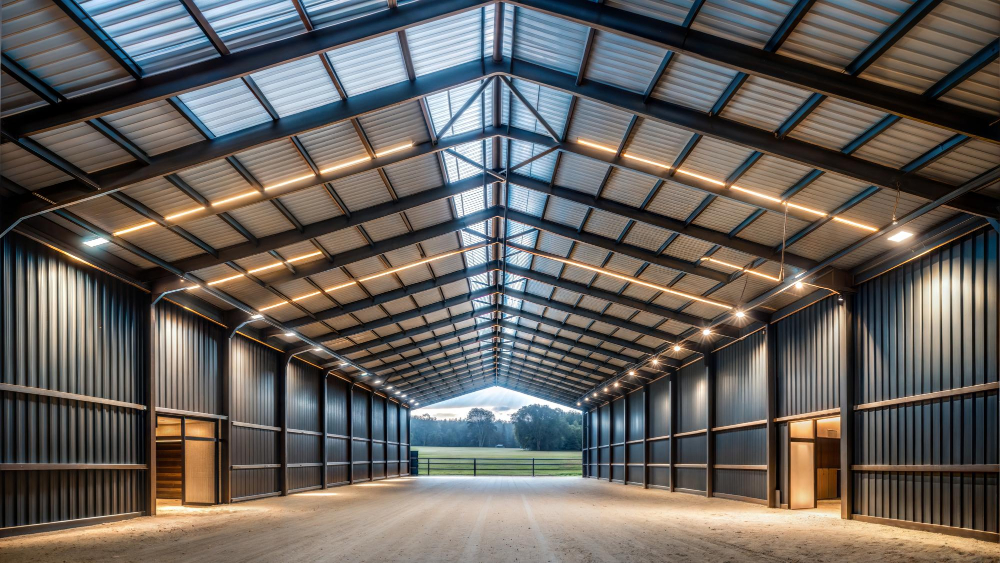
a structure of pre-engineered building

Conclusion

Steel building construction in India typically takes 10 to 16 weeks for a standard warehouse — less than half the time of an equivalent RCC structure. The timeline is predictable and manageable when properly planned, with the parallel fabrication and foundation phases providing the critical time advantage that makes steel the right choice for any business with a firm operational deadline.

The keys to hitting your timeline are straightforward: start early, lock down specifications before fabrication begins, submit permit applications in parallel, and work with a contractor who gives you a written programme upfront rather than promises managed on a handshake.

Lee Builders has been delivering steel construction projects on time across India since 1995. Our team has the in-house capability, the regional experience, and the project management discipline to get your building to handover — on schedule.

Steel vs Concrete Warehouse Construction

Introduction

You have a warehouse to build. You have a site, a brief, and a budget. And you have a decision in front of you that will affect your construction cost, your timeline, your operational efficiency, and your maintenance bills for the next 30 to 40 years: steel or concrete?

Both materials have been used to build warehouses successfully across India. Both can deliver a structurally sound, functional building. But for most industrial and logistics applications today, one option pulls significantly ahead in cost, speed, flexibility, and long-term value.

This guide from the team at Lee Builders steel construction specialists based in Perumbavoor, Kerala, with over 29 years of experience gives you an honest, objective comparison of both approaches. By the end, you will have a clear framework for making the right decision for your specific project.

What this guide covers

Understanding the Two Construction Methods

Before comparing them, it helps to understand exactly what each approach involves because the differences start at the very first stage of construction.

Steel Warehouse Construction (PEB / Structural Steel)

  • Primary structure: hot-rolled steel frames (columns and rafters) designed and fabricated off-site
  • Assembly method: bolted connections on-site minimal wet work, no formwork required
  • Building envelope: colour-coated or insulated metal cladding panels for roof and walls
  • Foundation: typically isolated pad footings or a combined footing lighter and shallower than RCC equivalents
  • Timeline advantage: fabrication runs in parallel with site preparation

Concrete Warehouse Construction (RCC)

  • Primary structure: reinforced cement concrete columns, beams, and slabs cast in-situ or using precast panels
  • Assembly method: formwork, pouring, curing sequential process that cannot run in parallel
  • Building envelope: block or brick masonry walls with plaster finish; concrete or metal roof
  • Foundation: heavier structure requires deeper pad footings, raft foundations, or pile foundations depending on soil conditions
  • Timeline: each structural phase must cure before the next begins

It is also worth noting that hybrid structures exist for example, a steel roof over concrete columns, or a steel superstructure on a concrete podium. These are used in specific situations but are outside the scope of this comparison, which focuses on the two dominant approaches for warehouse construction.

cost of pre-engineered building

Cost Comparison

Cost is the number-one question for any warehouse project. The honest answer is that steel and concrete need to be compared across three distinct cost layers not just the headline construction cost.

Layer 1: Construction Cost per Square Foot

Specification

Steel Warehouse

Concrete Warehouse

Basic industrial (standard span)

Rs. 1,500 – Rs. 2,000 / sq. ft.

Rs. 1,800 – Rs. 2,400 / sq. ft.

Mid-range commercial / logistics

Rs. 2,000 – Rs. 2,800 / sq. ft.

Rs. 2,400 – Rs. 3,200 / sq. ft.

High-spec / insulated

Rs. 2,800 – Rs. 3,500 / sq. ft.

Rs. 3,000 – Rs. 4,000+ / sq. ft.

At the construction stage, steel is typically 15 to 25 percent cheaper than an equivalent RCC structure. The reasons are straightforward: less on-site labour, minimal formwork, and factory-optimised steel sections that use only the material required by the engineering model.

Layer 2: Foundation Cost

Steel structures are significantly lighter than their concrete equivalents. A typical PEB warehouse exerts far lower column loads on the ground, which translates directly into smaller, shallower foundations. In good soil conditions this saves money; in poor or waterlogged soil common in parts of Kerala, it can make a substantial difference to the overall project budget.

RCC structures, by contrast, are heavy. They demand larger pad footings, raft foundations, or in weak soil conditions, a piled foundation system. These costs add up quickly, particularly for large-footprint warehouses.
Layer 3: Lifecycle Cost (Maintenance and Repair)

This is where the long-term picture comes into focus. Over a 30-year ownership period:

  • Steel cladding: periodic recoating every 10 to 15 years; structural steel itself is virtually maintenance-free if properly detailed and coated at installation
  • RCC structures: concrete carbonation, rebar corrosion, and spalling are common in India’s humid climate particularly in coastal Kerala; plaster cracks, seepage, and waterproofing failures require ongoing attention and expenditure

When all three cost layers are added together across the full ownership period, steel consistently delivers a lower total cost of ownership for warehouse applications in India.

steel vs concrete warehouse - construction timeline

Construction Timeline

For a business waiting to begin operations, every week of construction delay has a real cost, lease payments on a site that isn’t generating revenue, delayed product launches, or missed seasonal demand windows. The timeline comparison between steel and concrete warehouses is one of the starkest differences between the two approaches.

Phase

Steel Warehouse

Concrete Warehouse

Design and engineering

2 – 3 weeks

3 – 6 weeks

Foundation works

2 – 4 weeks

3 – 6 weeks

Structural erection

3 – 6 weeks

12 – 24 weeks

Cladding and finishing

2 – 3 weeks

4 – 8 weeks

Typical total duration

10 – 16 weeks

22 – 44 weeks

The decisive factor is that steel fabrication runs in parallel with site preparation and foundation work. While the foundation is being cast and cured, the steel components are being cut, drilled, and painted in the factory. The moment the foundation is ready, erection can begin immediately.

With RCC construction, each phase is sequential. The columns must be poured and cured before the beams can be cast. The beams must be complete before the slab can be poured. Each stage adds weeks of elapsed time regardless of how many workers are on-site.

steel vs concrete warehouse - durability

Structural Performance and Durability

The most common concern clients raise when considering steel warehouses is a straightforward one: is steel actually as strong as concrete? The answer backed by decades of engineering data and thousands of completed structures across India is yes, and in several key respects, stronger.

Strength and Load-Bearing Capacity

Modern structural steel has a far higher strength-to-weight ratio than reinforced concrete. A steel frame can carry equivalent loads using a fraction of the material mass. PEB frames are engineered to IS 800 (Code of Practice for General Construction in Steel) and IS 875 (Code of Practice for Design Loads) the same regulatory framework that governs RCC design in India.

Steel warehouses routinely handle heavy uniformly distributed floor loads, overhead crane systems, mezzanine floors, and roof-mounted equipment all without any structural compromise.

Wind and Seismic Performance

Steel has a structural property that RCC lacks: ductility. In an extreme wind event or seismic load, a steel frame deforms before it fails absorbing energy and giving time for occupants to evacuate. RCC, by contrast, is brittle under extreme loads unless very carefully designed and detailed with additional reinforcement.

Kerala falls within Wind Zone III under IS 875. Lee Builders designs every structure to be fully compliant with the applicable wind zone and seismic zone requirements for the project location.

Durability in Indian Conditions

Both steel and concrete warehouses can achieve service lives of 40 to 50 years or more when properly designed and maintained. The vulnerabilities are different:

  • Steel’s primary vulnerability: corrosion effectively managed through hot-dip galvanising of connections, factory-applied protective coatings, and good architectural detailing that prevents water ponding or trapping
  • RCC’s primary vulnerabilities: concrete carbonation and chloride ingress leading to rebar corrosion, spalling, and structural degradation particularly aggressive in Kerala’s coastal, high-humidity environment
steel vs concrete warehouse India

Design Flexibility and Scalability

Clear Span – Unobstructed Floor Space

This is perhaps the single most important structural difference for warehouse operators. A steel PEB frame can achieve clear spans of 60, 70, 80, or even 90 metres and beyond with no internal columns whatsoever. The entire floor area is available for racking, forklift movement, production lines, or bulk storage.

An RCC structure, by contrast, requires columns at intervals of 6 to 9 metres depending on the slab design. In a 60-metre wide warehouse, that means a grid of internal columns that disrupts racking layouts, limits vehicle turning circles, and reduces usable storage volume. For logistics and warehousing operations, this is a significant operational disadvantage.

Building Height

Modern logistics warehouses require clear internal heights of 10 to 18 metres to accommodate high-bay racking systems. Achieving these heights in RCC is expensive formwork costs, concrete volumes, and the engineering complexity of tall slender columns all add cost. Steel achieves tall eave heights naturally and economically, with no additional structural complexity.

Future Expansion

This is where the long-term business case for steel becomes undeniable. A PEB warehouse can be extended along its length by adding bays simply bolting new frames onto the existing end frame. The building can be widened, raised in height, or fitted with additional mezzanine levels. Crane systems can be added to existing frames if specified at the design stage.

Expanding an RCC warehouse typically requires demolition of structural walls or columns, redesign of the foundation system, and significant disruption to ongoing operations. In most cases it is more economical to build a new structure than to expand an existing RCC one.

Sustainability and Environmental Impact

Sustainability is an increasingly important consideration for businesses with ESG reporting requirements, green building certifications, or simply a commitment to responsible construction practices.

Steel

  • 100% recyclable at end of life, steel retains full material value when the building is eventually demolished or reconfigured
  • Factory fabrication generates minimal on-site waste,  components are cut to precise dimensions in the factory
  • Lighter structure requires less concrete and excavation for foundations lower embodied carbon in the substructure
  • Insulation systems (glasswool, rockwool, polyurethane sandwich panels) deliver high thermal performance, reducing operational energy consumption
  • Can contribute to GRIHA and LEED green building credits

Concrete

  • Cement production is among the highest sources of embodied carbon in the construction industry globally
  • Demolition waste is largely non-recyclable and ends up in landfill
  • Heavier structure demands more material in foundations higher total embodied carbon


For businesses that need to report on their construction footprint or are targeting green building certification, steel is the significantly more sustainable option.

a picture of a building being constrcuted by concrete

When Concrete Is Still the Right Choice

Lee Builders is a steel construction specialist but we also believe in giving clients an honest assessment. There are specific situations where conventional RCC construction remains the more appropriate choice:

  • Multi-storey residential construction: RCC remains the standard for apartment buildings, housing, and mixed-use residential structures where the floor plate, partition layout, and acoustic requirements suit cast-in-situ or precast concrete
  • Structures requiring masonry facades: where local planning requirements or architectural briefs specify a stone, brick, or masonry appearance that is difficult to achieve with metal cladding
  • Very small structures: for buildings under 200 square metres, the economics of a full PEB system with its engineering, fabrication, and logistics overhead do not scale down efficiently
  • Extremely remote locations: where steel transport is impractical due to poor road access but local aggregate and labour are readily available
  • Very heavy floor loading throughout: for industrial processes involving extremely heavy machinery, presses, or forging equipment that benefit from thick RCC slabs across the entire floor plate

If your project falls into one of these categories, Lee Builders will tell you, and refer you to the right solution. Our goal is to recommend the best outcome for your project, not simply to sell steel.

The Verdict - Which Should You Choose?

Here is the decision framework in plain terms:

Choose Steel if…

Choose Concrete if…

✅  Your project is a warehouse, factory, logistics hub, or cold storage

✅  The project is residential or mixed-use with significant living spaces

✅  Speed of construction is a priority

✅  Local planning requires a masonry or stone facade appearance

✅  You want maximum unobstructed floor space for racking or operations

✅  The structure requires extremely heavy RCC floor slabs throughout

✅  You may need to expand or reconfigure the building in the future

✅  The site is remote with very limited steel transport access

✅  Long-term cost efficiency and sustainability matter to your business


✅  You are building in a coastal or high-humidity environment like Kerala


For the overwhelming majority of warehouse, industrial, logistics, and commercial building projects in India, steel is the better choice. It is faster, more economical, more flexible, and more sustainable. The technology is mature, the engineering codes are well-established, and the track record speaks for itself.

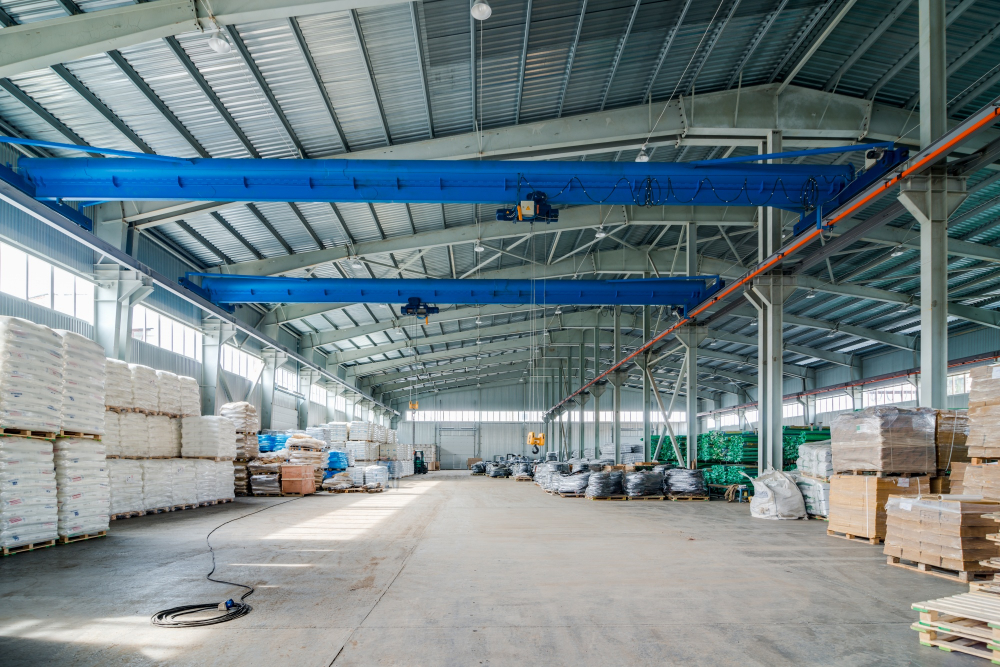
a structure of pre-engineered building

Why Lee Builders for Your Steel Warehouse Project?

When you commission a warehouse from Lee Builders, you get a single point of accountability across every phase from structural design through factory fabrication to on-site erection and handover.

What we bringWhat it means for your project
29+ years of steel construction experienceProven expertise across every scale of warehouse project
End-to-end delivery under one roofDesign, fabrication, erection no coordination gaps between contractors
In-house metal fabrication capabilityFull quality control at every stage of production
Diverse project portfolioWarehouses, cold storage, multistorey buildings, railway infrastructure
Government and institutional track recordCompleted projects for Southern Railways
Kerala-based, pan-India project capabilityLocal knowledge, national reach, competitive logistics
Transparent, itemised pricingNo hidden costs you know exactly what you are paying for
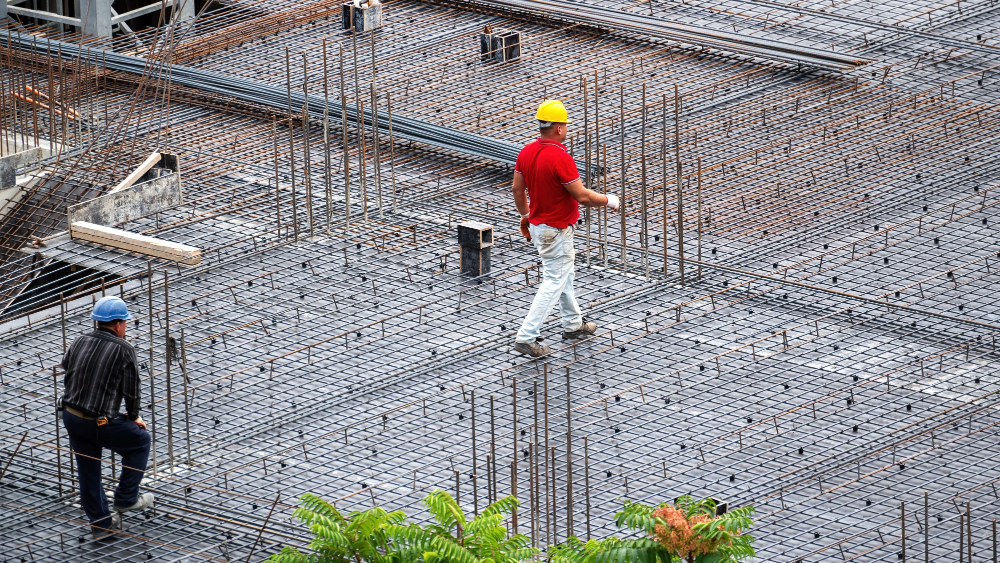
Working hard building man construction worker

Conclusion

For warehouse construction in India, steel wins on cost, speed, flexibility, and sustainability in the vast majority of scenarios. It delivers lower construction costs, a lighter foundation requirement, a faster build programme, column-free floor space, easy future expansion, and significantly lower lifecycle maintenance expenditure.

Concrete has its place primarily in residential construction and specific situations where RCC is clearly the right engineering or planning choice. But for industrial, logistics, and commercial warehouse projects, the case for steel is overwhelming.

Lee Builders has been building steel structures across India since 1995. Our team has the experience, the in-house capability, and the track record to deliver your warehouse project on time, on budget, and built to last.

Omkaranathan Indoor Stadium Kalpetta: Building a Landmark in Wayanad!

Introduction

Infrastructure development projects generally reflect many things. They reflect vision, perseverance, engineering skills, and people. The Omkaranathan Indoor Stadium in Kalpetta, Wayanad, is an infrastructure development project that reflects many things. It reflects vision, perseverance, engineering skills, and people.

Located in the heart of the Wayanad district in the hilly region of Kerala, the stadium has now emerged as one of the most important infrastructures in the region. What makes the Omkaranathan Indoor Stadium project even more interesting is the high degree of engineering that has been put into it.

Right from the beginning of the project, the responsibility of executing the construction work of the Omkaranathan Indoor Stadium was handed over to Lee Builders. It is interesting to note that despite the difficulties that were present during the execution of the project, the company has successfully completed the work within the stipulated time.

With an overall value of ₹38 crore, the Omkaranathan Indoor Stadium has now emerged as an important milestone in the infrastructure development sector in the state of Kerala.

A Vision for Modern Sports Infrastructure in Wayanad

The district of Wayanad has always been recognized for its beauty, mountains, and the high spirits of the people living there. But the development of such large infrastructure projects needs specific planning and construction skills.

The idea behind the construction of the Omkaranathan Indoor Stadium in Kalpetta was to build an indoor stadium that could accommodate indoor games, sports, and other activities. The idea was to develop a large indoor arena that could support various sporting activities and provide a safe environment for the sportspersons.

The construction of such an arena in the region of Wayanad was not only about the vision and idea behind the construction of the arena but also about the engineering skills that could adapt well to the geographic location of the region.

From the initial stages of the construction of the arena to the final stages, Lee Builders was at the center of the construction of the Omkaranathan Indoor Stadium.

Construction in Challenging Terrain

Wayanad’s terrain presents unique challenges for construction projects. Unlike urban construction environments where transportation and accessibility are easier, building large infrastructure in hilly regions requires careful logistical planning.

The Omkaranathan Indoor Stadium project faced similar challenges from the beginning.

The site was located in an area where access roads were narrow, making the transportation of construction materials a complex task. Moving heavy structural steel, construction equipment, and building materials required precise coordination and scheduling.

Each stage of the project required careful planning to ensure that materials reached the site safely and on time without disrupting the surrounding area.

In addition to logistical challenges, the region experienced landslide incidents and heavy rainfall during the construction period. These environmental conditions made construction work even more demanding, requiring additional safety precautions and adjustments in project scheduling.

Despite these challenges, the construction team continued to work steadily, ensuring that progress remained consistent throughout the project timeline.

Overcoming Logistics Challenges

The topography of Wayanad poses special difficulties for construction works. Unlike the usual construction sites found in cities, where transportation is not a problem, the topography of the region poses difficulties for the construction of large infrastructure projects.

The construction of the Omkaranathan Indoor Stadium was not an exception to the difficulties that can be expected in the region.

The construction site was located in an area where the roads leading to the site were narrow. This posed a great challenge for the transportation of materials to the construction site. The transportation of structural steel, equipment, and materials for the construction of the building was a complex activity.

Each step of the construction process was carefully planned to ensure that materials reached the construction site safely and on time, without disturbing the region.

Besides the difficulties presented by the topography of the region, the region experienced landslips and rainfall during the construction period. The environmental conditions posed an additional challenge to the construction process.

Despite the difficulties experienced during the construction of the Omkaranathan Indoor Stadium, the construction team worked steadily to ensure that the construction process was consistent with the expected timeline.

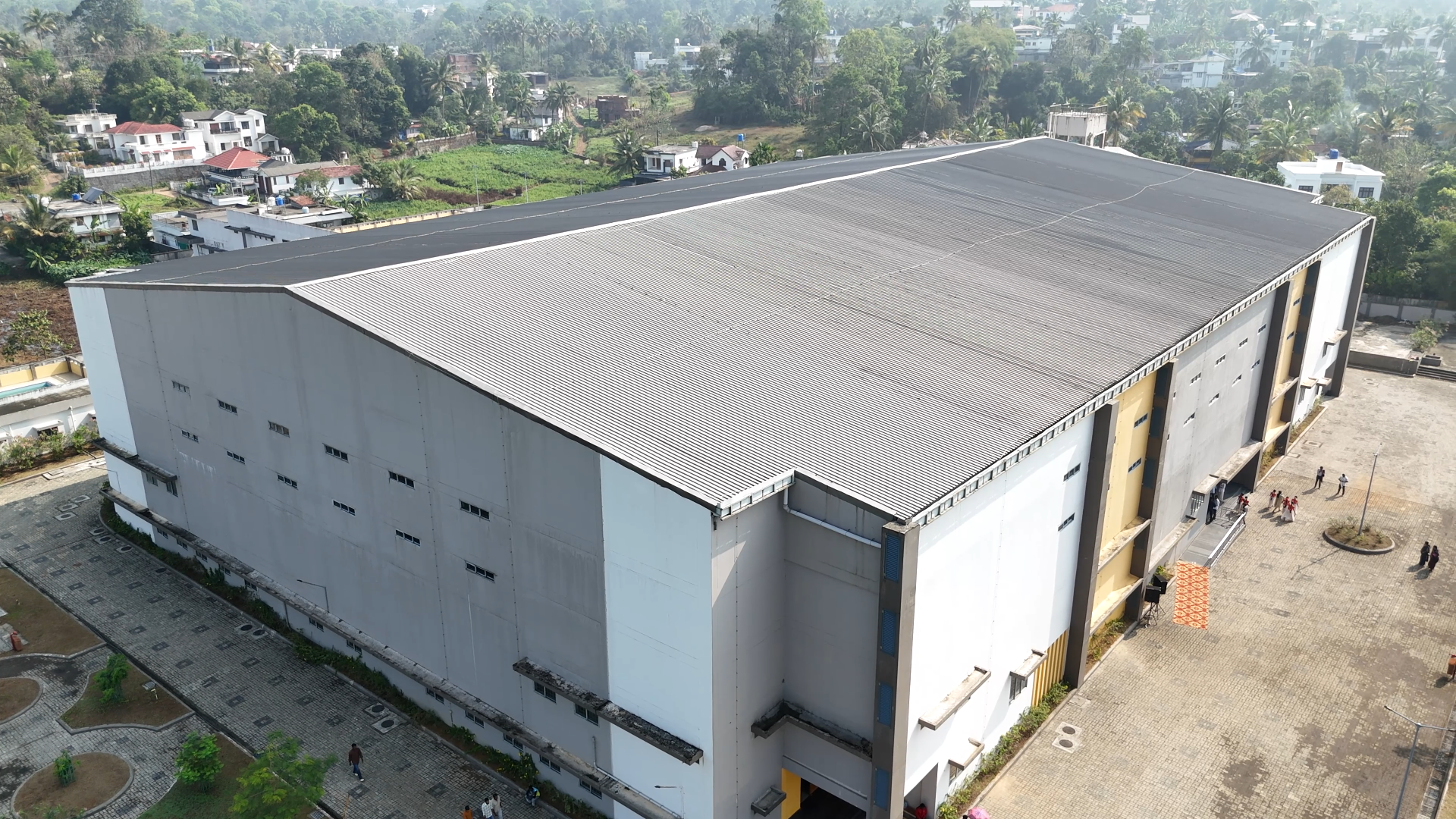
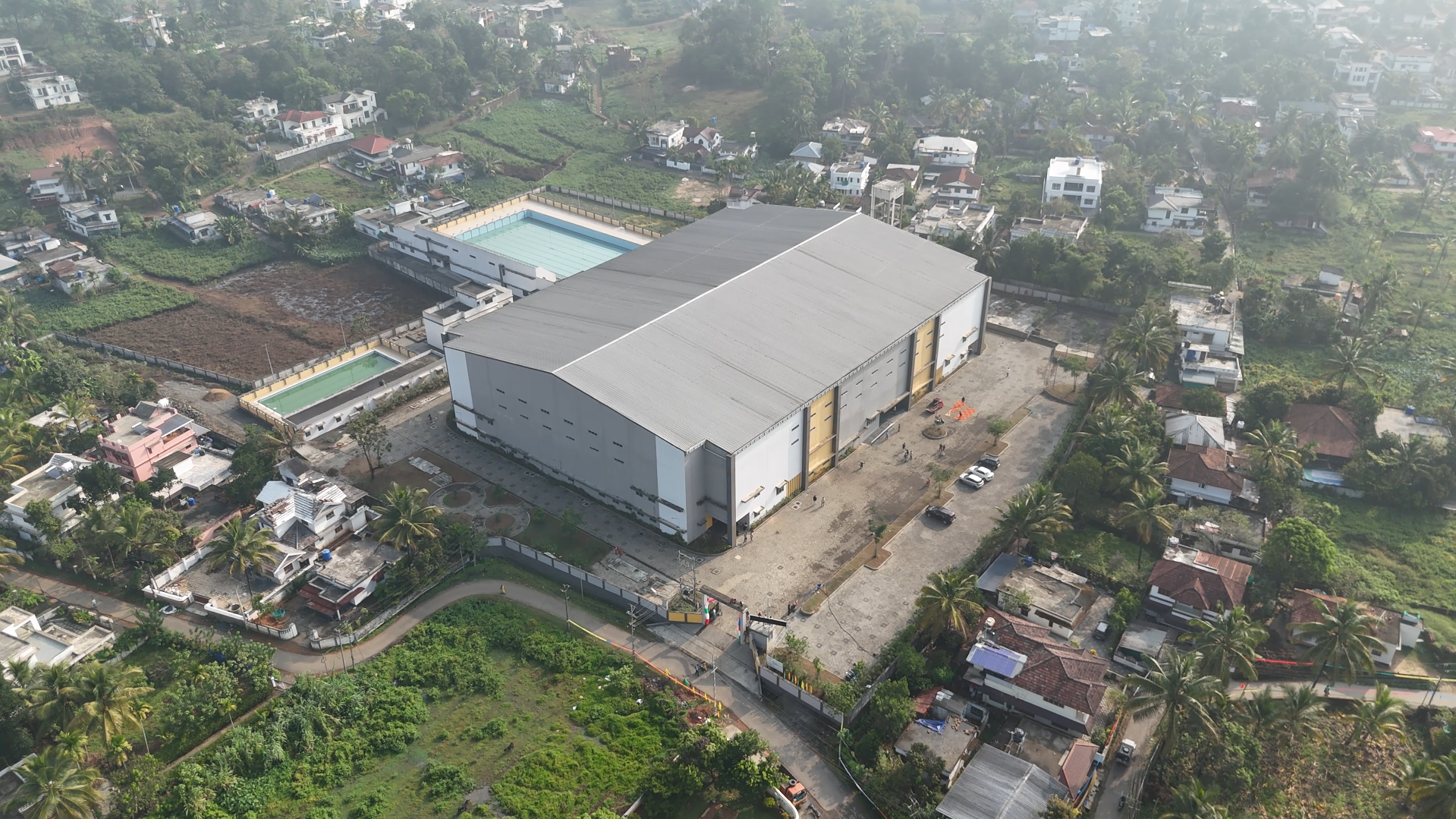
A 90 degree drone shot of Omkaranathan Indoor Stadium Kalppetta

Engineering Excellence: The 70-Metre Clear Span Structure

The most impressive feature of the Omkaranathan Indoor Stadium is the 70-meter clear-span roof.

The clear-span roof means that the roof is supported but that there are no pillars in the middle of the playing area. This is important because the playing area must be unobstructed.

The design of the roof of such a large space must be carefully calculated and constructed. Every part of the roof must be designed and constructed in such a way that the load is distributed evenly and that the roof is stable and long-lasting.

The construction of the Omkaranathan Indoor Stadium’s roof, which spans 70 meters without pillars in the middle, is a remarkable engineering feat.

The construction of the different parts of the roof and the transportation of the parts to the construction site required skill and precision. Every step of the construction of the roof must be carefully done.

The finished Omkaranathan Indoor Stadium is now one of the largest clear-span indoor stadiums in Kerala, showing the skill of Lee Builders.

Delivering a ₹38 Crore Project on Time

Large construction projects often face delays due to technical difficulties, environmental conditions, or logistical challenges. However, one of the most notable aspects of the Omkaranathan Indoor Stadium project is that it was completed on schedule despite the difficulties involved.

With a total project value of ₹38 crore, the stadium represents a major investment in sports infrastructure for the region.

Delivering such a project on time required:

  • Detailed project planning
  • Efficient resource management
  • Strong coordination between engineering and construction teams
  • Continuous monitoring of construction progress

The successful and timely completion of the project reflects the company’s commitment to professionalism and quality execution.

For communities waiting to use such facilities, timely project delivery is just as important as structural excellence.

Inside the Omkaranathan Indoor Stadium Kalppetta
Inside the Omkaranathan Indoor Stadium Kalppetta 2

A Facility Designed for the Community

In addition to its engineering achievements, the Omkaranathan Indoor Stadium is an important civic center.

This building provides a venue for sporting activities and other events. Indoor stadiums are significant in fostering the development of sports culture among the populace. They provide athletes with an opportunity to train and compete in an indoor arena throughout the year.

In this case, the indoor stadium is expected to serve various sporting needs and make an impact in the development of sports in the district and state as well. Wayanad is known for producing great sporting talent. Therefore, this is an advantage to the district.

Lee Builders: Experience and Expertise in Construction

The successful execution of the Omkaranathan Indoor Stadium is an indication of the depth of knowledge that the company has in handling intricate construction works.

Lee Builders has been instrumental in the creation of various infrastructural developments in the state of Kerala over the years.

Projects of such magnitude do not simply require companies that excel in the construction arena. They require companies that have an in-depth knowledge of structural engineering.

The Omkaranathan Indoor Stadium Kalpetta stadium is an example of how all these facets come together in the hands of seasoned professionals.

Building Infrastructure that Lasts

These infrastructure initiatives are long-term investments that will contribute to the betterment of the community in the long term. Therefore, the quality of construction and the structural integrity of the infrastructure are of utmost importance.

Every aspect of the Omkaranathan Indoor Stadium, from its foundation to its roofing structure, has been executed with the principles of durability and safety in mind.

The use of quality materials and construction techniques, coupled with quality assurance procedures, has enabled the stadium to meet the standards set for a public infrastructure of such magnitude.

These infrastructure initiatives not only contribute to the betterment of the local community but also to the state’s infrastructure advancement.

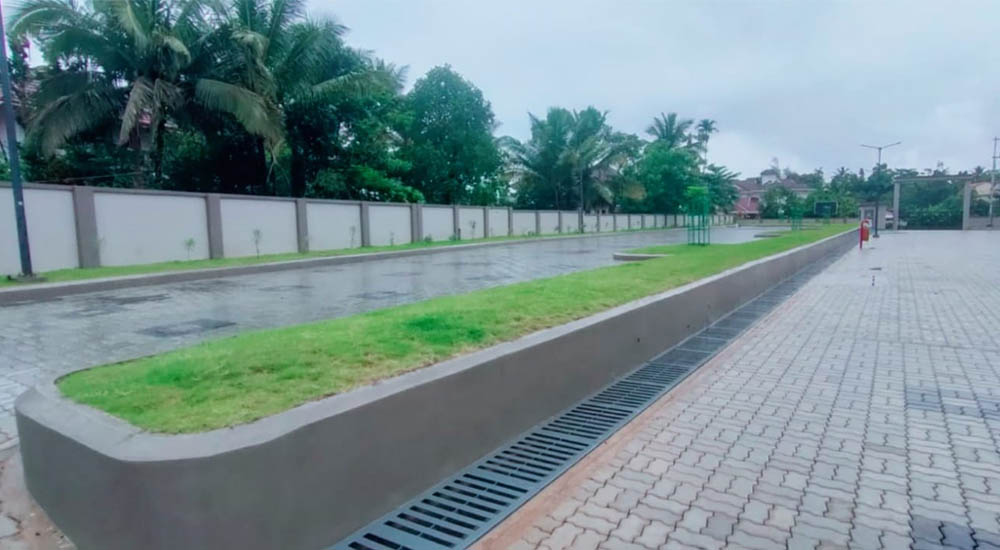
Wide shot of Omkaranathan Indoor Stadium Kalppetta

A Landmark Achievement in Kerala’s Sports Infrastructure

Omkaranathan Indoor Stadium, situated in Kalpetta, can be classified as a modern sports infrastructure and an example of engineering prowess. The 70-meter clear span of the Omkaranathan Indoor Stadium, coupled with its scale and purpose, makes it one of the most distinguished indoor sports infrastructures in the state of Kerala. The Omkaranathan Indoor Stadium serves as an example that difficult conditions and logistical issues can be overcome with meticulous planning, proficiency, and strong teamwork. The construction of the ₹38 crore Omkaranathan Indoor Stadium marks another significant milestone for Lee Builders in its journey of constructing quality infrastructure projects in the state.

Conclusion

The story of the construction of the Omkaranathan Indoor Stadium in Kalpetta is not just about the construction itself; rather, it is the story of the realization of an idea into reality amidst the challenging topography, inclement weather, and complex logistical requirements.

From the inception of the project until its successful completion, Lee Builders has played an integral part in overseeing and accomplishing each step of the construction process.

The end result is the modern indoor stadium that houses a 70-meter clear-span construction, completed within the stipulated time frame and ready to meet the needs of the residents of Wayanad for generations to come.

As the athletes prepare and compete within the confines of the indoor stadium, the construction itself will stand the test of time as an example of what can be accomplished through the excellence of engineering, hard work, and cooperation.

Are Pre-Engineered Buildings (PEBs) Environmentally Friendly in Kerala?

Pre-engineered buildings (PEBs) are modern structures built from prefabricated steel frames. They are increasingly popular in Kerala for warehouses, factories, and even residential and commercial projects. Advocates note that PEBs can reduce construction time and costs, but a key question is whether they are eco-friendly. In this article, we examine factors like material efficiency, energy efficiency, and durability to see how PEBs measure up environmentally. We also discuss how local PEB providers and construction company services in Kochi, Aluva, and Thrissur contribute to sustainable building practices in Kerala.

Material Efficiency

One major environmental advantage of PEBs is material efficiency. Since PEB components are precisely engineered in factories, builders use only the necessary amount of steel, which minimizes off-cuts and scrap. For example, modern PEB frameworks are made of high-quality, lightweight steel that can be cut exactly to design specifications, so the construction process generates very little waste. In fact, steel PEB components are typically fully recyclable – one report notes that steel used in PEBs is “100% reusable” and produces far less waste than conventional concrete construction. Key points include:

  • Precision fabrication: PEB components are custom-made for each project, ensuring only essential material is used.
  • Recyclable steel: Structural steel often contains up to 88% recycled content, and the steel from a building can be completely recycled at end-of-life (Steel frames are among the most recyclable construction materials.)
  • Minimal scrap: Compared to brick-and-mortar projects, PEB construction typically creates much less leftover material and demolition debris.

Together, these factors make pre-engineered projects highly resource-efficient. By cutting down on raw material use and maximizing recycled content, PEBs align well with green building principles.

Energy Efficiency

PEBs can also excel in energy efficiency. The design and insulation of steel buildings often reduce heating, cooling, and lighting demands over the building’s life. Key features include:

  • High-performance insulation: Many PEB systems use insulated roof and wall panels. These panels provide excellent thermal barriers, cutting down air-conditioning and heating needs. In fact, prefab steel buildings frequently boast “energy-efficient insulation” that lowers their carbon footprint
  • Passive design elements: Builders often incorporate skylights, large windows, and ventilation options into PEB designs. These elements maximize natural daylight and airflow, which can dramatically reduce artificial lighting and HVAC usage
  • Tight building envelope: Factory fabrication ensures a precise fit between panels and components, minimizing air leaks. This optimized envelope further improves overall energy performance.

As a result, a well-designed PEB can consume significantly less energy in daily operation compared to a poorly insulated traditional building. In Kerala’s humid climate, the ability to naturally ventilate and rapidly cool large spaces is especially beneficial, helping to lower both electricity use and carbon emissions.

Durability

Durability is another area where PEBs offer environmental benefits. A long-lasting building requires fewer repairs and replacements, which conserves resources over time. Steel PEB structures are inherently strong and resilient:

  • Resistant to pests and decay: Unlike wood, steel does not rot or attract termites. Steel frames are largely immune to mold and insects, eliminating the need for chemical treatments. They are also fire-resistant, which enhances safety in Kerala’s humid, fire-prone conditions
  • Weather resilience: PEBs are engineered to withstand extreme weather. High-grade steel structures can resist heavy rainfall and strong winds common in Kerala’s monsoons. Properly designed PEB frames can endure cyclones and even seismic events, making them well-suited for disaster-prone regions.
  • Low maintenance, long life: Coated steel requires minimal upkeep. A properly constructed PEB can easily last 50 years or more with little repair, far exceeding the lifespan of many traditional buildings.

These durability features mean fewer resources spent on renovations or rebuilds. By avoiding repeated repairs, PEBs reduce the material and energy footprint over the building’s lifetime, further supporting sustainability.

PEBs in Kochi, Aluva, and Thrissur

PEBs have become widely adopted across Kerala, especially in urban and industrial areas. Local availability of expertise makes these projects feasible and eco-friendly:

  • Pre Engineered Building Manufacturer: Kerala hosts several specialized PEB manufacturing firms. For example, Lee Builders is a leading PEB manufacturer in Kochi and Thrissur. These companies design and fabricate the steel components using efficient, sustainable methods, ensuring high-quality, green buildings for local projects.
  • Construction & Contractor Services: Many of the best construction companies in Kochi (and Thrissur) now offer turnkey PEB solutions. Local building contractors in Kochi and building contractors in Thrissur have experience with steel-frame assembly. These firms provide end-to-end construction company services – from structural design and permitting to on-site erection – integrating eco-friendly practices at each step.
  • Search & Availability: In Kerala cities like Kochi, Thrissur, and Aluva, looking up pre engineered building in Kochi, pre engineered building in Thrissur, pre engineered buildings in Aluva, or “new building construction near me” often returns local PEB specialists. This reflects strong demand for sustainable steel construction. Local contractors and construction companies in Kochi leverage these keywords to promote PEB projects, making it easy for buyers to find green building solutions nearby.

Overall, the PEB industry in Kerala is well-positioned to support environmentally friendly construction. The combination of local manufacturing and skilled contractors means that clients can build quickly and sustainably.

Conclusion

In summary, pre-engineered buildings can indeed be an environmentally friendly choice for Kerala. They use materials efficiently (with minimal waste and high recyclability), offer energy-efficient designs (through insulation and passive features), and deliver durable, long-lasting structures that resist harsh climate and pests. These advantages make PEBs a smart fit for Kerala’s focus on green infrastructure. For those in Kochi, Aluva, Thrissur and beyond, partnering with a reputable PEB provider or construction contractor means getting a new building that is both high-performance and eco-conscious. In fact, experts note that well-designed PEB projects are often among the best pre engineered buildings in terms of sustainability. By choosing qualified PEB manufacturers and contractors, developers ensure their new construction aligns with Kerala’s environmental goals.