





Introduction
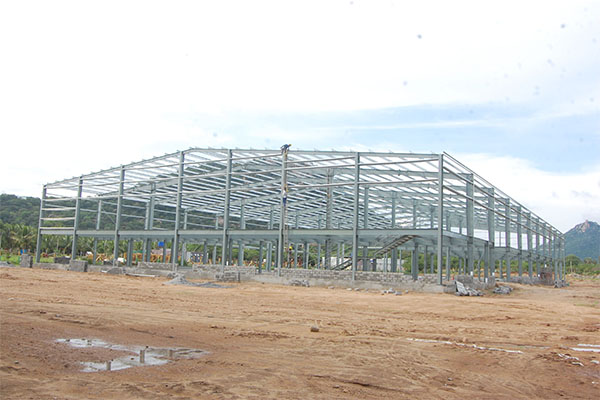
A well-maintained steel building can last 50 years. A neglected one can develop serious problems in five. That gap between a structure that performs reliably for decades and one that starts leaking, corroding, and degrading within a few monsoon seasons comes down almost entirely to maintenance.
Most steel building owners receive little practical guidance after handover. The contractor finishes, hands over the keys, and moves on to the next project. This guide is designed to fill that gap.
Steel buildings are genuinely low-maintenance compared to conventional RCC structures no concrete spalling, no rebar corrosion, no plaster cracking. But low maintenance does not mean zero maintenance. The right inspection routine, carried out at the right time of year, catches 90 percent of problems before they become expensive repairs.
Lee Builders has been building and maintaining steel structures across India since 1995. This guide distils what our team has learned from decades of post-handover support written specifically for Indian conditions, and for Kerala’s climate in particular
Table of Contents
Why Steel Building Maintenance Matters
The good news
• Steel is inherently more durable than RCC in several key respects: no concrete spalling, no hidden rebar corrosion, no plaster cracking or waterproofing failure in the slab above you
• Factory-applied protective coatings are engineered to last 10 to 15 years with basic care
• Most routine maintenance tasks require no specialist equipment, no trades, and no significant expenditure
The cost of neglect
The risk with steel buildings is not sudden catastrophic failure it is gradual, progressive deterioration that is expensive to reverse once it has taken hold:
• Corrosion at unprotected edges or fastener points progresses quickly once it starts, especially in Kerala’s humid climate
• Blocked gutters cause water to back up under cladding leading to interior leaks, wet insulation, and internal surface corrosion
• Loose fasteners and minor cladding damage left unattended worsen with every monsoon season
• A small roof repair that costs a few thousand rupees today becomes a cladding replacement that costs several lakhs if left for three monsoons
The Annual Inspection Checklist
This checklist covers every part of a typical steel building. Work through it systematically ideally with a camera to photograph anything that needs attention. The best times to inspect in Kerala and South India are pre-monsoon (April to May) and post-monsoon (November).
Roof System
|
Wall Cladding
|
Structural Steel
|
Doors, Windows and Openings
|
Drainage and Site Perimeter
|
Understanding Steel Corrosion in Indian Conditions
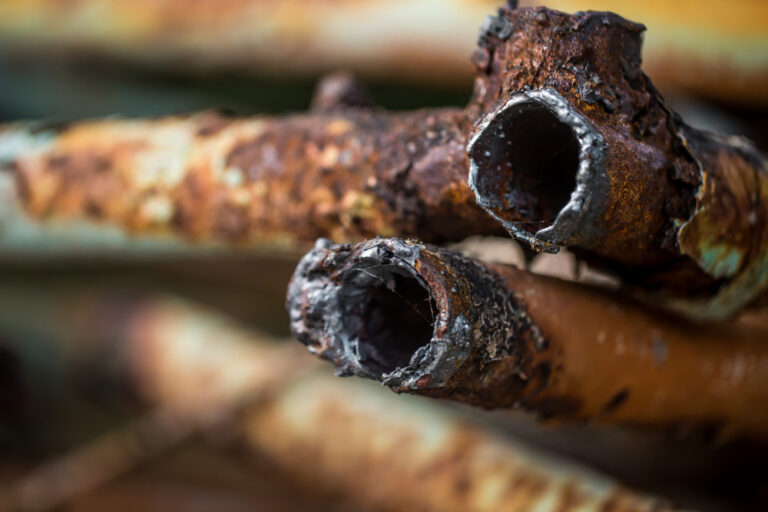
Most steel building owners know that rust is the enemy but few know exactly where to look for it, or why it starts where it does. Understanding the mechanism helps you inspect more effectively and catch problems earlier.
Where corrosion is most likely to start
- Cut edges: wherever steel has been cut during fabrication, the raw metal edge is unprotected unless properly treated; these are typically the first places paint begins to break down
- Fastener points: around self-drilling screws, where the coating has been punctured during installation; water infiltrates and sits under the washer, initiating corrosion that is invisible from above
- Column base plates: where the steel column meets the concrete plinth; moisture can accumulate in this joint, particularly if ground drainage around the building is poor
- Gutter interiors: if gutters are not cleaned regularly, wet debris creates a continuously damp environment against the steel surface — accelerating coating breakdown
- Cladding panel overlaps: where two panels overlap, capillary action can draw water into the joint if the sealant has failed or was never adequately applied
- Internal condensation points: in uninsulated warehouses, condensation forms on the internal surface of cold steel during humid weather, creating a wet surface that cannot dry naturally
The Kerala and coastal context
Kerala’s climate is among the most aggressive in India for steel coating systems. High ambient humidity, an average annual rainfall of 2,800 to 3,200mm in the Ernakulam and Perumbavoor area, and salt-laden air in coastal districts all accelerate coating degradation beyond what inland or arid-region standards anticipate.
Buildings within 5km of the coast require more frequent inspection intervals and earlier recoating than inland structures. Chloride-induced corrosion — driven by salt in the atmosphere — is chemically more aggressive than standard atmospheric corrosion and requires specific coating systems that include a barrier primer to resist chloride penetration.
Protective Coatings - When to Recoat and What to Use
The protective coating system is the primary defence against corrosion on a steel building. Understanding its service life and the signs of degradation helps you plan recoating at the right time before failure, not after.
Typical coating service life in Indian conditions
Coating System | Inland / Low Humidity | Coastal / High Humidity |
Standard alkyd primer + topcoat | 8 – 12 years | 5 – 8 years |
Epoxy primer + polyurethane topcoat | 12 – 18 years | 8 – 12 years |
Hot-dip galvanising + paint overcoat | 20 – 25 years | 15 – 20 years |
Pre-painted (Galvalume / Zincalume) cladding | 15 – 20 years | 10 – 15 years |
Signs it is time to recoat
- Visible chalking or colour fading on the topcoat surface — indicates UV degradation of the binder
- Topcoat cracking or flaking in localised areas — loss of adhesion to the primer beneath
- Rust staining visible through the coating — the underlying steel has begun to oxidise
- Coating thickness below specification when tested with a DFT gauge
- Widespread loss of gloss across the roof surface — the topcoat is approaching end of service life
The recoating process – an overview
- Surface preparation: remove loose and flaking paint; mechanically or chemically treat any rust spots to bare metal; clean entire surface of dust, oil, and contamination
- Primer coat: apply a compatible primer to all prepared areas — compatibility with the original factory primer is critical; incompatible systems cause inter-coat adhesion failure
- Finish coat: apply topcoat in the specified colour and sheen levelm
Monsoon Preparation - What to Do Before the Rains
In Kerala, the annual maintenance calendar is shaped by the monsoon. The southwest monsoon arrives in early June and runs through September. The northeast monsoon follows in October and November. Together, they deliver over 3,000mm of rainfall in many parts of the state.
A blocked gutter or failed roof sealant that is manageable in the dry season becomes a serious interior flood risk within days of the first heavy monsoon rainfall. Pre-monsoon preparation is the single most important maintenance activity of the year for any steel building in Kerala.
Pre-monsoon checklist – complete by end of May
- Clear all gutters and downpipes of debris, leaves, silt, and bird nests — this is the single most critical pre-monsoon task
- Inspect and reseal all roof flashings, ridge caps, valley gutters, and roof penetrations
- Check and replace any missing or damaged roof fasteners and their neoprene washers
- Inspect wall-to-roof junction flashings and reseal any open joints
- Clear all vegetation from the building perimeter and from gutters
- Ensure all drainage channels, sumps, and stormwater outlets around the building are clear and free-flowing
- Test all roller shutters and sliding doors — monsoon humidity can cause aluminium tracks to swell and steel tracks to corrode if not kept clean and lubricated
- Check mezzanine floor drains and internal drainage channels if applicable
During the monsoon
- Walk the building interior after the first heavy rainfall of the season and identify any new leak points immediately
- Photograph the location of any leaks for your maintenance record — note the roof area and the internal drip point
- Do not attempt to reseal a wet roof surface — silicone and polyurethane sealants require a dry surface to bond properly; wait for a dry spell and address the repair promptly within the same monsoon season
- Clear gutters of debris accumulation after any major storm event if safe to do so
Post-monsoon – November
- Conduct the full annual inspection from the Section 2 checklist
- Address all leak repairs identified during the monsoon season
- Clear all post-monsoon debris accumulation from gutters, roof, and building perimeter
- Check for any cladding distortion or fastener damage caused by storm debris or high winds
Maintenance Notes by Building Type
WAREHOUSE / INDUSTRIAL
|
COLD STORAGE FACILITY
|
MULTISTOREY STEEL BUILDING
|
RAILWAY AND INFRASTRUCTURE STRUCTURES
|
Conclusion
Steel buildings maintained well are among the most durable commercial and industrial structures available in India today. A structure built to IS 800 standards and maintained according to the programme in this guide will perform reliably for 40 to 50 years – and in many cases well beyond that.
The maintenance requirement is genuinely low. Two inspections per year, a thorough pre-monsoon preparation, periodic fastener replacement and sealant touch-ups, and a full recoating every 10 to 15 years – that is the entire programme for a typical warehouse or industrial building.
The buildings that fail early are almost always the ones where minor problems were noticed and left for the next monsoon. The buildings that last 50 years are the ones where owners treat maintenance as a routine annual commitment, not an emergency response.