





Introduction
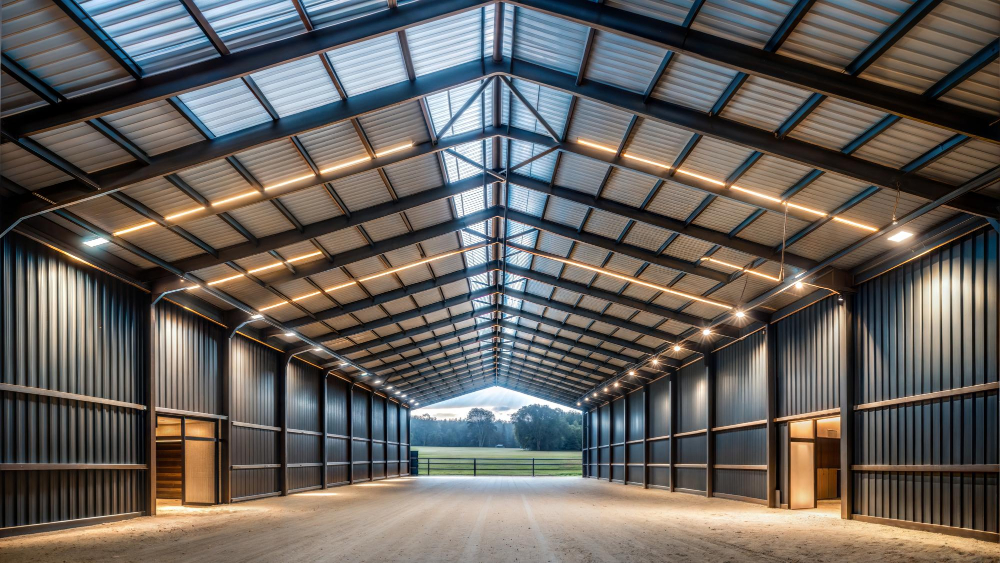
Choosing the right structure for your factory, warehouse, or manufacturing unit is one of the most consequential decisions you will make as a business owner. Get it right, and your facility becomes an engine for growth wide, unobstructed floor space, fast construction, low maintenance, and room to expand. Get it wrong, and you face cost overruns, missed deadlines, or a building that simply cannot keep up with your operations.
Three main structural options dominate industrial construction in South India today: the humble industrial shed, the modern Pre-Engineered Building (PEB), and the time-tested conventional RCC warehouse. Each has genuine strengths and each has situations where it falls short.
This guide breaks down all three structures across every critical parameter cost, speed, span, climate performance, scalability, and more so you can make a confident, informed decision. And because Lee Builders has delivered all three across Kerala, Tamil Nadu, and Karnataka for over 30 years, you will also hear from real-world experience, not just theory.
Table of Contents
Understanding the Three Industrial Construction Options
Industrial Shed
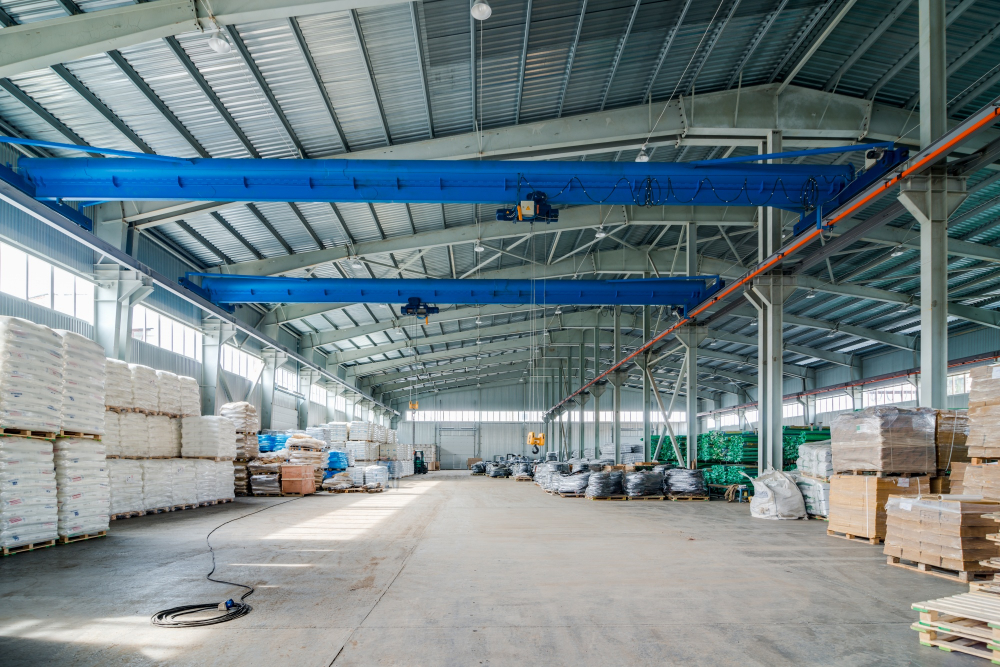
An industrial shed is a lightweight steel or pre-fabricated structure typically built on a portal frame or truss system. It is the most basic form of covered industrial space designed to be erected quickly and economically for smaller operations.
- Typical clear span: 10 – 30 metres
- Typical eave height: up to 8 – 10 metres
- Common uses: small workshops, agri-processing units, material storage, vehicle bays, temporary facilities
Pre-Engineered Building (PEB)
A Pre-Engineered Building is a fully integrated, factory-fabricated structural steel system. Primary framing (tapered columns and rafters), secondary framing (purlins, girts, eave struts), and cladding systems are designed as one engineered package manufactured under controlled conditions and assembled on-site.
Unlike conventional construction where everything is designed and built at the site, PEB separates design and fabrication from erection dramatically reducing construction time and improving quality consistency. Lee Builders operates its own PEB fabrication facility, giving clients the advantage of in-house manufacturing quality without outsourcing markup.
- Spans of up to 90 metres and beyond column-free
- Eave heights from 5 to 20+ metres
- Common uses: large warehouses, logistics hubs, factories, commercial buildings, convention centres, cold storage shells
Conventional Warehouse (RCC / Composite Structure)
A conventional warehouse is built using Reinforced Cement Concrete the traditional method involving column-beam frames, slab construction, brick or block infill walls, and plastered finishes. This is the construction approach most people are familiar with, and it remains the best choice in specific scenarios.
- Virtually unlimited height and configuration including multi-storey
- Highest inherent fire resistance among the three
- Common uses: cold storage with complex utility integration, multi-floor warehouses, government facilities, flagship facilities requiring maximum permanence
Side-by-Side Comparison: Industrial Shed vs PEB vs Conventional Warehouse
The table below covers the 11 parameters that most directly affect your facility planning decision:
Parameter | Industrial Shed | PEB Structure | Conventional Warehouse |
Construction Speed | 4 – 8 weeks | 6 – 14 weeks | 6 – 18+ months |
Cost/Sq. Ft. (approx.) | ₹600 – ₹1,100 | ₹900 – ₹1,800 | ₹1,500 – ₹2,800+ |
Max Clear Span | Up to 30 m | Up to 90 m+ | Column – limited |
Customisation | Moderate | High | High (but slow) |
Durability | 20 – 30 years | 30 – 50+ years | 50+ years |
Scalability | Moderate | Easy | Difficult |
Automation-Ready | Low-Moderate | High | Moderate |
Maintenance Cost | Low | Low | Moderate – High |
Foundation Load | Light | Moderate | Heavy |
Best For | Small units, sheds | Factories, warehouses | Multi – storey, cold storage |
Industrial Sheds - The Lightweight, Budget-Friendly Option
The industrial shed has been the backbone of small-scale manufacturing and storage across India for decades. Its appeal is straightforward: low cost, fast erection, and minimal civil work requirements. For the right application, nothing beats a shed for speed and simplicity.
When an Industrial Shed Is the Right Choice
- Your covered area requirement is under 3,000 – 5,000 sq. ft.
- The operation involves light storage, agri-processing, vehicle parking, or basic fabrication
- Budget is tight and the facility does not need to accommodate heavy machinery or automated racking
- You need the structure up and operational within 4 – 6 weeks
- The facility is a phase-one solution, with expansion planned later
Key Advantages
- Fastest construction timeline among the three options
- Lowest initial capital outlay – ideal for start-ups or MSME expansion
- Minimal foundation requirements reduce civil cost significantly
- Readily available materials and fabricators across Kerala
Limitations to Consider
- Limited clear span internal columns interrupt usable floor space
- Not suitable for heavy overhead cranes or automated racking systems above 30 m span
- Thermal performance in Kerala’s humid climate requires additional insulation investment
- Lower long-term asset value compared to PEB or RCC
- Difficult to achieve eave heights above 10 m economically
Pre-Engineered Buildings (PEB) - The Smart Choice for Modern Industry
If you are planning a facility above 5,000 sq. ft. and want the best combination of speed, cost-efficiency, design flexibility, and long-term performance, a Pre-Engineered Building is almost certainly your answer. PEB has become the global standard for industrial construction and for good reason.
What Sets PEB Apart
The fundamental difference between PEB and conventional construction is this: with PEB, the entire structural system is engineered as an integrated product, not assembled from independent components designed in isolation. Columns are tapered to match the bending moment diagram heavier where loads are highest, lighter where they are not. This optimises steel consumption and reduces cost without sacrificing structural integrity.
Lee Builders operates its own PEB fabrication shop. This means your project benefits from direct quality control at every stage of fabrication from raw steel receipt and shot-blasting to primer application, welding, and dispatch. You are not dependent on a third-party fabricator and their schedule.
Key Advantages of PEB Construction
- Speed: Fabrication and civil foundation work proceed in parallel. A large PEB warehouse that would take 12-18 months in RCC is operational in 6-14 weeks after design freeze.
- Column-free spans up to 90 m+: Unobstructed floor space is critical for modern logistics, manufacturing, and automated operations.
- Cost efficiency: Typically 20-30% more economical than equivalent RCC construction, with significantly lower foundation loads reducing civil cost further.
- Design flexibility: Mezzanine floors, overhead crane beams (EOT/HOT), skylights, ridge ventilators, canopies, lean-tos, and partitions can all be integrated into the structural design.
- Energy efficiency: Insulated sandwich panels combined with ridge ventilators and translucent sheets reduce artificial lighting and cooling loads critical for Kerala’s climate.
- Expandability: Bays can be added to the length of a PEB structure in the future with minimal disruption to ongoing operations conventional structures cannot match this.
PEB and JSW Roofing – A Complete System
Lee Builders is also a manufacturer and supplier of JSW Galvalume and colour-coated roofing sheets. This means when you choose Lee Builders for a PEB project, your structural steel and your roofing come from the same controlled supply chain no coordination delays, no specification mismatches, and no additional supply markup.
JSW Galvalume sheets are particularly suited to Kerala’s coastal environment, offering superior resistance to salt-laden air and high-humidity conditions. Properly installed with correct ridge ventilation and gutter design, a JSW-roofed PEB structure performs reliably for 30-50 years with minimal maintenance.
Best Use Cases for PEB in South India
- Large warehouses and e-commerce distribution centres (Bengaluru, Chennai corridors)
- Manufacturing plants, assembly halls, and automotive component units
- Cold storage facilities (PEB steel shell with insulated panel cladding)
- Aircraft maintenance hangars and shipyard fabrication shops
- Convention centres and large commercial buildings
- Factories and processing units in industrial estates across Kerala
What to Watch Out For
PEB is an engineered product, not a commodity. Changes to the design post-fabrication are expensive and cause delays so it is critical to finalise all operational requirements (crane loads, mezzanine levels, door sizes, future expansion plans) before the design is frozen. This is where an experienced contractor like Lee Builders adds real value: our engineering team helps clients think through requirements they may not have considered, preventing costly change orders mid-project.
Corrosion protection is also non-negotiable in coastal Kerala. All structural steel must be shot-blasted, primed with zinc phosphate, and finished with a quality topcoat. Lee Builders’ fabrication process includes this as standard not an optional add-on.
Conventional RCC Warehouses - Built for the Long Haul
Conventional construction has not lost its place it has simply become more specialised. In specific scenarios, reinforced cement concrete offers advantages that no steel structure can fully replicate.
When Conventional Construction Is the Right Choice
- Multi-storey warehouse requirement PEB is poorly suited above two floors
- Facilities requiring very high floor load capacity (10 tonnes/m² and above)
- Cold storage with complex embedded piping, insulation, and utility integration
- Government or institutional projects with RCC structural specifications
- Urban plots where the facility is a long-term flagship asset and no future expansion is planned
- Applications where fire resistance requirements preclude steel structures without expensive intumescent coating
Advantages
- Maximum structural permanence and long-term asset value
- Superior inherent fire resistance no additional coating required
- Best suited for embedding complex mechanical, electrical, and plumbing systems
- No corrosion risk critical for certain chemical or marine environments
Limitations
- Highest cost per sq. ft. among the three options
- Longest construction timeline sequential process cannot be parallelised
- Extremely difficult and expensive to expand or reconfigure post-construction
- Heavier foundation requirements significantly increase civil cost
Cost Breakdown: What to Expect in 2024–25 (South India)
Cost is typically the first number any business owner asks for but the honest answer is: it depends. The cost of an industrial structure varies significantly based on clear span, eave height, crane load requirements, insulation specification, floor load, and site conditions. The table below gives you reliable indicative ranges for South India.
Structure | Cost (₹/sq. ft.) | Typical Project Size | Timeline |
Industrial Shed | ₹600 – ₹1,100 | 1,000 – 5,000 sq. ft. | 4 – 8 weeks |
PEB Structure | ₹900 – ₹1,800 | 5,000 – 2,00,000 sq. ft. | 6 – 16 weeks |
Conventional Warehouse | ₹1,500 – ₹2,800+ | Any size | 6 – 18 months |
Key Cost Drivers
- Clear span and eave height: The single biggest variable doubling the span can increase steel weight by 60 – 80%.
- Crane provision: Adding a 10-tonne EOT crane to a PEB structure adds substantial cost to column and bracket design.
- Insulation: A fully insulated building (roof + walls) adds ₹150 – 350/sq. ft. but saves significantly on long-term energy costs.
- Flooring specification: Hardened industrial floor vs. plain concrete vs. standard finish a ₹200 – 500/sq. ft. range in itself.
- Site conditions: Poor soil bearing capacity, high water table, or sloped terrain increase foundation costs materially.
One point worth emphasising: PEB consistently offers the best lifecycle cost. Even though it may cost more upfront than a basic industrial shed, lower maintenance, better energy performance, and higher resale value make PEB the stronger long-term investment for most business applications.
Decision Framework: How to Choose the Right Structure for Your Business
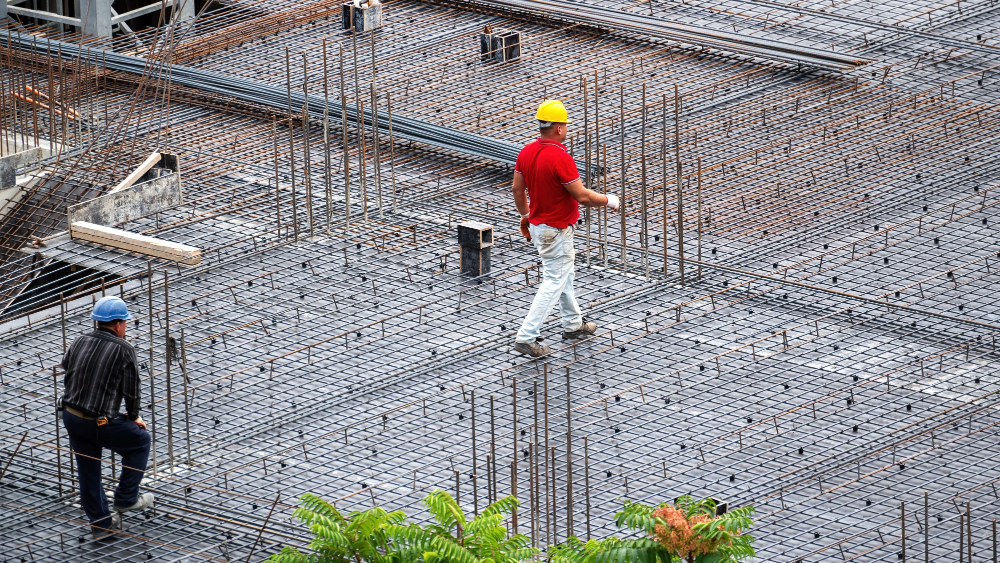
Use the decision table below as a quick reference. If your situation maps to a particular structure in most rows, that is a strong signal. For borderline cases, the right call depends on weighting your priorities and that is exactly the conversation Lee Builders’ engineering consultants can facilitate.
Your Situation | Industrial Shed | PEB | Conventional |
Area < 3,000 sq. ft. | ✔ Best fit | ✔ Works | ✘ Overkill |
Area 3,000–2,00,000 sq. ft. | ✘ Limited | ✔ Ideal | ✔ Possible |
Need clear span > 30 m | ✘ Not possible | ✔ Only option | ✘ Column limits |
Timeline under 3 months | ✔ Fastest | ✔ Feasible | ✘ Too slow |
Future expansion planned | ✔ Possible | ✔ Easiest | ✘ Difficult |
Heavy floor loads (> 10 T/m²) | ✘ Not suitable | ✔ Engineered | ✔ Best |
Multi-storey requirement | ✘ No | ✘ Limited | ✔ Yes |
Tight budget | ✔ Lowest cost | ✔ Mid-range | ✘ Highest cost |
Coastal / high-humidity site | ⚠ Needs protection | ✔ With treatment | ✔ Robust |
If three or more rows point clearly to one structure type, you have your answer. If results are mixed, a hybrid approach may be the right solution — for example, a PEB primary structure with RCC mezzanine floors, or a PEB warehouse with a conventional office block attached.
Why South India's Leading Businesses Trust Lee Builders
Lee Builders Pvt Ltd has been delivering industrial and commercial structures across South India for over 30 years. Our integrated capabilities mean that from the first site visit to the final handed-over facility, you work with one accountable team not a chain of separate consultants, fabricators, and contractors each managing their own scope.
What Makes Lee Builders Different
- In-house PEB fabrication: We design, fabricate, and erect your structure. No third-party fabricator, no outsourcing markup, no quality compromise.
- JSW roofing manufacturing and supply: Your structure and your roof come from the same controlled supply chain.
- Full civil capability: Land development, piling, foundations, flooring, structural concrete, and finishing – all in-house.
- Precision fabrication pedigree: Our shipbuilding fabrication work – hatch covers and sub-assemblies – demands tolerances that general construction rarely approaches. This culture of precision runs through everything we build.
- Southern Railways – trusted contractor: When one of India’s largest infrastructure operators chooses you for quality-critical work, it is not a marketing claim it is a track record.
Our Project Geography
- Kerala: Kochi, Thiruvananthapuram, Kottayam, Kozhikode, Thrissur, Ernakulam
- Tamil Nadu: Chennai, Coimbatore, Madurai, Hosur, Tiruppur
- Karnataka: Bengaluru, Hubli, Mysuru, Tumkur, Dharwad
Our Services
- PEB design, fabrication, and erection
- Industrial sheds and steel structures
- Warehouses, factories, and manufacturing units
- Commercial buildings and convention centres
- Land development, foundations, and flooring
- Roofing including JSW sheet manufacturing and supply
- Shipbuilding fabrication: hatch covers and sub-assemblies