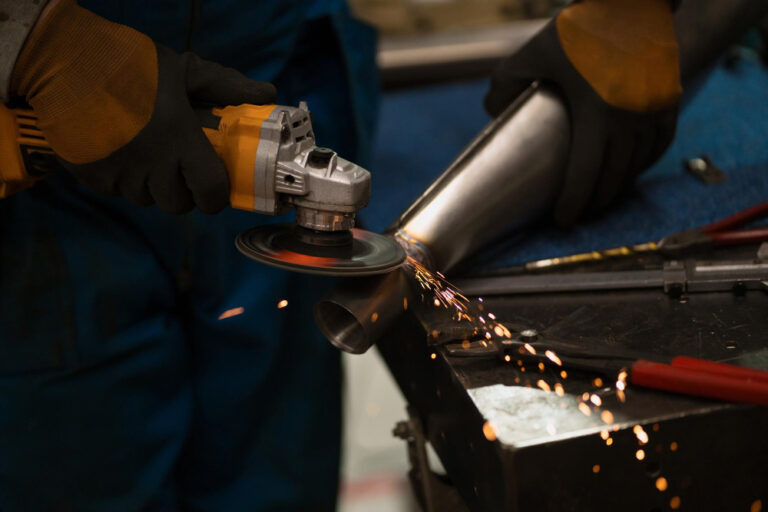



Best Roofing Sheets for Kerala Climate: JSW & Galvalume Sheets

Introduction

Kerala receives over 3,000mm of annual rainfall in many districts, has one of the longest coastlines in India, and spends six months a year in monsoon conditions. Not every roofing sheet is built for that.

Roofing is one of the most consequential material decisions in any building project and one of the most under-researched. The wrong specification can mean a roof that chalks and fades in three years, leaks at every fastener point by year five, and needs full replacement before the building loan is repaid.

This guide is written as a climate-specific buyer’s reference: what Kerala’s environment actually demands from a roofing material, what JSW’s Galvalume and colour-coated sheet technology delivers, and which specification is right for each building type and district zone.

Lee Builders has been specifying, supplying, and installing roofing systems across Kerala and South India since 1995 including JSW roofing sheets for industrial, commercial, and residential applications. This guide draws on that experience and on JSW’s published product specifications.

Table of Contents

What Kerala's Climate Actually Does to Roofing Materials

Most roofing product guides are written for general Indian conditions. Kerala is not general Indian conditions. Here are the four climate stressors that make roofing specification in Kerala categorically different and more demanding.

1.  Monsoon Intensity

  • South-west monsoon: June to September the primary monsoon, extremely heavy across the Western Ghats districts (Idukki, Wayanad, and Palakkad can exceed 4,000mm annually)
  • North-east monsoon: October to November secondary but significant in central and northern Kerala
  • Sustained high-volume, wind-driven rainfall tests every lap joint, fastener point, ridge flashing, and sealant bead in the roofing system failures that are minor in dry conditions become active leaks within hours of the monsoon arriving

2.  Coastal Salt Air

  1. Approximately 590km of coastline Ernakulam, Alappuzha, Kozhikode, Thrissur, and Kollam districts all have significant coastal industrial and residential development within the chloride-exposure zone
  2. Salt-laden air (chloride-rich atmosphere) is among the most aggressive corrosion environments for metal roofing chloride ions penetrate coating defects and accelerate corrosion at a rate far higher than inland atmospheric conditions
  3. Standard galvanised (GI) sheets have significantly shorter service life within 5km of the coast failure rates are disproportionately high in coastal Kerala for GI products

3.  Year-Round Humidity

  • Kerala’s average relative humidity ranges from 70 to 90 percent year-round across most districts among the highest sustained humidity levels of any Indian state
  • High ambient humidity accelerates condensation on internal roof surfaces, promotes coating degradation at cut edges and fastener points, and maintains a continuously damp environment in partially sheltered areas
  • Condensation on the underside of uninsulated metal roofing is a persistent problem in Kerala’s humid climate relevant to insulation specification for cold storage and air-conditioned buildings

4.  UV Radiation and Thermal Cycling

  • Intense solar radiation between monsoon seasons Kerala’s solar irradiance levels are among the highest in India, particularly in the coastal belt
  • UV exposure bleaches and degrades lower-quality polyester paint systems; chalking, colour fading, and surface erosion become visible within 3 to 5 years for substandard coatings
  • Daily thermal expansion and contraction cycles stress fastener holes and panel overlaps over years, this causes fastener hole elongation and loss of watertightness at lap joints if the system is not correctly designed
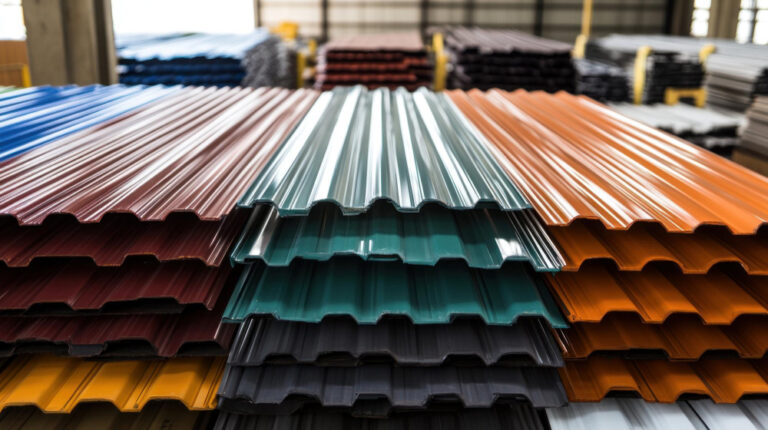
best roofing sheets Kerala

What Is Galvalume and How Does It Work?

Most buyers have encountered the term Galvalume but are unclear on what distinguishes it from standard galvanised steel. The difference is significant and directly relevant to Kerala’s climate.

The composition

Galvalume is the trade name for steel coated with an alloy of approximately 55 percent aluminium, 43.5 percent zinc, and 1.5 percent silicon. It was developed specifically to combine the best protective properties of both metals:

  • Aluminium: provides barrier protection it forms a dense, adherent oxide layer on the coating surface that resists moisture and chloride penetration
  • Zinc: provides sacrificial cathodic protection at cut edges and areas of coating damage, zinc corrodes preferentially to protect the underlying steel
  • Silicon: improves adhesion of the Al-Zn alloy to the steel substrate during the hot-dip coating process

How it outperforms standard galvanised steel

Standard galvanised (GI) steel is coated with pure zinc. Zinc provides good sacrificial protection but limited barrier performance in chloride-rich coastal environments, zinc corrodes relatively quickly once the coating is breached. The Al-Zn alloy in Galvalume delivers 2 to 4 times better corrosion resistance than equivalent-weight pure zinc coating in most atmospheric environments, and significantly better performance in the coastal and high-humidity conditions found across Kerala.

JSW’s Galvalume production process

  • Steel coils are cleaned and chemically treated to ensure coating adhesion
  • The Al-Zn alloy is applied in a continuous hot-dip coating line coating weight precisely controlled to specification for each product grade
  • Consistency of coating weight across the full coil width is verified at the mill not left to chance
  • Coated coils then proceed to the colour-coating line where primer and topcoat are applied in controlled thicknesses and cured at high temperature

Expected service life in Kerala conditions

Sheet Type

Inland Kerala (SMP coat)

Coastal Kerala (PVDF coat)

Note

Standard GI (zinc only)

8-12 years

3-6 years

Not recommended within 5km of coast

JSW Galvalume bare

15-20 years

10-14 years

Unpainted — site-coat if needed

JSW Colouron+ with SMP

12-18 years

8-12 years

Standard commercial specification

JSW Colouron+ with SDP

15-20 years

10-15 years

Demanding industrial applications

JSW Colouron+ with PVDF

20-25 years

15-20 years

Coastal and premium specification

The JSW Roofing Product Range

JSW offers a roofing sheet range that covers every application from basic agricultural sheds to premium coastal commercial buildings. Here is what is relevant for Kerala projects.

JSW Colouron+ (Colour-Coated Galvalume)

  • The flagship roofing product for commercial, industrial, and residential applications
  • Steel substrate with Galvalume Al-Zn coating, then primer and colour topcoat applied on the colour-coating line
  • Top-side coating: primer plus paint system (PE, SMP, SDP, or PVDF depending on specification)
  • Back-side coating: epoxy-based primer for internal surface protection against condensation
  • JSW Colouron+ carries up to 15-year product warranty in appropriate installation conditions confirm warranty terms and applicable conditions with Lee Builders at specification stage
  • Available in a wide range of RAL colours used for industrial, commercial, and residential applications where appearance matters

Paint System Options What They Mean for Your Project

The paint system is the most important specification decision for Kerala applications. The substrate (Galvalume) is consistent across the range the paint system determines UV resistance, colour retention, and coastal performance.

Paint System

Colour Retention

Coastal Suitability

Best Applications in Kerala

Polyester (PE)

5-8 years

Not recommended coastal

Sheltered inland, agricultural, short design life

Silicon Modified Polyester (SMP)

10-12 years

Moderate (>5km coast)

General commercial and industrial, inland districts

Super Durable Polyester (SDP)

12-15 years

Good (3-5km coast)

Demanding industrial, institutional buildings

PVDF (Polyvinylidene Fluoride)

15-20 years

Excellent (<5km coast)

Coastal districts, premium projects, long design life

Kerala recommendation:

Minimum SMP for all inland commercial and industrial applications. PVDF for any building within 5km of the coast, for premium projects with a 20+ year design life, and for applications where colour consistency over time is important (corporate facilities, institutional buildings). Standard PE only for sheltered inland or agricultural applications with a short intended service life.

Sheet Profiles

Profile Type

Description

Typical Application

Corrugated

Traditional sinusoidal profile wide coverage, cost-effective

Agricultural, simple industrial, low-cost residential

Trapezoidal / Ribbed

Flat pan with raised ribs higher stiffness for longer purlin spans

PEB structures, industrial warehouses, commercial buildings

Standing seam

Concealed fastener, raised seam  premium watertight system

Commercial, institutional, high-specification residential

Sheet thickness typically ranges from 0.30mm to 0.60mm. For industrial and commercial applications in Kerala, 0.47mm to 0.50mm is the standard specification. Thinner sheets (0.30mm to 0.35mm) are used only for residential or low-load applications with close purlin spacing. Always confirm gauge to structural design loading do not simply specify the lightest available sheet.
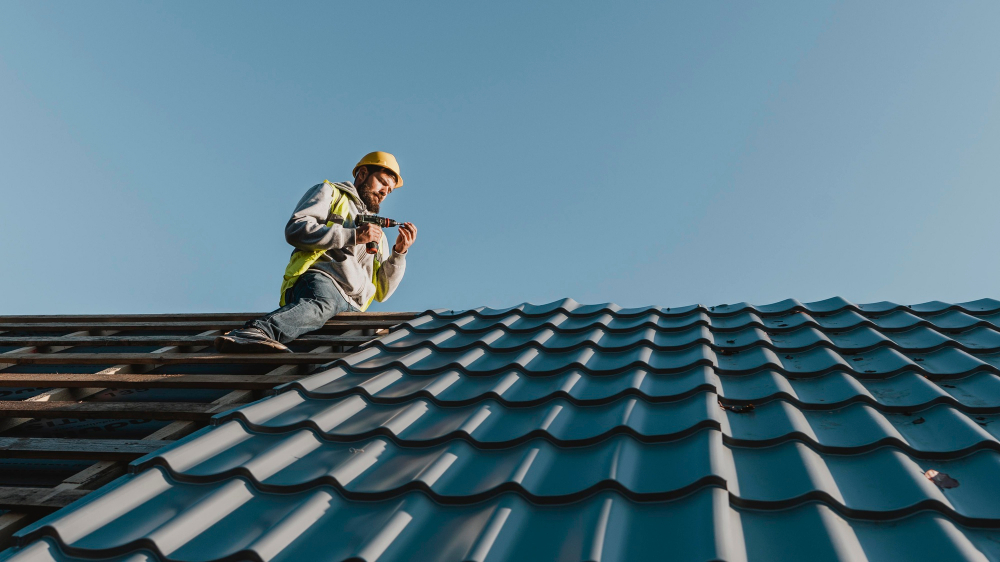
A picture of a guy in roofing sheet go down

Which JSW Roofing Sheet Is Right for Your Project?

Use this specification selector matrix to identify the appropriate JSW roofing sheet for your building type and location. This is a starting-point guide final specification should be confirmed with your structural engineer or contractor based on design loads, purlin spacing, and site-specific conditions.

Project Type

Recommended Spec

Paint System

Key Reason

Industrial warehouse / factory (inland)

Galvalume + SMP, trapezoidal, 0.47-0.50mm

SMP

Span stiffness, durability, cost balance

Industrial warehouse / factory (coastal)

Galvalume + PVDF, trapezoidal, 0.50mm

PVDF

Chloride resistance in coastal atmosphere

Cold storage facility

Galvalume + SMP + insulated sandwich panel

SMP

Vapour control and thermal performance

PEB / pre-engineered building

Galvalume + SMP, trapezoidal, per engineer

SMP

Consistent with PEB design load and span

Commercial (school, hospital, office)

Colouron+ SDP or PVDF, ribbed profile

SDP/PVDF

Appearance and 12-20 year colour life

Residential / villa roofing

Colouron+ SMP or PVDF, lighter gauge

SMP/PVDF

Visual finish and low maintenance

Agricultural / temporary structure

Galvalume bare or PE, corrugated

PE/Bare

Cost-primary, shorter design life

Installation - What Determines Whether a Good Sheet Performs

The roofing sheet is only half of the equation. The best product in the wrong hands  or with the wrong installation details will underperform. Most roof failures in Kerala are installation failures, not product failures. Here are the four installation factors that determine long-term performance.

1.  Fastener Specification and Placement

  • Self-drilling fasteners must be stainless steel (Type 316 for coastal areas, Type 304 for inland) or hot-dip galvanised carbon steel fasteners corrode within 18 to 24 months and stain the sheet with rust streaks
  • Neoprene-backed washers must be correctly torqued overtightened washers deform and crack, losing their seal; under-torqued washers allow water infiltration under the washer
  • Fastener spacing must match the structural design do not reduce fastener count to save cost on a high-wind-load roof

2.  Lap and End Joint Detailing

  • Side laps must be sealed with compatible butyl tape or silicone sealant in Kerala’s rainfall conditions an unsealed side lap will leak under wind-driven monsoon rain even if the overall roof slope is adequate
  • End laps should provide a minimum 200mm overlap and must be positioned at a purlin to prevent deflection of the unsupported lap under foot traffic and ponding water
  • Lap sealant must be compatible with the paint system and the fastener washer material incompatible sealants degrade and lose adhesion within 2 to 3 years

3.  Ridge and Eave Flashing

  • Ridge flashings must be correctly formed to the roof pitch, properly lapped (minimum 150mm side laps), and fully sealed the ridge is the most vulnerable point in any metal roof and the most common leak location in Kerala during the monsoon
  • Eave fascia and gutter detailing must allow thermal expansion of the sheets along their length a fixed-end condition causes sheet oil-canning (visible waviness) and progressive fastener hole elongation
  • Valley gutters between intersecting roof slopes require particular attention they carry the highest water volume and must be sized and sealed for Kerala’s peak rainfall intensity

4.  Cut Edge Protection

  • All cut edges at the eave, at openings, at trimmed sheet lengths, and at penetrations must be treated with a compatible cut-edge sealant or zinc-rich primer immediately after cutting
  • Untreated cut edges expose the raw steel substrate directly to Kerala’s humid atmosphere they are the most common initiation point for corrosion in coastal and high-humidity zones
  • In coastal areas (within 5km), cut-edge treatment is not optional it is a necessary part of achieving the rated product service life
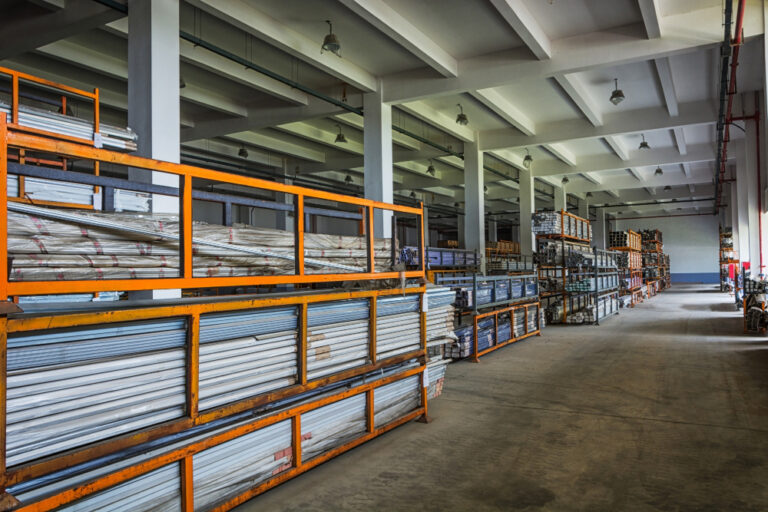
A picture of roofing sheet go down

Why Source JSW Roofing Through Lee Builders?

Sourcing roofing sheets through Lee Builders is not the same as buying from a materials stockist. The difference is structural and specification knowledge behind the supply.

What Lee Builders brings

What it means for your roofing project

29 years specifying roofing for Kerala’s climate

Correct product and paint system recommendation for your district and building type

JSW product supply capability

Direct access to JSW Colouron+ and Galvalume range with consistent supply and documentation

PEB and structural steel construction background

Roofing specified and installed in alignment with structural design loads, purlin spacing, and wind zone

End-to-end project capability

Supply + installation as a combined engagement — no gap between what was specified and what was installed

Cold storage, warehouse, and industrial experience

Specific knowledge of condensation management, thermal performance, and insulated panel requirements

Kerala-based service from Perumbavoor

On-ground knowledge of coastal, inland, and high-rainfall zone requirements across Ernakulam, Thrissur, Kottayam, and surrounding districts

Conclusion

Kerala’s climate is among the most demanding for roofing materials anywhere in India. The combination of monsoon intensity, coastal salt air, year-round humidity, and UV exposure eliminates lower-specification products from consideration for any building intended to last 15 years or more.

JSW’s Galvalume substrate and colour-coating technology particularly the SMP and PVDF paint systems are engineered specifically for these conditions. When combined with correct installation detailing, stainless steel fasteners, and annual post-monsoon maintenance, they deliver the 15 to 20-year roof life that Kerala buildings need.

Lee Builders brings both sides of that equation: the right JSW product for your specification, and the construction expertise to ensure it is installed correctly from purlin spacing to cut-edge treatment.
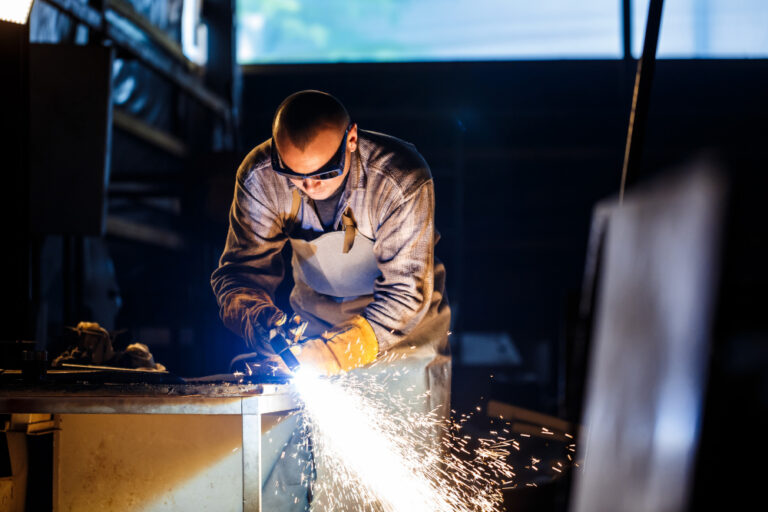
What Is Metal Fabrication? A Buyer’s Guide for Industrial Projects in India

Introduction

You have a fabrication requirement. Maybe it is a structural steel frame for a new plant, a custom equipment skid, a process vessel support structure, or a set of access platforms and handrails. You know what you need, but you are less sure how to evaluate whether a fabricator can actually deliver it to specification, on time, and without rework.

Metal fabrication is one of those procurement categories where the difference between a capable contractor and a poor one is not visible at quotation stage. It becomes visible at delivery when a beam is 15mm out on a critical dimension, a weld fails an inspection, or a structure arrives without the documentation your project requires.

This guide is written for project managers, plant engineers, and procurement teams who commission fabricated steel components and structures as part of industrial, construction, marine, or infrastructure projects. It covers what fabrication is, how the process works, what to look for in a contractor, and the most common mistakes buyers make so you can avoid them.

Lee Builders has operated an in-house metal fabrication facility in Perumbavoor, Kerala since 1995, serving industrial, construction, marine, and infrastructure clients across India. This guide draws on what we have learned from three decades of fabrication project delivery.

Table of Contents

What Is Metal Fabrication?

It is distinct from casting, which involves pouring molten metal into a mould, and from forging, which shapes metal under high pressure. Fabrication works with stock material purchased as plate, bar, section, or pipe and cuts and joins that material to produce the required form. The end product can range from a single bracket weighing a few kilograms to a complete structural frame weighing hundreds of tonnes.

The core fabrication operations

Operation

Description

Common Methods

Cutting

Reducing raw material to the required size and profile

Oxy-fuel, CNC plasma, laser, waterjet, sawing

Forming

Bending, rolling, or pressing material to the required shape

Press brake, plate rolls, section bender

Joining

Assembling components into a finished structure or assembly

Welding (MIG, TIG, SMAW, SAW), bolting

Surface treatment

Protecting the finished product from corrosion and wear

Blasting, priming, painting, galvanising

Machining

Achieving precision features, holes, and mating surfaces

Drilling, tapping, milling, grinding

Who uses fabricated steel in India

  • Construction and infrastructure: structural frames, staircases, access platforms, and mezzanine floors for industrial and commercial buildings
  • Industrial plants: equipment supports, pipe racks, process structures, and vessel saddles for manufacturing and processing facilities
  • Marine and shipbuilding: hull sections, deck structures, jetty steelwork, and offshore platform components
  • Railways and transport: bridge structures, station canopies, maintenance shed frames, and trackside infrastructure
  • Power and energy: turbine support frames, transformer bays, transmission line structures, and solar mounting systems
  • Food processing and cold chain: storage structure frames, conveyor supports, and process equipment structures
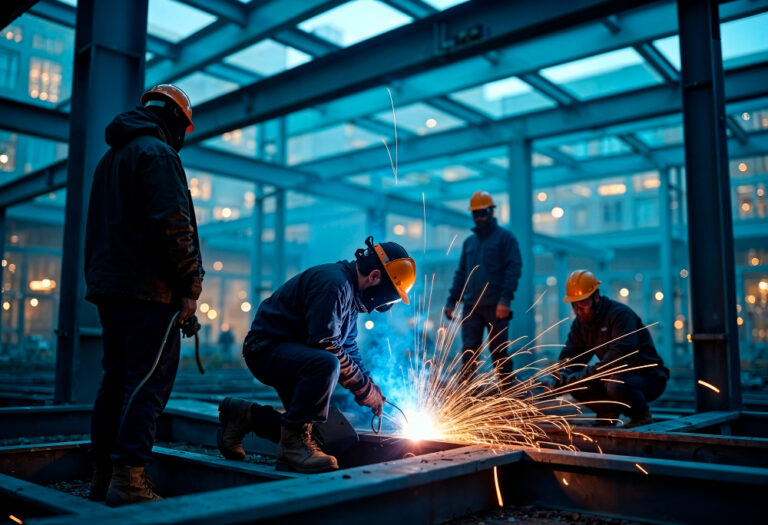
Welding in marine steel fabrication

Types of Metal Fabrication Work

Different fabrication requirements demand different equipment, skills, and quality systems. Understanding which category your project falls into helps you identify the right type of contractor and the right questions to ask.

Structural Steel Fabrication

  • Scope: Primary and secondary structural members columns, beams, rafters, trusses, and bracing for buildings, platforms, and infrastructure
  • Materials: Hot-rolled sections (I-beams, channels, angles, hollow sections) and built-up plate girders
  • Governing standard: IS 800 (Code of Practice for General Construction in Steel) and IS 2062 (Structural Steel) in India
  • Volume: The largest category of fabrication work most industrial and construction projects involve structural steel

Plate Fabrication

  • Scope: Tanks, hoppers, chutes, bins, vessel shells, and enclosures fabricated from flat steel plate
  • Requirements: Precise cutting, accurate edge preparation, and high-quality fit-up before welding — weld quality and leak-tightness are primary concerns
  • Governing standards: Pressure vessel work is governed by IBR (Indian Boiler Regulation) or ASME BPVC; general storage and process vessels by project specification
  • Inspection: Weld inspection, NDT, and hydrostatic or pneumatic pressure testing are typically required

Miscellaneous and Architectural Fabrication

  • Scope: Staircases, handrails, ladders, walkways, access platforms, equipment guards, machine frames, and architectural features
  • Materials: Carbon steel, stainless steel, or galvanised steel depending on the environment and finish requirement
  • Volume: Typically lower unit weight but high variety a single industrial plant may have hundreds of individual miscellaneous steel items
  • Finish: Often more visible than structural steel surface finish and dimensional accuracy are important for handrail systems, staircases, and architectural items

Precision and Equipment Fabrication

  • Scope: Close-tolerance components for equipment, machinery, tooling, and instrumentation
  • Requirements: CNC cutting, controlled welding, and documented dimensional inspection, tolerances are tighter than standard structural work
  • Materials: Often includes stainless steel, alloy steels, and non-ferrous metals in addition to carbon steel
  • Note: Marine fabrication is a specialised category with its own quality and documentation requirements see our Steel Fabrication for Shipbuilding guide for this application

The Fabrication Process — How It Works

A well-managed fabrication project follows a clear sequence from enquiry to delivery. Understanding this sequence helps buyers know what to provide, what to expect, and where problems typically arise.

Step 1:  Enquiry and technical review

  • Buyer provides drawings (DWG or PDF format), material specification, applicable codes or standards, and required delivery date
  • Fabricator reviews for completeness and identifies any ambiguities, clashes, or items needing clarification before quoting
  • A contractor who accepts a vague or incomplete scope without asking questions is a red flag the ambiguities that are not resolved at enquiry stage become disputes and rework later

Step 2:  Quotation and scope definition

  • Detailed quotation covering: material supply, cutting, fabrication, surface treatment, inspection, and delivery with each element priced separately or clearly included
  • Explicit list of exclusions: items not included in scope (e.g. site installation, anchor bolts, grout, paint beyond primer)
  • Programme with key milestone dates: drawing approval, material procurement, fabrication completion, and delivery
  • Quality plan or Inspection and Test Plan (ITP) if required by the specification confirm whether this is included before accepting the quotation

Step 3:  Material procurement

  • Structural steel procured from approved stockists with mill certificates confirming grade, chemical composition, and mechanical properties
  • Material checked on receipt against the purchase specification grade, dimensions, surface condition, and documentation
  • For projects requiring material traceability (structural, marine, pressure vessel work), material is heat-number marked and tracked from receipt through to finished component

Step 4:  Fabrication

  • Profile cutting to drawing dimensions using CNC plasma, oxy-fuel, or saw as appropriate for material thickness and profile complexity
  • Assembly and fit-up checked against drawings and within defined tolerance limits before welding commences
  • Welding carried out by qualified operators to specified procedures weld sizes, joint type, and position as shown on the drawing
  • In-process dimensional checks at defined stages not deferred to the final inspection

Step 5:  Inspection and surface treatment

  • Final dimensional inspection of completed components against drawing dimensions and specified tolerances
  • NDT (RT, UT, MPI, or DPI) carried out if required by the specification or applicable standard
  • Surface preparation by abrasive blasting or mechanical preparation to the specified cleanliness standard
  • Primer and finish coats applied to the specified dry film thickness and inspected before dispatch

Step 6:  Delivery and documentation

  • Components loaded, protected, and secured for transport heavy or long components require specialist transport arrangements confirmed in advance
  • Documentation package issued with delivery: mill certificates, weld records, dimensional inspection reports, NDT reports if applicable, and coating inspection records
  • Site installation support or technical guidance provided if included in scope
Metal fabrication

What Makes a Good Fabrication Contractor?

Use these six criteria to evaluate any fabrication contractor before committing scope and schedule to them. The answers and the documentation they can readily produce tell you far more than a brochure or a website.

1. In-House Capability – Not Subcontracted

  • The best fabricators carry out the work in their own facility, with their own qualified workforce and equipment
  • Extensive subcontracting adds cost, removes direct quality control, and makes schedule management significantly harder
  • Ask explicitly: what operations are carried out in your own workshop, and what is subcontracted to third parties?

2. Qualified Welding Workforce

  • Welders must hold current qualification certificates for the welding processes, material grades, and joint configurations relevant to your project
  • Applicable standards in India: IS 7307 (qualification of welders), AWS D1.1 (structural welding), or classification society requirements for marine work
  • Supervisor-level competence is equally important ask who is responsible for welding quality control on the shop floor
  • Ask: how many certified welders do you currently employ, and what are their qualification scopes?

3. Equipment Appropriate to Your Scope

  • Overhead crane capacity determines the maximum sub-assembly size the workshop can handle a component that exceeds the crane capacity must be assembled in multiple pieces on-site
  • CNC cutting equipment delivers dimensional accuracy and repeatability that manual oxy-fuel cutting cannot match for profiles with curves, notches, or close-tolerance features
  • Adequate covered workshop space fabrication carried out in an open yard is exposed to weather, prone to quality problems, and difficult to supervise effectively

4. A Documented Quality Process

  • At minimum: a written Inspection and Test Plan (ITP) for each project, defining every inspection point, acceptance criteria, responsible party, and records required
  • ISO 9001 certification is the benchmark for a mature quality management system it demonstrates that the quality process is documented, followed, and audited
  • Ask for an example ITP from a previous similar project the level of detail tells you more about the QMS than any certificate
  • A fabricator without a documented QMS is managing quality informally which works until it doesn’t

5. Realistic Scheduling and Delivery Track Record

  • A capable fabricator will tell you their current workshop loading and give you an honest lead time not the lead time you want to hear
  • Ask specifically for references about delivery performance, not just quality late delivery of fabricated components causes site delays that are expensive and often impossible to recover
  • Confirm what happens if the fabricator falls behind programme: who carries the cost of a site delay caused by late delivery?

6. Clear and Complete Documentation

  • Mill certificates, weld records, dimensional inspection reports, and coating records should be standard deliverables included in the price not extras that require negotiation
  • Without documentation, you cannot demonstrate compliance to a client, insurer, or statutory authority and you cannot resolve a dispute about the specification of a component already installed
  • Ask specifically: what documentation will I receive with the fabricated components, and in what format?

Common Mistakes Buyers Make When Sourcing Fabrication

These five mistakes appear consistently across fabrication procurement in India. Each one is avoidable but only if you know to look for it.

Mistake 1: Choosing on price alone

The cheapest quotation almost never accounts for the true cost: rework, dimensional failures, site re-fabrication, or the cost of a component that fails in service. A 10 percent saving on the fabrication cost can be consumed by a single day of site delay caused by one dimensional error.

Compare quotations on scope completeness and what is included not price per kilogram alone.

Mistake 2: Providing incomplete drawings

Fabricators quote and fabricate what is on the drawing. If the drawing is incomplete or ambiguous missing weld sizes, unspecified material grades, unclear tolerances the fabricated component will reflect that ambiguity.

Ensure all weld sizes, material grades, surface treatment specifications, hole sizes, and dimensional tolerances are clearly stated on the drawing before issuing for quotation. If in doubt, mark it as ‘TBC’ and resolve it before fabrication begins not after.

Mistake 3: Not specifying the applicable standard

IS 800? AWS D1.1? IBR? The applicable standard determines the required welding procedures, inspection requirements, and material grade. Without a stated standard, the fabricator makes assumptions and those assumptions may not match what your project, client, or insurer actually requires.

State the governing standard explicitly on the drawing title block or in the scope of work document. If you are unsure which standard applies, ask the fabricator or your structural engineer before issuing the enquiry.

Mistake 4: Ignoring lead time until it is urgent

Good fabricators with adequate capacity and a qualified workforce are typically committed weeks or months ahead. Urgent fabrication requirements either attract a premium, or get allocated to a contractor with available capacity for the wrong reason.

Initiate fabrication procurement as early as possible in the project programme even a preliminary scope discussion with a preferred fabricator can secure a programme slot before the drawings are complete.

Mistake 5: Not visiting the workshop before appointment

A 30-minute visit to the fabrication facility tells you more than any tender document. Workshop condition and housekeeping, visible workforce size and activity, the type and condition of equipment, the organisation of the material storage area all of these are reliable indicators of how the fabricator actually operates.

For any significant fabrication scope, a pre-appointment workshop visit should be a standard part of the evaluation process.

Metal fabrication kerala

Metal Fabrication in Kerala - The Industrial Context

Kerala has a more active industrial fabrication sector than many outsiders expect. The state’s combination of port infrastructure, manufacturing estates, marine industries, and expanding logistics and cold chain networks creates consistent demand for quality structural steel fabrication.

Key sectors driving fabrication demand in Kerala

Sector

Fabrication requirement

Cochin Port and Vizhinjam Port development

Berth structural steelwork, jetty frames, port logistics infrastructure

Cochin Special Economic Zone

Industrial building frames, equipment supports, process structures for manufacturing units

Marine and shipbuilding sector

Hull sub-assemblies, vessel structural components, dry dock and slipway steelwork

KSEB and power infrastructure

Transmission structures, substation equipment frames, and support steelwork

Industrial estates: Edayar, Ambalamugal, Kalamassery

Equipment supports, plant structures, mezzanines, and process steelwork

Food processing and cold chain

Storage building frames, conveyor supports, cold room structural components

Plantation and agri-processing

Processing facility structures, silo supports, and handling equipment frames in the Perumbavoor and Muvattupuzha belt

Lee Builders’ fabrication facility in Perumbavoor is centrally located for delivery across Ernakulam, Thrissur, Kottayam, and Idukki districts, with established supply chain relationships with Kerala-based steel stockists that reduce material lead time and logistics cost compared with sourcing from outside the state.

Why Lee Builders for Industrial Metal Fabrication

When you commission fabrication from Lee Builders, you are working with a team that has been producing structural steel components from our Perumbavoor facility for over 29 years across industrial, construction, marine, and infrastructure applications.

What we bring

What it means for your project

In-house fabrication workshop, Perumbavoor

Cutting, welding, assembly, and surface treatment under one roof no subcontracting of core operations

29+ years of fabrication experience

Production experience across structural, plate, marine, and miscellaneous categories

Qualified welding workforce

Current certifications for structural and marine welding processes and material grades

CNC cutting capability

Dimensional accuracy and repeatability for complex profiles and close-tolerance components

Documented quality process

ITP-based inspection for every project inspection records issued as standard

Full documentation package

Mill certificates, weld records, dimensional reports, and coating records with every delivery

Parallel construction capability

If your project requires both fabricated components and a steel building or PEB, Lee Builders delivers both under one contract

Kerala-based, established supply chain

Reduced material lead time and logistics cost for clients in Kerala and South India

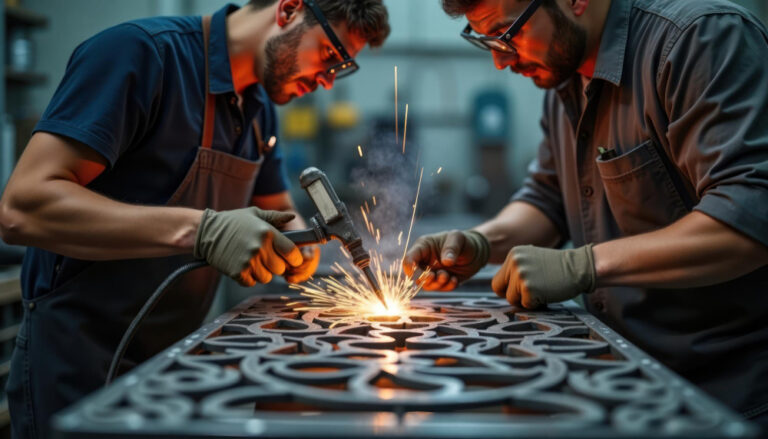
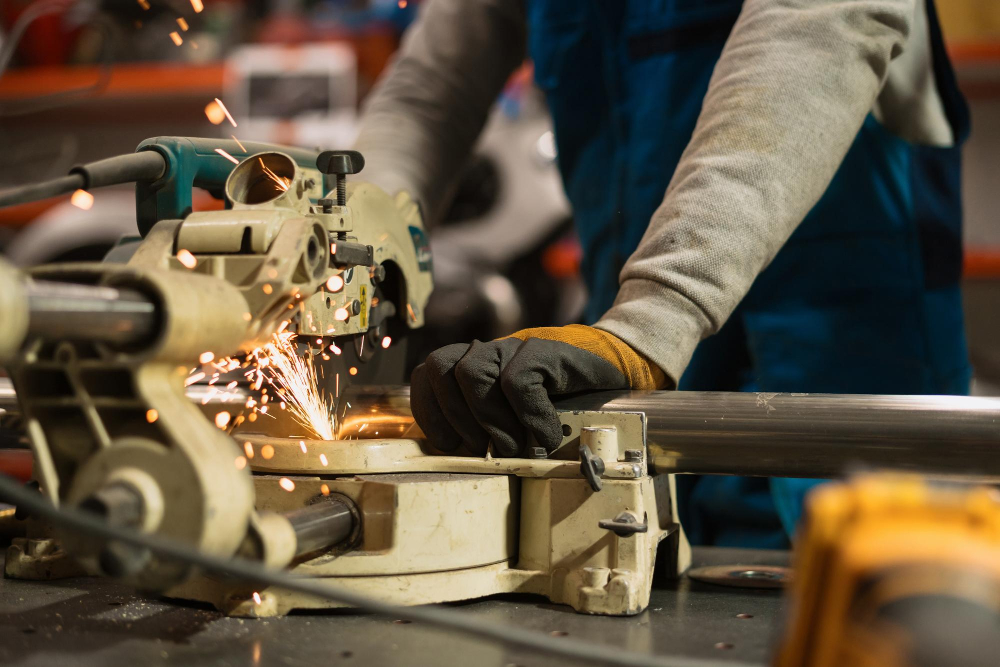
Metal welding picture

Conclusion

Metal fabrication is a procurement category where quality, schedule reliability, and documentation discipline matter as much as price and where the consequences of getting the supplier selection wrong are felt on-site, not in the quotation comparison.

The buyer’s framework in this guide in-house capability, qualified workforce, appropriate equipment, documented quality process, scheduling honesty, and complete documentation gives procurement teams a reliable basis for evaluating any fabrication contractor before cost and programme are committed.

Lee Builders has been delivering structural steel fabrication from our Perumbavoor facility since 1995. Our team has the in-house capability, the qualified workforce, and the documented quality processes to support industrial, construction, marine, and infrastructure fabrication projects across Kerala and South India.