


What Is a Pre-Engineered Building?

Introduction

You need a large commercial space, a warehouse, factory, or industrial facility. You need it built fast, within budget, and strong enough to last decades. If you’ve started researching your options, you’ve likely come across the term ‘Pre-Engineered Building’ or PEB. But what exactly is it? And is it right for your project?

Pre-engineered buildings have transformed the construction landscape in India over the past two decades. They offer a smarter, faster, and more cost-efficient alternative to conventional construction and for the right applications, they are simply unmatched.

In this guide, the team at Lee Builders, steel construction specialists based in Perumbavoor, Kerala, with over 29 years of experience breaks down everything you need to know about PEBs before you break ground.

What you'll learn in this article

What Exactly Is a Pre-Engineered Building?

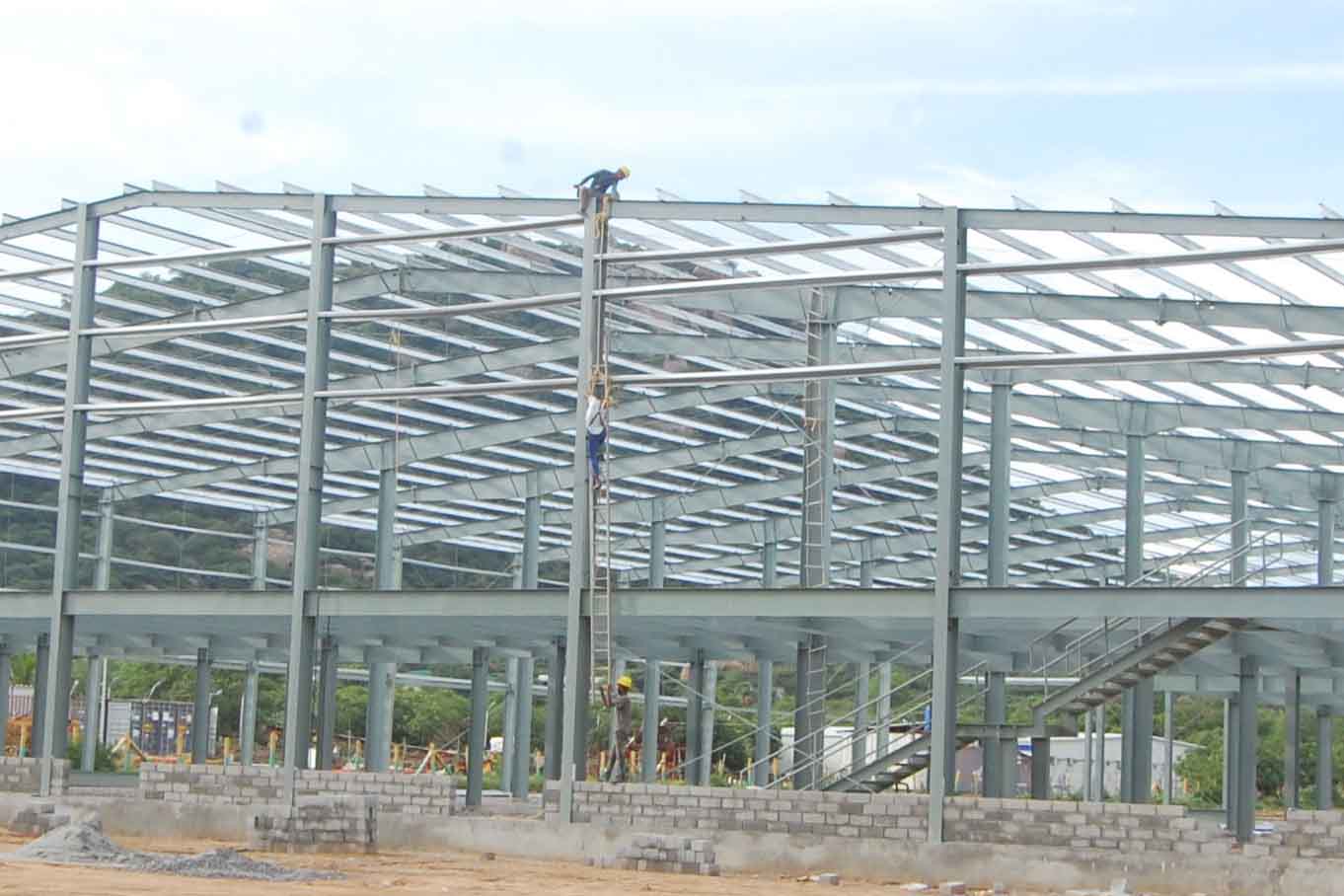
A pre-engineered building (PEB) is a steel structure that is designed, engineered, and fabricated at a factory then transported to the site and assembled by a skilled erection team. Unlike conventional construction, where materials are sourced, cut, and assembled entirely on-site, a PEB arrives as a precision-manufactured kit of parts, ready to be bolted together.

The term ‘pre-engineered’ refers to the fact that the structural system is fully engineered in advance using specialised software that optimises every component for load, span, and local conditions before a single piece of steel is cut.

Key Components of a Pre-Engineered Building

A complete PEB system typically consists of:

  • Primary steel framing – the main structural skeleton (columns, rafters, and primary beams)
  • Secondary framing – purlins, girts, and eave struts that support the cladding
  • Roof and wall cladding panels – metal sheeting that forms the building envelope
  • Doors, windows, and ventilators – factory-fitted or site-installed accessories
  • Mezzanine floors, crane systems, and other accessories as required

Every component is designed to work together as an integrated system. This is what makes PEBs significantly more efficient than building a structure piece by piece.
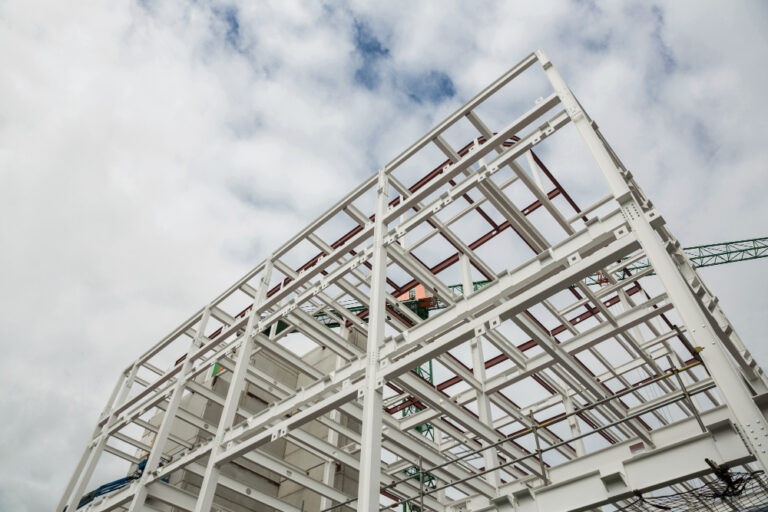
a structure of pre-engineered building

How Does a Pre-Engineered Building Work?

Understanding the PEB process helps explain why it is faster and more efficient than conventional construction. Here is how it works from start to finish:

  • Step 1 – Requirement gathering
    • The process begins with a detailed brief  span, height, load requirements, intended use, site location, and climatic conditions. This information drives every subsequent design decision.
  • Step 2 – Engineering and design
    • Specialist software is used to model the structure and optimise each member for strength and efficiency. Detailed shop drawings and a Bill of Quantities are produced before fabrication begins.
  • Step 3 – Factory fabrication
    • Steel components are cut, drilled, welded, and coated with primer in a controlled factory environment. Quality checks are carried out at each stage. This phase runs parallel to site preparation saving weeks of time.
  • Step 4 – Delivery to site
    • Components are labelled, packed, and transported to the site along with an erection manual. Every piece is accounted for before delivery.
  • Step 5 – On-site erection
    • The structure is bolted together on-site by a trained erection crew. Most connections are bolted rather than welded, making the process faster, safer, and more consistent.
  • Step 6 – Finishing and handover
    • Cladding panels are fixed, doors and windows are installed, and any finishing works (gutters, downpipes, fascia) are completed. The building is ready for fit-out.
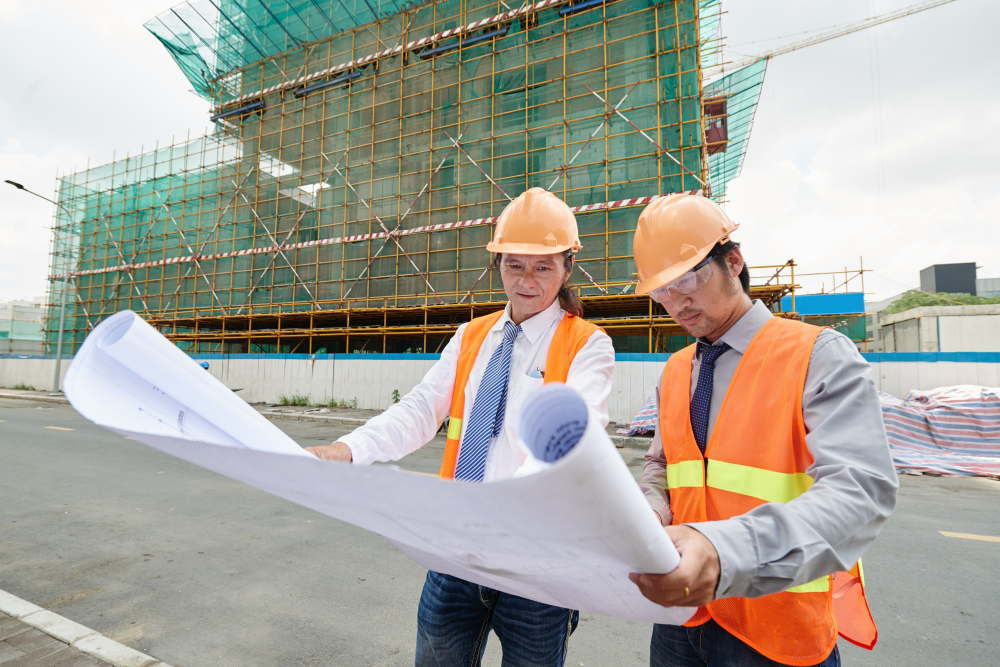
picture of 2 construction engineers looking at blueprint

What Are Pre-Engineered Buildings Used For?

One of the greatest strengths of PEB technology is its versatility. Pre-engineered steel buildings are used across a wide range of industries and applications in India:

  • Industrial Applications
    • Manufacturing plants and assembly units
    • Processing facilities and production halls
    • Automobile workshops and service centres
  • Logistics and Storage
    • Warehouses and distribution centres
    • Cold storage and temperature-controlled facilities
    • Bulk storage structures
  • Commercial Buildings
    • Hypermarkets and large retail showrooms
    • Exhibition halls and convention centres
    • Petrol station canopies and service forecourts
  • Infrastructure
    • Aircraft hangars and MRO facilities
    • Railway maintenance sheds and platform shelters
    • Metro and transit structures
  • Institutional
    • Sports halls, indoor stadiums, and gymnasiums
    • School and college assembly halls
    • Community centres and multipurpose buildings

PEB vs. Conventional Construction - Key Differences

The most common question clients ask is: how does PEB compare to traditional RCC (Reinforced Cement Concrete) construction? The table below provides a clear answer:

FactorPre-Engineered Building (PEB)Conventional (RCC) Construction
Construction time4-12 weeks (typical)6-18 months
Overall cost20-30% lower (typical)Higher – more labour and material
Design flexibilityHigh – custom spans and heightsModerate
Clear span (no columns)Up to 90 metres and beyondLimited without expensive beams
Future expansionEasy – bolt-on bays or extensionsDifficult – demolition often required
WeightLighter – lower foundation costHeavier – larger foundations needed
MaintenanceLow – galvanised or coated finishesModerate to high
SustainabilityRecyclable steel, minimal site wasteHigher material waste, non-recyclable
Best suited forIndustrial, commercial, logisticsResidential, small commercial


It is worth noting that conventional RCC construction still makes sense in certain scenarios, particularly for low-rise residential buildings, structures in high-seismic zones with specific design requirements, or projects where the building aesthetics require masonry facades. A good contractor will recommend the right system for your project rather than pushing a single solution.

Advantages of Pre-Engineered Buildings

Here is a closer look at the benefits that have made PEB the preferred construction method for industrial and commercial projects across India:

1. Faster Construction Timeline

Factory fabrication runs in parallel with site preparation. Once the foundation is ready, erection of a medium-sized PEB can be completed in as little as four weeks. For businesses, this means faster operations, earlier revenue generation, and lower project holding costs.

2. Significant Cost Savings

Reduced labour on-site, minimal material waste, optimised steel usage, and shorter construction timelines all contribute to cost savings that typically range from 20 to 30 percent compared to equivalent conventional structures.

3. Column-Free Clear Spans

PEBs can achieve clear spans of 90 metres or more without internal columns. For warehouses, factories, and exhibition halls, this is a decisive advantage — unobstructed floor space maximises operational efficiency.

4. Engineered Durability

Hot-rolled steel components with factory-applied protective coatings deliver long service life with minimal maintenance. PEBs are engineered to applicable IS codes for wind, snow, and seismic loads relevant to their location.

5. Easy Future Expansion

A PEB can be extended by adding bays to the length or width, or by adding mezzanine levels, without major structural disruption. This makes PEB the sensible choice for businesses planning to scale.

6. Sustainability

Steel is 100 percent recyclable. PEB construction generates significantly less waste on-site compared to conventional builds. For businesses with ESG commitments, this is an increasingly important factor.

7. Suited to India’s Climate

Proper insulation options, including fibreglass wool, polyurethane foam panels, and reflective foil systems, are available for PEB roof and wall assemblies. Buildings in Kerala and other high-rainfall, high-humidity zones can be fully weatherproofed to the required specification.
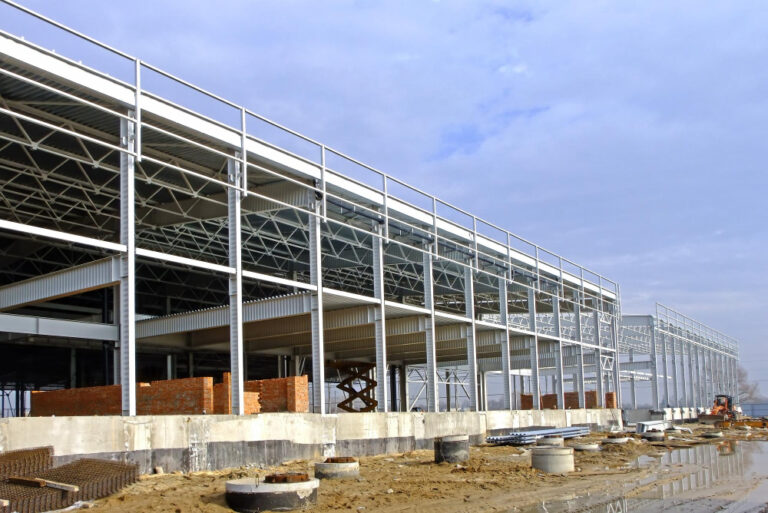
cost of pre-engineered building

How Much Does a Pre-Engineered Building Cost in India?

Cost is naturally one of the first questions clients ask. The honest answer is that there is no single number, PEB costs vary depending on several factors:

  • Building size – total floor area and footprint
  • Span and height – wider and taller buildings require heavier steel sections
  • Roof pitch and architectural features
  • Cladding specification – standard colour-coated, insulated sandwich panels, or specialised systems
  • Accessories – doors, windows, skylights, ventilators, crane systems
  • Site location and soil conditions – affects foundation design and transport costs
  • Local labour rates and erection complexity

Indicative Cost Range (India, 2024)

As a general indicative guide, PEB projects in India typically fall in the range of:

SpecificationApproximate Cost Range (per sq. ft.)
Basic industrial (single skin, standard span)Rs. 1,500 – Rs. 2,000
Mid-range commercial / logisticsRs. 2,000 – Rs. 2,800
Insulated / cold storage / high-specRs. 2,800 – Rs. 3,500+

Cost-Saving Tips

  1. Standardise dimensions where possible – non-standard spans and heights add engineering and fabrication cost.
  2. Plan for future expansion upfront – it is far cheaper to design expansion provisions now than to retrofit them later.
  3. Bundle multiple structures – if your project involves more than one building, package them together for better pricing.
  4. Choose the right cladding – over-specifying insulation on a non-temperature-sensitive building adds cost without benefit.

Is a Pre-Engineered Building Right for Your Project?

Run through this quick checklist. If you tick three or more boxes, PEB is very likely the right solution:

✅  You need a large clear span (20 metres or more) without internal columns

✅  Your timeline is a priority – you need the building operational as soon as possible

✅  Budget efficiency matters – you want to maximise value per rupee invested

✅  The structure is for industrial, commercial, logistics, or institutional use

✅  You may want to expand or modify the building in the future

✅  Sustainability and low maintenance are important considerations

If your project is primarily residential, requires a specific architectural masonry facade, or is below 300 square metres, a conventional approach may be more appropriate. Lee Builders is happy to assess your requirements and recommend the most suitable construction method – with no obligation.

Why Choose Lee Builders for Your PEB Project?

Lee Builders has been a trusted name in steel construction across India since 1995. Here is what that means for your project:

What we bringWhat it means for you
29+ years of steel construction experienceProven expertise across hundreds of projects
End-to-end delivery under one roofDesign, fabrication, and erection — no coordination gaps
Diverse project portfolioWarehouses, cold storage, multistorey buildings, railway infrastructure
Government and institutional track recordCompleted projects for Southern Railways
Kerala-based, pan-India capabilityLocal knowledge, national reach
In-house metal fabricationQuality control at every stage of production
pre-engineered building

Conclusion

Pre-engineered buildings represent one of the most significant advances in construction technology available to Indian businesses today. They are faster to build, more cost-effective, highly adaptable, and proven across every major industrial and commercial sector.

Whether you are planning a warehouse, factory, cold storage facility, or large commercial structure, PEB is worth serious consideration. The combination of engineering precision, factory quality, and rapid site erection delivers outcomes that conventional construction simply cannot match at the same cost or budget.

Lee Builders has been delivering steel construction excellence since 1995. Our team is ready to guide you from concept to completion.
Omkaranathan Indoor Stadium Kalpetta: Building a Landmark in Wayanad!

Introduction

Infrastructure development projects generally reflect many things. They reflect vision, perseverance, engineering skills, and people. The Omkaranathan Indoor Stadium in Kalpetta, Wayanad, is an infrastructure development project that reflects many things. It reflects vision, perseverance, engineering skills, and people.

Located in the heart of the Wayanad district in the hilly region of Kerala, the stadium has now emerged as one of the most important infrastructures in the region. What makes the Omkaranathan Indoor Stadium project even more interesting is the high degree of engineering that has been put into it.

Right from the beginning of the project, the responsibility of executing the construction work of the Omkaranathan Indoor Stadium was handed over to Lee Builders. It is interesting to note that despite the difficulties that were present during the execution of the project, the company has successfully completed the work within the stipulated time.

With an overall value of ₹38 crore, the Omkaranathan Indoor Stadium has now emerged as an important milestone in the infrastructure development sector in the state of Kerala.

A Vision for Modern Sports Infrastructure in Wayanad

The district of Wayanad has always been recognized for its beauty, mountains, and the high spirits of the people living there. But the development of such large infrastructure projects needs specific planning and construction skills.

The idea behind the construction of the Omkaranathan Indoor Stadium in Kalpetta was to build an indoor stadium that could accommodate indoor games, sports, and other activities. The idea was to develop a large indoor arena that could support various sporting activities and provide a safe environment for the sportspersons.

The construction of such an arena in the region of Wayanad was not only about the vision and idea behind the construction of the arena but also about the engineering skills that could adapt well to the geographic location of the region.

From the initial stages of the construction of the arena to the final stages, Lee Builders was at the center of the construction of the Omkaranathan Indoor Stadium.

Construction in Challenging Terrain

Wayanad’s terrain presents unique challenges for construction projects. Unlike urban construction environments where transportation and accessibility are easier, building large infrastructure in hilly regions requires careful logistical planning.

The Omkaranathan Indoor Stadium project faced similar challenges from the beginning.

The site was located in an area where access roads were narrow, making the transportation of construction materials a complex task. Moving heavy structural steel, construction equipment, and building materials required precise coordination and scheduling.

Each stage of the project required careful planning to ensure that materials reached the site safely and on time without disrupting the surrounding area.

In addition to logistical challenges, the region experienced landslide incidents and heavy rainfall during the construction period. These environmental conditions made construction work even more demanding, requiring additional safety precautions and adjustments in project scheduling.

Despite these challenges, the construction team continued to work steadily, ensuring that progress remained consistent throughout the project timeline.

Overcoming Logistics Challenges

The topography of Wayanad poses special difficulties for construction works. Unlike the usual construction sites found in cities, where transportation is not a problem, the topography of the region poses difficulties for the construction of large infrastructure projects.

The construction of the Omkaranathan Indoor Stadium was not an exception to the difficulties that can be expected in the region.

The construction site was located in an area where the roads leading to the site were narrow. This posed a great challenge for the transportation of materials to the construction site. The transportation of structural steel, equipment, and materials for the construction of the building was a complex activity.

Each step of the construction process was carefully planned to ensure that materials reached the construction site safely and on time, without disturbing the region.

Besides the difficulties presented by the topography of the region, the region experienced landslips and rainfall during the construction period. The environmental conditions posed an additional challenge to the construction process.

Despite the difficulties experienced during the construction of the Omkaranathan Indoor Stadium, the construction team worked steadily to ensure that the construction process was consistent with the expected timeline.

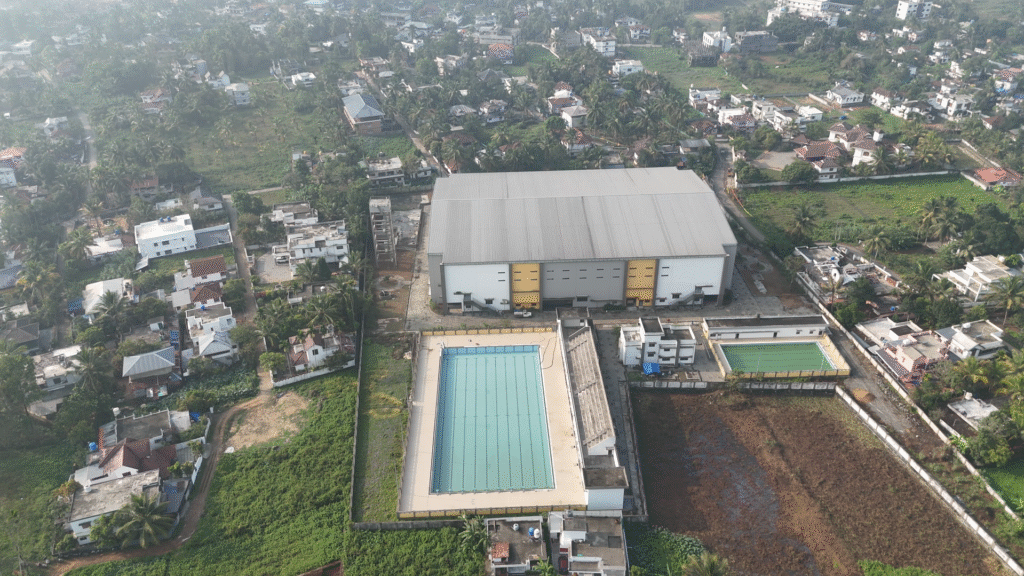
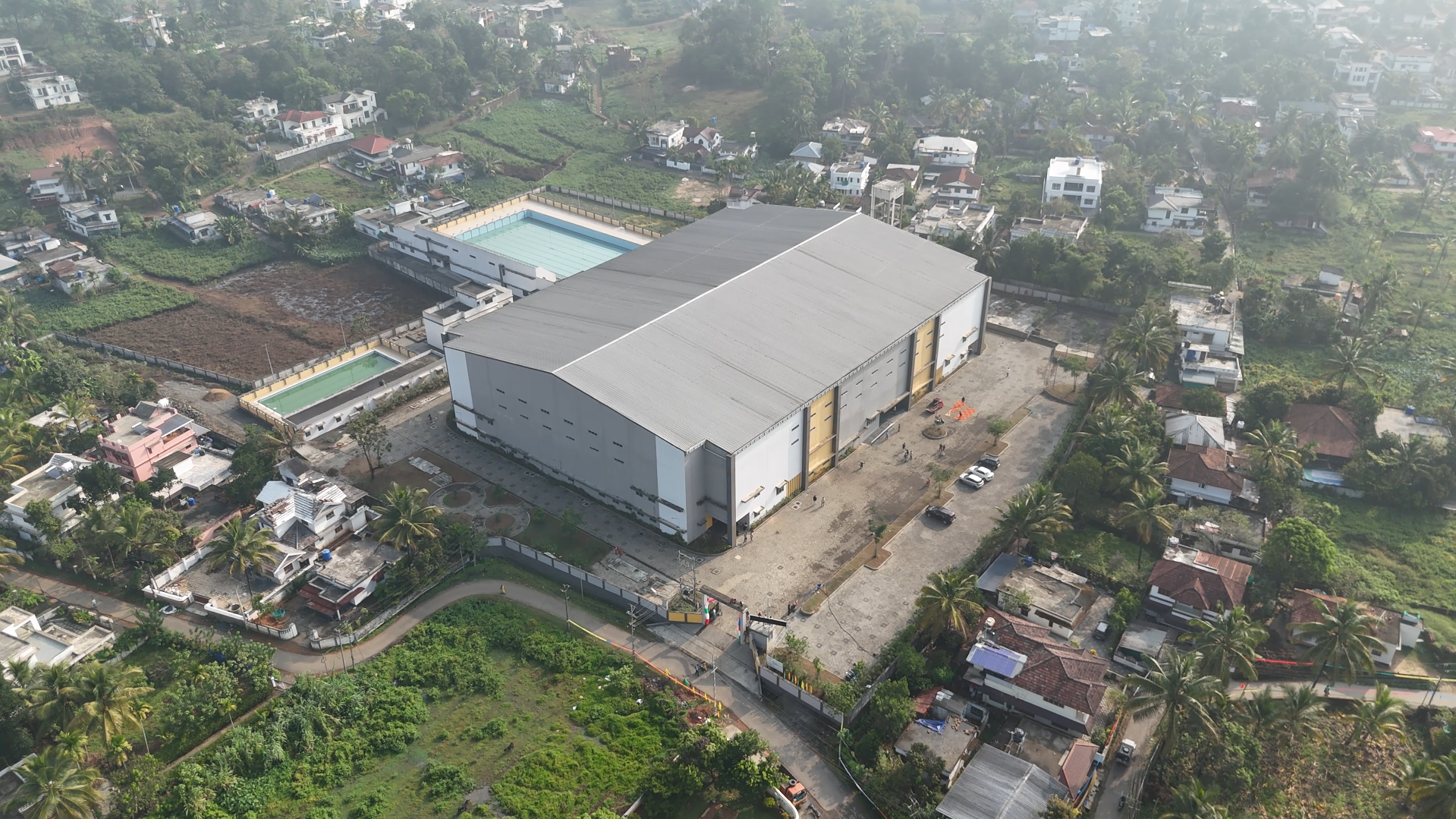
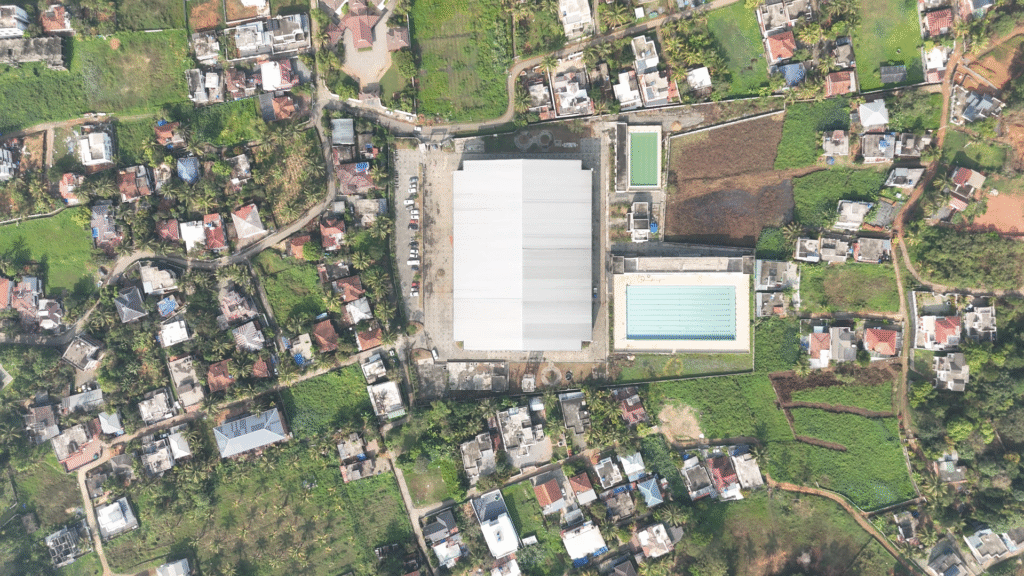
A 90 degree drone shot of Omkaranathan Indoor Stadium Kalppetta

Engineering Excellence: The 70-Metre Clear Span Structure

The most impressive feature of the Omkaranathan Indoor Stadium is the 70-meter clear-span roof.

The clear-span roof means that the roof is supported but that there are no pillars in the middle of the playing area. This is important because the playing area must be unobstructed.

The design of the roof of such a large space must be carefully calculated and constructed. Every part of the roof must be designed and constructed in such a way that the load is distributed evenly and that the roof is stable and long-lasting.

The construction of the Omkaranathan Indoor Stadium’s roof, which spans 70 meters without pillars in the middle, is a remarkable engineering feat.

The construction of the different parts of the roof and the transportation of the parts to the construction site required skill and precision. Every step of the construction of the roof must be carefully done.

The finished Omkaranathan Indoor Stadium is now one of the largest clear-span indoor stadiums in Kerala, showing the skill of Lee Builders.

Delivering a ₹38 Crore Project on Time

Large construction projects often face delays due to technical difficulties, environmental conditions, or logistical challenges. However, one of the most notable aspects of the Omkaranathan Indoor Stadium project is that it was completed on schedule despite the difficulties involved.

With a total project value of ₹38 crore, the stadium represents a major investment in sports infrastructure for the region.

Delivering such a project on time required:

  • Detailed project planning
  • Efficient resource management
  • Strong coordination between engineering and construction teams
  • Continuous monitoring of construction progress

The successful and timely completion of the project reflects the company’s commitment to professionalism and quality execution.

For communities waiting to use such facilities, timely project delivery is just as important as structural excellence.

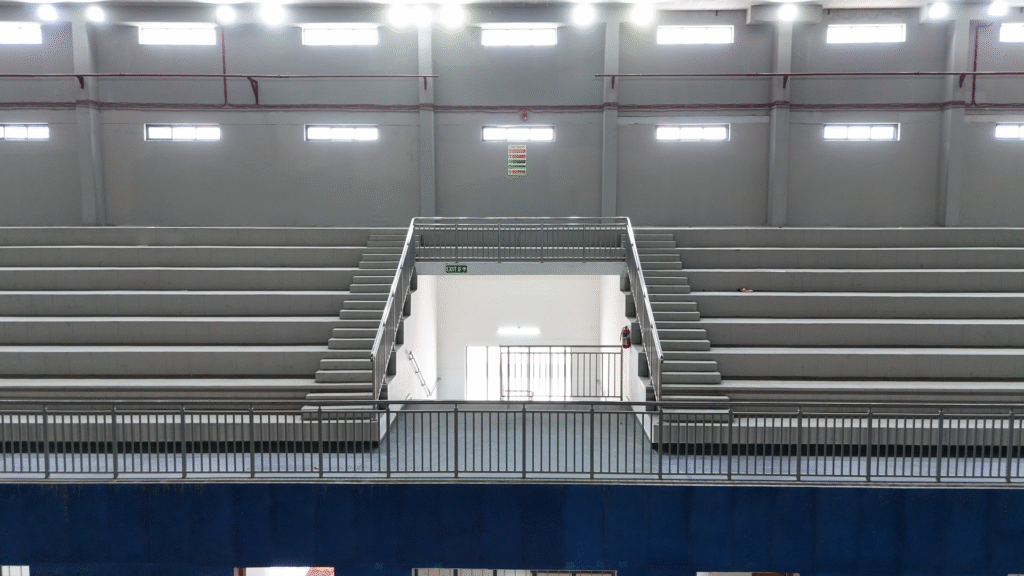
Inside the Omkaranathan Indoor Stadium Kalppetta
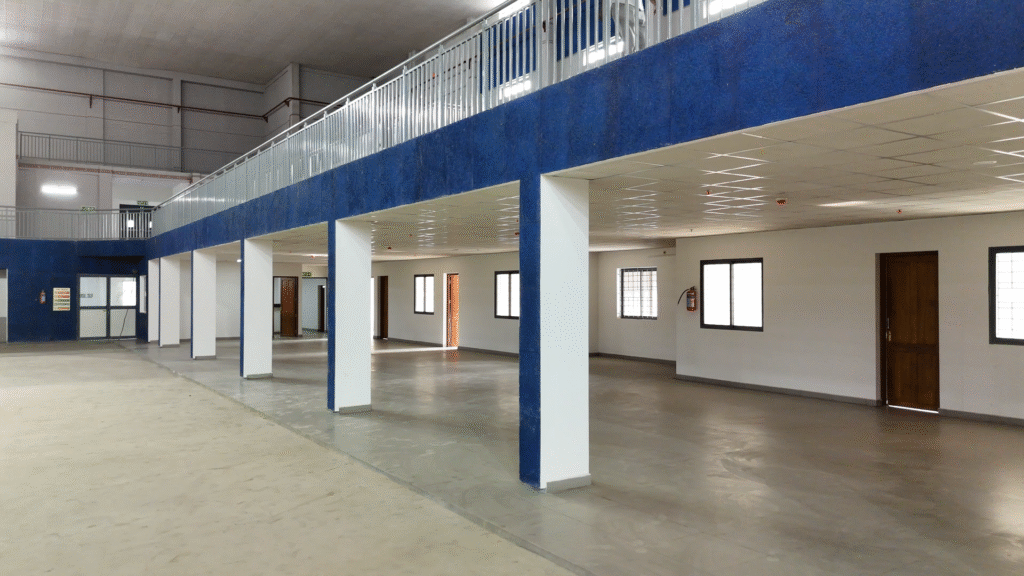
Inside the Omkaranathan Indoor Stadium Kalppetta 2

A Facility Designed for the Community

In addition to its engineering achievements, the Omkaranathan Indoor Stadium is an important civic center.

This building provides a venue for sporting activities and other events. Indoor stadiums are significant in fostering the development of sports culture among the populace. They provide athletes with an opportunity to train and compete in an indoor arena throughout the year.

In this case, the indoor stadium is expected to serve various sporting needs and make an impact in the development of sports in the district and state as well. Wayanad is known for producing great sporting talent. Therefore, this is an advantage to the district.

Lee Builders: Experience and Expertise in Construction

The successful execution of the Omkaranathan Indoor Stadium is an indication of the depth of knowledge that the company has in handling intricate construction works.

Lee Builders has been instrumental in the creation of various infrastructural developments in the state of Kerala over the years.

Projects of such magnitude do not simply require companies that excel in the construction arena. They require companies that have an in-depth knowledge of structural engineering.

The Omkaranathan Indoor Stadium Kalpetta stadium is an example of how all these facets come together in the hands of seasoned professionals.

Building Infrastructure that Lasts

These infrastructure initiatives are long-term investments that will contribute to the betterment of the community in the long term. Therefore, the quality of construction and the structural integrity of the infrastructure are of utmost importance.

Every aspect of the Omkaranathan Indoor Stadium, from its foundation to its roofing structure, has been executed with the principles of durability and safety in mind.

The use of quality materials and construction techniques, coupled with quality assurance procedures, has enabled the stadium to meet the standards set for a public infrastructure of such magnitude.

These infrastructure initiatives not only contribute to the betterment of the local community but also to the state’s infrastructure advancement.

Wide shot of Omkaranathan Indoor Stadium Kalppetta

A Landmark Achievement in Kerala’s Sports Infrastructure

Omkaranathan Indoor Stadium, situated in Kalpetta, can be classified as a modern sports infrastructure and an example of engineering prowess. The 70-meter clear span of the Omkaranathan Indoor Stadium, coupled with its scale and purpose, makes it one of the most distinguished indoor sports infrastructures in the state of Kerala. The Omkaranathan Indoor Stadium serves as an example that difficult conditions and logistical issues can be overcome with meticulous planning, proficiency, and strong teamwork. The construction of the ₹38 crore Omkaranathan Indoor Stadium marks another significant milestone for Lee Builders in its journey of constructing quality infrastructure projects in the state.

Conclusion

The story of the construction of the Omkaranathan Indoor Stadium in Kalpetta is not just about the construction itself; rather, it is the story of the realization of an idea into reality amidst the challenging topography, inclement weather, and complex logistical requirements.

From the inception of the project until its successful completion, Lee Builders has played an integral part in overseeing and accomplishing each step of the construction process.

The end result is the modern indoor stadium that houses a 70-meter clear-span construction, completed within the stipulated time frame and ready to meet the needs of the residents of Wayanad for generations to come.

As the athletes prepare and compete within the confines of the indoor stadium, the construction itself will stand the test of time as an example of what can be accomplished through the excellence of engineering, hard work, and cooperation.

Steel vs Concrete: Why Pre-Engineered Buildings Are the Future

Steel framework of a pre-engineered building under construction. Pre-engineered buildings (PEBs) are modern structures built from factory-made steel components. Each beam and column is cut and drilled off-site, then bolted together on-site, which dramatically shortens construction time and reduces waste. In Kerala – especially around Kochi, Aluva and Thrissur – these steel buildings are “increasingly popular” for everything from factories and warehouses to commercial and even residential projects. The result is a strong, durable building delivered much faster and often at lower cost than a comparable concrete structure. In fact, industry reports note that India’s PEB market reached about $1.84 billion in 2024 and is forecast to more than double by 2030. With advantages in speed, cost-efficiency and sustainability, pre-engineered steel buildings are rapidly outpacing traditional concrete construction in the region.

Steel vs Concrete: A Structural Showdown

Comparing the two approaches highlights why PEBs have the edge. Conventional concrete construction (cast-in-place or tilt-up) relies on heavy materials, on-site pouring and lengthy curing times. In contrast, a pre-engineered steel frame is delivered ready to assemble, so even large buildings go up quickly. Key differences include:

  • Weight and Span: Steel frames offer very long clear spans. For example, a pre-engineered steel building can cover over 300 feet between supports without interior columns. In a concrete building, the weight of walls and slabs requires frequent columns and supports, limiting open space.
  • Construction Speed: PEB components arrive prefabricated, so on-site assembly is fast. As one builder notes, a PEB’s “time-efficiency in fabrication and erection” is a foremost advantage. By contrast, concrete walls and slabs must be formed and cured on-site, which can add weeks or months. For instance, an indoor sports arena near Thrissur was constructed with a steel roof frame in half the time of a similar concrete build.
  • Safety and On-Site Impact: Less on-site construction means fewer hazards. Steel PEB frames are assembled quickly with cranes and bolts, creating a cleaner worksite. Studies note that steel construction is generally safer during erection, since concrete work involves heavier materials and wet processes.
  • Design Flexibility: Steel’s high strength-to-weight ratio allows custom shapes and expansions. Architects can design wide open interiors (ideal for factories, showrooms or gymnasiums) because steel beams easily carry loads over long distances. Modifications or future extensions are also simpler: new bays can be added by inserting more frames. Concrete’s rigidity makes late-stage design changes difficult.
  • Resilience: Pre-engineered steel buildings perform well under extreme conditions. Steel flexes in high winds or earthquakes while concrete tends to crack or fail. A quality steel frame resists tropical storms and seismic loads effectively, whereas a similarly strong concrete structure would be much costlier. Fire resistance is also comparable or better: steel does not burn, and modern coatings can increase its heat tolerance.

By these measures, PEBs clearly outclass conventional concrete for many building types. They minimize structural dead-weight, accelerate schedules, and create versatile spaces – making them ideal for modern industry and commerce.

Key Advantages of Pre-Engineered Buildings

Close-up of complex steel framework in a modern pre-engineered building. Pre-engineered structures bring multiple benefits that make them attractive for today’s construction needs. As one supplier notes, the foremost advantage of a PEB is “time-efficiency in fabrication and erection” along with “value-effectiveness in material”. In practice, this means much faster builds with lower labor costs and minimal material waste. The key benefits of steel pre-engineered buildings include:

  • Rapid, Cost-Effective Builds: PEBs are engineered for speed. Since components are precision-cut in factories, projects assemble in a fraction of the time of concrete construction. This faster schedule also reduces labor expenses. Industry experts conclude that PEBs are often “more flexible, cost-efficient, and quick” than traditional methods. For example, a concrete warehouse might take half a year to complete, whereas a similar steel PEB can often finish in weeks.
  • Design Flexibility: Steel’s strength lets developers create large open layouts and accommodate specialized equipment. Clear-span interiors (up to 300+ ft) are routine, benefiting uses like warehouse racking, retail showrooms or recreational centers. Steel buildings also allow easy future expansion; new bays or mezzanines can be added by extending the frame. Custom roof shapes, clerestory windows or large overhangs are straightforward with pre-engineered components.
  • Durability and Low Maintenance: Steel frames resist many issues that plague concrete. Unlike wood, steel doesn’t rot or host termites, and it endures weather extremes without cracking. A well-built PEB can last 50 years or more with very little upkeep. This long lifespan means fewer replacements and lower lifecycle costs. Many manufacturers emphasize that PEBs require “less maintenance” over decades, making them a smart investment.
  • Sustainability: Pre-engineered steel construction is inherently eco-friendly. Factory fabrication wastes very little material – one study points out that steel PEB components are “custom-made… ensuring only essential material is used”. Excess scrap is minimal, and steel is highly recyclable (often 100% at end-of-life). In fact, current industry trends highlight steel’s recyclability and reuse as major green advantages. Steel PEB kits also often include insulated metal panels, which deliver excellent thermal performance and reduce energy use.
  • Safety and Resilience: PEBs tend to have lower on-site risks. Steel parts arrive pre-cut, so there is less messy concrete work to slow progress or create hazards. Moreover, steel structures are engineered to withstand extreme events – for instance, many can resist winds over 200 mph – without catastrophic failure. Their ductility means steel bends and recovers in strong forces, enhancing occupant safety in storms or quakes.

These advantages make pre-engineered steel buildings an attractive choice for a wide range of projects. Commercial developers, industrial firms, and even institutional clients gain from shorter timelines, predictable costs and robust performance. Government and public agencies also favor PEBs for infrastructure and facility projects that demand fast delivery without sacrificing quality.

Pre-Engineered Buildings in Kochi, Aluva, and Thrissur

The shift toward PEBs is especially noticeable in Kerala’s major cities. Local construction markets have rapidly adapted to steel framing:

  • Local Demand & Search: In Kochi, Thrissur and Aluva, online searches for pre engineered building in Kochi, “pre engineered buildings in Aluva” or even “new building construction near me” often list specialized PEB contractors. This reflects strong demand for steel-based solutions. Many developers and investors are finding that reputable PEB providers appear at the top of local search results, making it easy to find turnkey options nearby.
  • Contractors & Services: Many of the best construction companies in Kochi (and Thrissur) now offer PEB expertise. Leading firms provide full turnkey construction company services – from detailed steel frame design and permitting to fabrication and on-site erection. These local builders have invested in the necessary equipment and training to handle steel projects end-to-end. By advertising PEB capabilities on their websites and in bids, they signal that steel framing is a core part of modern construction services.
  • Manufacturers & Specialists: Regional PEB manufacturers have established a strong presence. For example, Tapco Smart Builders is noted as “a leading Pre-Engineered Building Manufacturer in Kochi”. Likewise, Lee Builders (based near Kochi) markets itself as a trusted PEB contractor serving Kochi and Thrissur. These companies combine advanced engineering with local know-how. By using locally made steel components and crews familiar with Kerala’s climate and regulations, they deliver high-quality buildings efficiently. In short, both building contractors in Kochi and building contractors in Thrissur now emphasize steel framing on par with traditional methods.

This local ecosystem means anyone in the Kochi region can capitalize on PEB technology. Investors and business owners can easily find qualified construction companies in Kochi to execute a steel building. Even for general public or residential projects, pre-fab steel modules are becoming an option. (Indeed, one industry report notes that “even modern residences are sometimes built using PEB modules” for faster construction.) The combination of skilled contractors, nearby manufacturers, and strong demand makes Kochi, Aluva, and Thrissur fertile ground for the PEB trend.

Choosing a Pre-Engineered Building Provider

When planning a new steel building, it pays to select the right manufacturer and contractor. Key considerations include:

  • Full-Service Manufacturers: Look for firms that act as a true Pre Engineered Building Manufacturer, offering end-to-end solutions. The top providers handle everything from structural design to fabrication to on-site assembly and commissioning. For example, Green Brick Project in Kochi advertises integrated PEB services – they manage detailed engineering, procurement, project management and installation as a package. This one-stop approach reduces coordination headaches and ensures compatibility of all components.
  • Proven Track Record: Choose contractors with experience in steel projects. The best builders in Kochi and Thrissur have portfolios showing completed PEB warehouses, offices or halls. Verify that their work meets standards (e.g. they use certified steel grades and precise connections). For instance, Lee Builders’ local website highlights its history of PEB projects, underscoring its reputation as “a leading PEB manufacturer” in the region. Reviewing case studies and client testimonials can reveal which companies deliver on time and quality.
  • Turnkey Construction Services: Ensure the contractor provides comprehensive construction company services. This means they handle approvals, foundations, roofing, cladding, electrical and plumbing as part of the steel building package. Local PEB contractors often bundle these with the steel framing, so you don’t have to subcontract each phase. Check that they can coordinate finishes like insulation, facades and utilities to your specifications.
  • Search & Keywords: When researching providers, use targeted search terms. Phrases like “Pre Engineered Building Manufacturer Kochi”, “building contractors in Kochi”, or even “new building construction near me” can surface specialized firms. Many local companies optimize for these keywords online, so this is a good way to identify reputable local partners.

By partnering with a qualified PEB manufacturer and contractor, developers and clients ensure a smooth project. The right team will maximize the speed, safety and quality that steel construction promises.

Conclusion

Across sectors, pre-engineered steel buildings are proving their worth. From developers and investors to government planners and the general public, PEBs deliver what concrete cannot: faster completion, lower total costs, and greater flexibility. One industry analyst sums it up: pre-engineered steel structures are often “the clear winner” in a head-to-head with traditional construction, thanks to their efficiency and resilience. In Kerala’s booming economy, cities like Kochi, Thrissur and Aluva have seen PEBs become the go-to choice for new projects. Even complex facilities – from sports arenas to industrial sheds – are now routinely built with steel frames to meet tight deadlines and budgets.

For businesses, developers and government bodies, this means future-proof construction. Pre-engineered buildings offer long-term value: durable steel frames that last decades, lower maintenance, and a smaller carbon footprint from reduced waste. As local experts note, well-designed PEB projects rank among the “best pre engineered buildings” for performance and sustainability.

In summary, whether planning a new warehouse, mall, school or office, decision-makers in Kochi, Aluva and Thrissur should strongly consider steel PEB technology. Its combination of speed, strength and cost-effectiveness is unmatched. By choosing skilled PEB manufacturers and contractors, commercial developers, residential clients and public agencies alike can build smarter, faster and greener – truly making pre-engineered steel buildings the future of construction in the region.