






The construction industry is undergoing a quiet revolution. Across India and globally, developers, industrialists, and business owners are increasingly turning to pre-engineered buildings (PEB) as their go-to construction solution and for good reason.
Pre-engineered buildings are factory-fabricated steel structures designed and manufactured off-site, then assembled on location. This approach dramatically reduces construction time, minimises on-site labour, and delivers cost-effective, high-performance buildings tailored to specific functional needs.
From sprawling logistics hubs to compact commercial showrooms, PEB buildings are proving their versatility across virtually every sector. Their combination of speed, structural flexibility, low maintenance, and sustainability is making them the preferred choice for industries that can’t afford long construction timelines or high overheads.
In this article, we explore the top applications of pre-engineered buildings across industries and why more businesses are choosing steel structure buildings over conventional construction methods.
Table of Contents
What Are Pre-Engineered Buildings?
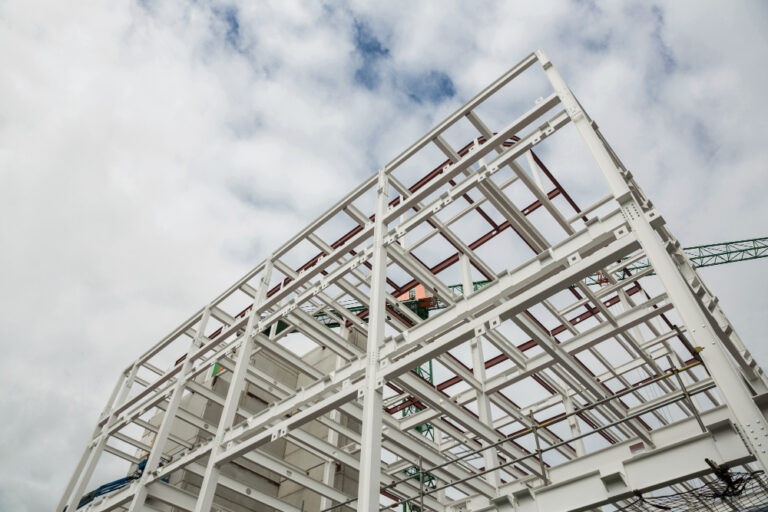
A pre-engineered building is a complete structural system including primary steel frames, secondary structural members, roofing, and cladding that is engineered in a factory to precise specifications and delivered as a kit of parts for rapid on-site assembly.
The key components of a typical PEB structure include:
- Primary frames: Tapered or straight I-sections forming the structural skeleton
- Secondary members: Purlins, girts, and eave struts that support the cladding
- Roof and wall panels: Insulated or single-skin profiled steel sheets
- Accessories: Doors, windows, louvers, ridge vents, and skylights
- Fasteners and anchor bolts: Precision-engineered for structural integrity
Unlike conventional RCC construction which depends on in-situ casting, curing times, and significant manual labour PEB buildings are engineered for precision, speed, and efficiency from the ground up.
Why Industries Prefer PEB Buildings
The rapid adoption of PEB buildings across sectors isn’t accidental. Several compelling advantages make steel structure buildings a strategic investment for modern industries.
- Faster Construction: PEB projects can be completed 30–50% faster than conventional buildings, since fabrication and site preparation happen simultaneously.
- Lower Maintenance: Steel structures require minimal upkeep compared to concrete, with factory-applied coatings that resist corrosion and weathering for decades.
- Scalability: PEB structures can be expanded laterally or vertically with relative ease, making them ideal for businesses that anticipate future growth.
- Cost Savings: Reduced construction time, lower material waste, and minimal on-site labour directly translate into significant cost advantages.
- Structural Strength: High-grade steel delivers exceptional strength-to-weight ratios, enabling large clear-span spaces without intermediate columns.
- Sustainability: Steel is 100% recyclable. PEB construction generates less waste and can incorporate energy-efficient design features, aligning with modern green building goals.
Top Applications of Pre-Engineered Buildings Across Industries
1. Warehouses and Storage Facilities
Warehousing is arguably the most prominent application of PEB structures in India today. With the rapid growth of organised retail, manufacturing exports, and e-commerce, demand for large-scale, cost-efficient storage infrastructure has never been higher.
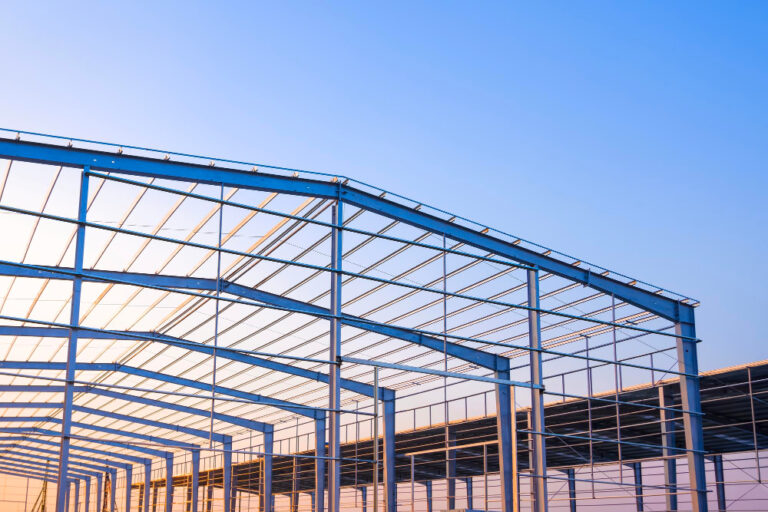
PEB warehouse construction is particularly well-suited to this demand. Steel structure buildings can achieve clear spans of up to 90 metres meaning vast column-free interior spaces that optimise storage layout, forklift movement, and inventory management systems.
Key advantages of PEB warehouses include:
- Large, unobstructed floor areas ideal for racking and pallet storage
- Fast project delivery a 10,000 sq ft warehouse can be completed in weeks
- Easy integration of dock levellers, roller shutters, and mezzanine floors
- Superior fire resistance and weatherproofing compared to older shed structures
- Scalable design future bays can be added without major structural changes
For third-party logistics providers (3PLs), FMCG companies, and manufacturers, PEB warehouse construction delivers the best value-per-square-foot of any construction method available today.
2. Manufacturing Plants and Industrial Facilities
Industrial steel buildings have long been the backbone of manufacturing infrastructure. PEB structures take this a step further, offering purpose-engineered facilities that can accommodate heavy machinery, overhead cranes, and complex production workflows.
Modern manufacturing demands flexible, high-ceiling spaces with precise load-bearing capabilities. PEB buildings can be designed with crane runway beams integrated into the primary frame, supporting EOT (Electric Overhead Travelling) cranes up to 50 tonnes or more.
Why manufacturers choose industrial PEB buildings:
- Clear-span designs allow machinery to be repositioned as production lines evolve
- High eave heights (up to 15+ metres) accommodate tall industrial equipment
- Crane support systems designed into the primary structural frame
- Easy future expansion new bays can be added as capacity grows
- Compliant with industrial safety standards and fire protection requirements
- Faster commissioning compared to RCC critical for production timelines
Sectors including automotive, textile, pharmaceuticals, food processing, and heavy engineering have all embraced PEB structures for their production facilities.
3. Logistics and Distribution Hubs
The e-commerce boom has triggered unprecedented demand for last-mile and mid-mile logistics infrastructure across India. Distribution centres and fulfilment hubs need to be operational quickly, adaptable to changing inventory volumes, and efficient to run.
Pre-engineered buildings are the dominant structural choice for logistics facilities for several reasons. Their long-span structural capabilities allow for wide, uninterrupted floor areas essential for conveyor systems, sorting equipment, and multi-aisle racking. Additionally, multiple loading bays and dock doors can be integrated seamlessly into the building envelope.
PEB advantages in logistics infrastructure:
- Fast build times support urgent market entry deadlines
- Flexible interior layouts accommodate changing logistics operations
- Large door openings and loading bays for trucks and containers
- Energy-efficient skylights and ventilation reduce operational costs
- Thermally insulated panels maintain ambient temperature for sensitive goods
Major logistics players and e-commerce giants have adopted PEB warehouse construction for their hub networks precisely because it delivers operational space faster and at lower cost than any alternative.
4. Agricultural Buildings and Rural Infrastructure
Agriculture is a sector that has traditionally relied on low-cost, low-quality structures. However, modern agribusiness operations particularly large-scale poultry farms, dairy facilities, and grain storage installations demand better. PEB structures are increasingly the answer.
Steel structure buildings offer agricultural operators significant advantages over conventional farm buildings:
- Poultry farms: Clear-span interiors with no columns allow unobstructed bird movement; ventilation accessories can be integrated into the panel system
- Dairy farms: Hygienic steel surfaces, easy-clean profiles, and wide spans accommodate milking parlours and cow housing
- Equipment storage: Durable, weatherproof enclosures protect tractors, harvesters, and irrigation systems
- Grain storage: Hermetically sealed PEB structures with moisture-resistant panels protect grain quality
- Agro-processing units: Large, flexible spaces for sorting, packaging, and cold-chain facilities
The weather resistance, natural ventilation options, and long service life of PEB buildings make them a smart long-term investment for farming operations of all scales.
5. Commercial Spaces and Community Structures
The versatility of pre-engineered buildings extends well beyond industrial and agricultural applications. Today, architects and developers are leveraging steel structure buildings to create visually striking, cost-effective commercial spaces.
Commercial applications of PEB buildings include:
- Shopping complexes and retail parks: Large column-free retail floors with attractive facade options
- Automobile showrooms: Wide, well-lit interiors ideal for vehicle display
- Office buildings: Multi-storey PEB structures with modern, open-plan layouts
- Exhibition halls and convention centres: Massive clear-span spaces for events and trade shows
- Sports and recreational facilities: Stadia, indoor courts, gymnasium buildings, and swimming pool enclosures
- Petrol stations and service centres: Canopy and service bay structures engineered for durability
Modern PEB design software allows architects to specify curved rooflines, glass facades, and decorative cladding systems ensuring commercial PEB buildings are not merely functional but architecturally distinctive.
Key Benefits of PEB Structures Across Industries
Regardless of the sector, the benefits of pre-engineered buildings are consistent and compelling:
- Faster construction timelines: Factory fabrication runs parallel to site preparation, cutting total project duration by 30–50%.
- Reduced construction costs: Lower material waste, streamlined labour, and shorter project cycles all contribute to significant savings.
- High strength-to-weight ratio: Steel’s superior structural properties enable long spans with lighter foundations than equivalent concrete structures.
- Design flexibility: PEB buildings can be configured in virtually any shape, height, or bay spacing to meet exact functional requirements.
- Easy future expansion: End walls are designed from the outset to facilitate lateral extension future bays can be added with minimal disruption.
- Energy efficiency: Insulated panel systems, reflective roofing, and strategically placed skylights reduce thermal loads and energy consumption.
- Sustainability benefits: Steel is among the most recycled materials on earth. PEB construction generates minimal construction waste and supports green building certifications.
Choosing the Right PEB Partner
The performance of a pre-engineered building is only as good as the manufacturer behind it. Selecting the right PEB partner is a critical decision that will determine the quality, timeline, and long-term value of your project.
Evaluate potential PEB contractors on these five dimensions:
- Design expertise: Look for in-house engineering teams capable of producing detailed structural calculations and 3D models. A skilled design team anticipates site-specific challenges before fabrication begins.
- Manufacturing capabilities: Modern CNC fabrication equipment, controlled welding processes, and blast-and-paint facilities are indicators of a serious manufacturer. Tour the factory if possible.
- Quality standards: Confirm ISO certification and adherence to IS standards for steel structures. Quality checks at every production stage prevent costly on-site surprises.
- Project management: An experienced site supervision team ensures that erection proceeds on schedule and to specification. Ask for references from comparable projects.
- After-sales support: A reputable PEB partner provides maintenance guidance, genuine spare parts, and responsive support for the life of the building.
The cheapest quote is rarely the best value. Prioritise experience, transparency, and technical capability when selecting your PEB manufacturer.
Conclusion
Pre-engineered buildings have moved well beyond their origins as simple industrial sheds. Today, PEB structures serve as warehouses, manufacturing plants, distribution hubs, agricultural facilities, and architecturally sophisticated commercial spaces delivering consistent value across every sector they touch.
The fundamental advantages speed, structural efficiency, cost-effectiveness, scalability, and sustainability position pre-engineered buildings as the construction solution of choice for industries that want to build smart. As India’s industrial and commercial sectors continue to expand, PEB buildings will undoubtedly play an increasingly central role in shaping the built environment.
Whether you are planning a new warehouse, expanding a manufacturing facility, or developing a commercial complex, a well-designed PEB structure from a reputable manufacturer can deliver your vision on time, within budget, and built to last.
Frequently Asked Questions (FAQs)
Q1. What are the main applications of pre-engineered buildings?
Pre-engineered buildings are used across a wide range of sectors. The most common applications include warehouses and storage facilities, manufacturing and industrial plants, logistics and distribution centres, agricultural buildings (poultry farms, dairy units, grain storage), and commercial spaces such as showrooms, offices, and sports facilities. Their structural flexibility makes them suitable for almost any building type that requires large, efficient, low-maintenance space.
Q2. Why are PEB buildings preferred for warehouses?
PEB warehouse construction is preferred because steel structures can achieve clear spans of up to 90 metres, creating large, column-free storage areas that maximise usable space. Construction is significantly faster than RCC alternatives, costs are lower, and the design can accommodate dock doors, mezzanine floors, and material handling equipment from the outset. Future expansion is also straightforward, making PEB warehouses a long-term asset for any logistics or storage operation.
Q3. Can PEB structures be used for manufacturing plants?
Yes, absolutely. Industrial steel buildings based on PEB technology are widely used for manufacturing plants. They can be engineered with crane runway beams, high eave heights for tall equipment, and flexible bay configurations that adapt as production lines change. Automotive, pharmaceutical, food processing, and heavy engineering sectors regularly choose PEB structures for their factories because of the combination of structural performance, speed of construction, and lower long-term cost.
Q4. Are steel structure buildings suitable for agricultural facilities?
Steel structure buildings are highly suitable for agricultural use. Modern PEB-based farm buildings offer weather resistance, natural ventilation options, long clear spans (ideal for equipment storage and animal housing), and corrosion-resistant finishes. Poultry farms, dairy units, grain storage facilities, and agro-processing plants all benefit from PEB construction’s combination of durability, hygiene compliance, and low maintenance requirements.
Q5. What are the advantages of PEB buildings over conventional construction?
PEB buildings offer several advantages over conventional RCC construction:
- Speed — projects are completed 30–50% faster due to factory fabrication
- Cost — reduced labour, less material waste, and shorter timelines lower total project costs
- Structural efficiency — steel’s high strength-to-weight ratio enables longer spans with lighter foundations
- Flexibility — designs can be customised and expanded easily
- Sustainability — steel is fully recyclable and PEB projects generate minimal construction waste
- Low maintenance — factory-applied coatings provide decades of corrosion protection with minimal upkeep.