





Introduction
You need a large commercial space, a warehouse, factory, or industrial facility. You need it built fast, within budget, and strong enough to last decades. If you’ve started researching your options, you’ve likely come across the term ‘Pre-Engineered Building’ or PEB. But what exactly is it? And is it right for your project?
Pre-engineered buildings have transformed the construction landscape in India over the past two decades. They offer a smarter, faster, and more cost-efficient alternative to conventional construction and for the right applications, they are simply unmatched.
In this guide, the team at Lee Builders, steel construction specialists based in Perumbavoor, Kerala, with over 29 years of experience breaks down everything you need to know about PEBs before you break ground.
What you'll learn in this article
What Exactly Is a Pre-Engineered Building?
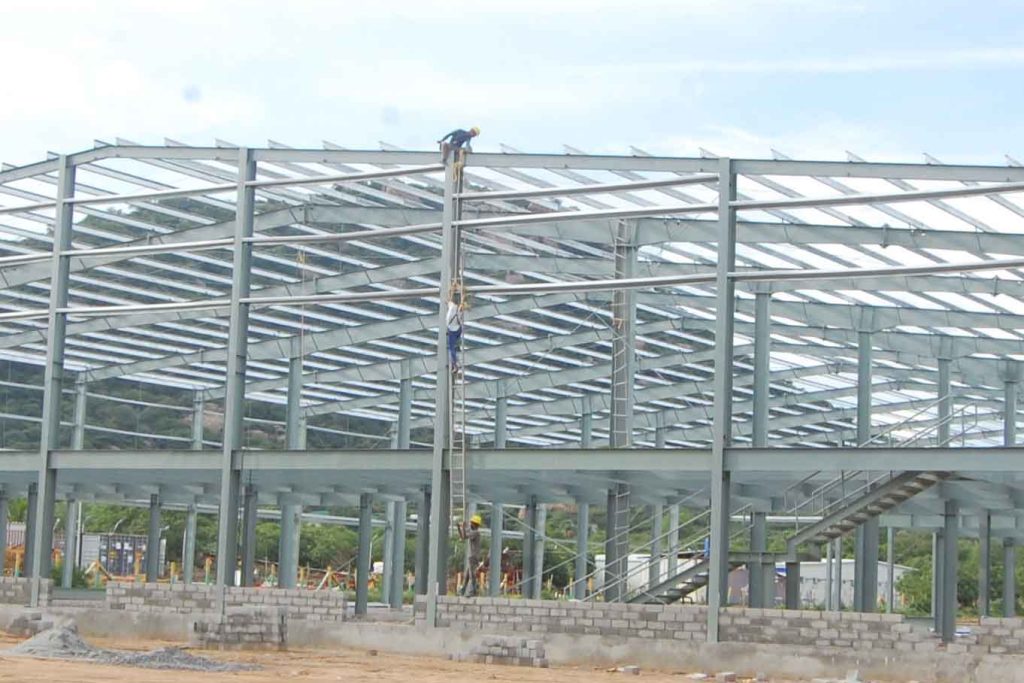
A pre-engineered building (PEB) is a steel structure that is designed, engineered, and fabricated at a factory then transported to the site and assembled by a skilled erection team. Unlike conventional construction, where materials are sourced, cut, and assembled entirely on-site, a PEB arrives as a precision-manufactured kit of parts, ready to be bolted together.
The term ‘pre-engineered’ refers to the fact that the structural system is fully engineered in advance using specialised software that optimises every component for load, span, and local conditions before a single piece of steel is cut.
Key Components of a Pre-Engineered Building
A complete PEB system typically consists of:
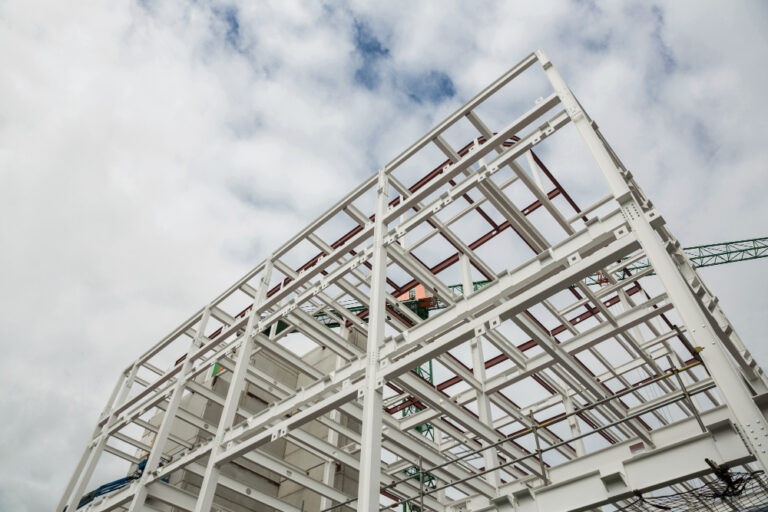
- Primary steel framing – the main structural skeleton (columns, rafters, and primary beams)
- Secondary framing – purlins, girts, and eave struts that support the cladding
- Roof and wall cladding panels – metal sheeting that forms the building envelope
- Doors, windows, and ventilators – factory-fitted or site-installed accessories
- Mezzanine floors, crane systems, and other accessories as required
Every component is designed to work together as an integrated system. This is what makes PEBs significantly more efficient than building a structure piece by piece.
How Does a Pre-Engineered Building Work?
Understanding the PEB process helps explain why it is faster and more efficient than conventional construction. Here is how it works from start to finish:
- Step 1 – Requirement gathering
- The process begins with a detailed brief span, height, load requirements, intended use, site location, and climatic conditions. This information drives every subsequent design decision.
- Step 2 – Engineering and design
- Specialist software is used to model the structure and optimise each member for strength and efficiency. Detailed shop drawings and a Bill of Quantities are produced before fabrication begins.
- Step 3 – Factory fabrication
- Steel components are cut, drilled, welded, and coated with primer in a controlled factory environment. Quality checks are carried out at each stage. This phase runs parallel to site preparation saving weeks of time.
- Step 4 – Delivery to site
- Components are labelled, packed, and transported to the site along with an erection manual. Every piece is accounted for before delivery.
- Step 5 – On-site erection
- The structure is bolted together on-site by a trained erection crew. Most connections are bolted rather than welded, making the process faster, safer, and more consistent.
- Step 6 – Finishing and handover
- Cladding panels are fixed, doors and windows are installed, and any finishing works (gutters, downpipes, fascia) are completed. The building is ready for fit-out.

What Are Pre-Engineered Buildings Used For?
One of the greatest strengths of PEB technology is its versatility. Pre-engineered steel buildings are used across a wide range of industries and applications in India:
- Industrial Applications
- Manufacturing plants and assembly units
- Processing facilities and production halls
- Automobile workshops and service centres
- Logistics and Storage
- Warehouses and distribution centres
- Cold storage and temperature-controlled facilities
- Bulk storage structures
- Commercial Buildings
- Hypermarkets and large retail showrooms
- Exhibition halls and convention centres
- Petrol station canopies and service forecourts
- Infrastructure
- Aircraft hangars and MRO facilities
- Railway maintenance sheds and platform shelters
- Metro and transit structures
- Institutional
- Sports halls, indoor stadiums, and gymnasiums
- School and college assembly halls
- Community centres and multipurpose buildings
PEB vs. Conventional Construction - Key Differences
The most common question clients ask is: how does PEB compare to traditional RCC (Reinforced Cement Concrete) construction? The table below provides a clear answer:
| Factor | Pre-Engineered Building (PEB) | Conventional (RCC) Construction |
| Construction time | 4-12 weeks (typical) | 6-18 months |
| Overall cost | 20-30% lower (typical) | Higher – more labour and material |
| Design flexibility | High – custom spans and heights | Moderate |
| Clear span (no columns) | Up to 90 metres and beyond | Limited without expensive beams |
| Future expansion | Easy – bolt-on bays or extensions | Difficult – demolition often required |
| Weight | Lighter – lower foundation cost | Heavier – larger foundations needed |
| Maintenance | Low – galvanised or coated finishes | Moderate to high |
| Sustainability | Recyclable steel, minimal site waste | Higher material waste, non-recyclable |
| Best suited for | Industrial, commercial, logistics | Residential, small commercial |
It is worth noting that conventional RCC construction still makes sense in certain scenarios, particularly for low-rise residential buildings, structures in high-seismic zones with specific design requirements, or projects where the building aesthetics require masonry facades. A good contractor will recommend the right system for your project rather than pushing a single solution.
Advantages of Pre-Engineered Buildings
Here is a closer look at the benefits that have made PEB the preferred construction method for industrial and commercial projects across India:
1. Faster Construction Timeline
Factory fabrication runs in parallel with site preparation. Once the foundation is ready, erection of a medium-sized PEB can be completed in as little as four weeks. For businesses, this means faster operations, earlier revenue generation, and lower project holding costs.
2. Significant Cost Savings
Reduced labour on-site, minimal material waste, optimised steel usage, and shorter construction timelines all contribute to cost savings that typically range from 20 to 30 percent compared to equivalent conventional structures.
3. Column-Free Clear Spans
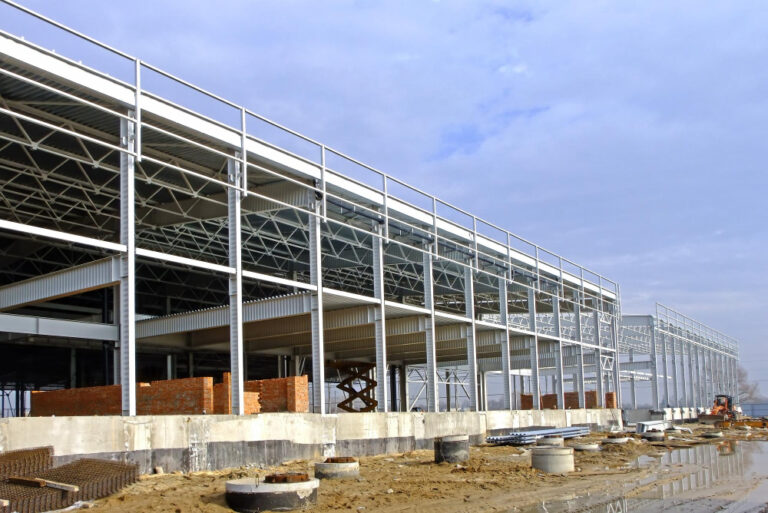
PEBs can achieve clear spans of 90 metres or more without internal columns. For warehouses, factories, and exhibition halls, this is a decisive advantage — unobstructed floor space maximises operational efficiency.
4. Engineered Durability
Hot-rolled steel components with factory-applied protective coatings deliver long service life with minimal maintenance. PEBs are engineered to applicable IS codes for wind, snow, and seismic loads relevant to their location.
5. Easy Future Expansion
A PEB can be extended by adding bays to the length or width, or by adding mezzanine levels, without major structural disruption. This makes PEB the sensible choice for businesses planning to scale.
6. Sustainability
Steel is 100 percent recyclable. PEB construction generates significantly less waste on-site compared to conventional builds. For businesses with ESG commitments, this is an increasingly important factor.
7. Suited to India’s Climate
Proper insulation options, including fibreglass wool, polyurethane foam panels, and reflective foil systems, are available for PEB roof and wall assemblies. Buildings in Kerala and other high-rainfall, high-humidity zones can be fully weatherproofed to the required specification.
How Much Does a Pre-Engineered Building Cost in India?
Cost is naturally one of the first questions clients ask. The honest answer is that there is no single number, PEB costs vary depending on several factors:
- Building size – total floor area and footprint
- Span and height – wider and taller buildings require heavier steel sections
- Roof pitch and architectural features
- Cladding specification – standard colour-coated, insulated sandwich panels, or specialised systems
- Accessories – doors, windows, skylights, ventilators, crane systems
- Site location and soil conditions – affects foundation design and transport costs
- Local labour rates and erection complexity
Indicative Cost Range (India, 2024)
As a general indicative guide, PEB projects in India typically fall in the range of:
| Specification | Approximate Cost Range (per sq. ft.) |
| Basic industrial (single skin, standard span) | Rs. 1,500 – Rs. 2,000 |
| Mid-range commercial / logistics | Rs. 2,000 – Rs. 2,800 |
| Insulated / cold storage / high-spec | Rs. 2,800 – Rs. 3,500+ |
Cost-Saving Tips
- Standardise dimensions where possible – non-standard spans and heights add engineering and fabrication cost.
- Plan for future expansion upfront – it is far cheaper to design expansion provisions now than to retrofit them later.
- Bundle multiple structures – if your project involves more than one building, package them together for better pricing.
- Choose the right cladding – over-specifying insulation on a non-temperature-sensitive building adds cost without benefit.
Is a Pre-Engineered Building Right for Your Project?
Run through this quick checklist. If you tick three or more boxes, PEB is very likely the right solution:
✅ You need a large clear span (20 metres or more) without internal columns |
✅ Your timeline is a priority – you need the building operational as soon as possible |
✅ Budget efficiency matters – you want to maximise value per rupee invested |
✅ The structure is for industrial, commercial, logistics, or institutional use |
✅ You may want to expand or modify the building in the future |
✅ Sustainability and low maintenance are important considerations |
If your project is primarily residential, requires a specific architectural masonry facade, or is below 300 square metres, a conventional approach may be more appropriate. Lee Builders is happy to assess your requirements and recommend the most suitable construction method – with no obligation.
Why Choose Lee Builders for Your PEB Project?
Lee Builders has been a trusted name in steel construction across India since 1995. Here is what that means for your project:
| What we bring | What it means for you |
| 29+ years of steel construction experience | Proven expertise across hundreds of projects |
| End-to-end delivery under one roof | Design, fabrication, and erection — no coordination gaps |
| Diverse project portfolio | Warehouses, cold storage, multistorey buildings, railway infrastructure |
| Government and institutional track record | Completed projects for Southern Railways |
| Kerala-based, pan-India capability | Local knowledge, national reach |
| In-house metal fabrication | Quality control at every stage of production |

Conclusion
Pre-engineered buildings represent one of the most significant advances in construction technology available to Indian businesses today. They are faster to build, more cost-effective, highly adaptable, and proven across every major industrial and commercial sector.
Whether you are planning a warehouse, factory, cold storage facility, or large commercial structure, PEB is worth serious consideration. The combination of engineering precision, factory quality, and rapid site erection delivers outcomes that conventional construction simply cannot match at the same cost or budget.
Lee Builders has been delivering steel construction excellence since 1995. Our team is ready to guide you from concept to completion.